News

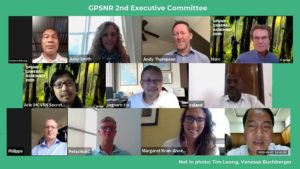
A First Look at GPSNR’s second Executive Committee

GPSNR’s Executive Committee comprises Ordinary Member representatives of each membership category, according to the newly approved allocation proposed in the resolution for a standalone category for natural rubber smallholder producers. Each membership category is allocated a total of three seats in the Executive Committee, with representatives chosen by elections within the category.

The Executive Committee serves as a center for overarching ideas of the Platform, and Executive Committee members bear the responsibility of raising awareness of emerging issues to their respective categories, initiating consultation sessions, and encouraging active participation in GPSNR’s Working Groups and activities.

The members of the second GPSNR Executive Committee, according to category, are as follows:

Producers, Processors & Traders

SIPH – represented by Marc Genot (Managing Director, Societe Africaine des  Plantations  d’Heveas SA)

Socfin – represented by Philippe De Groote (Head of Agronomy – Rubber)

Southland Global – represented by Tim Leong (Associate Director)

Tire Makers and Other Natural Rubber Product Makers

Bridgestone Corporation – represented by Andy Thompson (Global Director, Sustainability Strategy, Policy & Integration) 

Continental AG – represented by Claus Petschick (Head of Sustainability)

Michelin – represented by Segsarn Trai-Ukos (Managing Director, Société des Matières Premières Tropicales Pte Ltd)

Car Makers, Other Downstream Users, and Financial Institutions

BMW Group – represented by Vanessa Buchberger (Purchasing and Supplier Network, Sustainability, Innovation Management, Cooperations)

Civil Society

HCV Resource Network – represented by Arie Soetjiadi (SEA Representative)

Mighty Earth – represented by Margaret Kran-Annexstein (Campaign Director)

WWF – represented by Amy Smith (Deputy Director, Forest Sector Transformation)

Smallholder Producers

Baroan Roland – Côte d’Ivoire

Dang Quoc Thong – Vietnam 

Soontorn Rakrong – Thailand

The Executive Committee holds a monthly conference call to discuss proposals put forth by the Working Groups, and other issues pertinent to the Platform.
Read More »
News

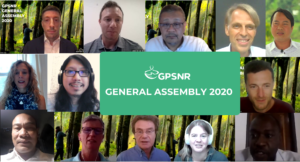
Highlights from General Assembly 2020

GPSNR’s second General Assembly was opened by Director Stefano Savi, who wished everyone a warm welcome to the virtual event. 

Next on the agenda was a message from Dr Gerd Müller, the German Federal Minister for Economic Cooperation and Development. The message was delivered via video by Sebastian Lesch, Head of Unit – International Agricultural Policy, Agriculture, Innovation, from the German Federal Ministry for Economic Cooperation and Development (BMZ). In his message, Dr Müller underscored BMZ’s support for GPSNR as a member and donor. He also urged all links in the natural rubber supply chain to continue to work towards comprehensive sustainability. 

Stefano also took the opportunity to acknowledge and thank BMZ and other donor partners such as Partnerships for Forests (P4F), a UK aid funded program, for their continued support, as well as WBCSD and the Tire Industry Project for their support in the Platform’s launch phase.

The opening remarks were delivered by Segsarn Trai-Ukos, Chair of the GPSNR Executive Committee. In his remarks, Segsarn summarized the achievements of the Platform over the past 18 months, recognising the dedication and effort put in by members of the Working Groups and the Executive Committee despite the global pandemic. “We have accomplished much in our first 18 months, and I’m excited to see our continued progress as we move forward.” he concluded.

After the opening remarks, Stefano gave a Secretariat Update, showing how GPSNR has grown since the first General Assembly. Membership has almost tripled, and engagement remains high. On the Communications front, GPSNR maintains a global outreach with its website, and has seen an increase in social media followers, along with mentions and features by numerous media outlets. Stefano also touched upon GPSNR’s financial status, which he described as healthy. 

The various Co-Chairs of the respective Working Groups then proceeded to give a brief update on what they have achieved so far, as well as the next steps. For a more detailed look at what comes next for our Working Groups, check out the article ‘The Road Ahead for GPSNR’s Working Groups’.

And finally, the moment everyone had been waiting for – the results of the voting. 

The verdict for each resolution was revealed one at a time, with the number of votes for, against and abstained, displayed for each resolution. All proposed resolutions were passed with overwhelming majorities.

Up next to be revealed were the results of the Executive Committee elections. These were announced by category, with the elected representatives giving a short speech after being introduced. For a look at GPSNR’s second Executive Committee, check out our article ‘A First Look at GPSNR’s second Executive Committee’.

Lastly, Co-Chair of the GPSNR Executive Committee, Amy Smith, delivered some heartfelt words as part of her closing remarks. “We all have the responsibility to drive sustainability in the global marketplace because our forests, wildlife, climate, communities and businesses depend on it,” she said. “And GPSNR has the ability to effect that transformational change.”

Read More »
News

GPSNR’s new Policy Framework drives members commitment to sustainable rubber production and sourcing

Singapore, 23 September 2020: On Wednesday, members of the Global Platform for Sustainable Natural Rubber (GPSNR) convened the annual General Assembly, which saw the approval of a members’ sustainability policy framework and the creation of a new membership category for smallholder producers of natural rubber.

The newly approved policy framework will help GPSNR member companies, who account for almost 50% of global natural rubber volume, to establish or update strong supply chain sustainability commitments through their natural rubber purchasing policies, on all aspects of sustainability: economic, environmental, and social. Modeled around the Platform’s 12 Principles of Sustainable Natural Rubber, the new policy framework sets out eight overarching themes that include commitments to legal compliance, community livelihoods, healthy, functioning ecosystems (including no deforestation), and respecting all human rights.

“This is a tremendous milestone for the Platform and for the natural rubber industry. In just under two years, GPSNR members developed and approved concrete policy commitments for companies to integrate into their sustainable natural rubber policies. Today, and despite the challenges we all faced during this global pandemic, GPSNR members send a signal to the world about their commitment to achieving a fair, equitable and environmentally sound future” said GPSNR Director Stefano Savi.

Around 85% of the world’s natural rubber is produced by smallholders. In order to transform a sector that is primarily reliant on smallholder producers, GPSNR is embracing smallholder inclusivity and a concept of shared responsibility through the establishment of a Shared Responsibility Working Group, which will identify how the responsibilities and costs of implementation can be equitably distributed across all stakeholder categories, with the understanding that smallholders should not carry the burden of a higher cost to implement sustainability activities in complying with the policy or implementation guidance to be developed.

“Smallholders are a crucial link in the natural rubber value chain, and they have a key role to play in driving awareness on-the-ground and setting the global agenda for sustainable natural rubber” remarked Director Savi.

This year, GPSNR welcomed 28 smallholder members from seven rubber-producing countries. These smallholders now constitute a newly approved standalone category and play an equal role in decision-making within GPSNR alongside the other four categories: producers, processors, and traders; tire manufacturers and other natural rubber makers/buyers; car manufacturers, other downstream users and financial institutions; and civil society.

GPSNR’s virtual General Assembly drew more than 120 attendees, including members of the Platform, partners and invited guests. In addition to voting on resolutions, GPSNR members also elected representatives to the 2020-2021 Executive Committee, which comprises representatives from each of the membership categories. And for the first time, three newly elected smallholder producers with diverse geographical backgrounds will participate in Executive Committee discussions and decision-making.

Read More »
News

Platform Updates for August

Baseline Reporting Requirements Pilot Testing

The Baseline Reporting Requirements, developed by the Policy Toolbox Working Group, is a document that indicates certain qualitative and quantitative sustainability data to be reported to the Secretariat. Back in June, we invited GPSNR members to volunteer to be part of a pilot testing for these Baseline Reporting Requirements. Since then, we have had 12 member companies coming forward to contribute their time and efforts to the exercise. These member companies consist of processors, tire makers and one car maker. As part of the pilot testing, each company was given access to a secure reporting platform where they could input the necessary reporting data.  

The Secretariat has conducted in-depth interviews with ten of the volunteer members so far. Following this, all feedback and data received will be reviewed, with the view to refine the Baseline Reporting Requirements in preparation for the formal launch in the near future.

Strategy and Objectives Working Group

The Working Group has commenced an extension of the study on Human Rights and Labour Rights’ Risk Mapping in the Global Natural Rubber Value Chains conducted by independent consultants James Griffiths & Associates Sàrl. This extension will see the consultant preparing an Annex to the main report that focuses on “equity issues” in the global natural rubber value chain. The objective of this extension is to understand current levels of equity (or inequity) along the natural rubber supply chain and identify where these could pose a threat to ecological, social and economic sustainability.

The report will also touch on how GPSNR’s current definition of “equity” compares to definitions used by others in related sectors or related risk assessments, providing suggested revisions to GPSNR’s definition where appropriate.

The Equity sub-Group published four Requests for Proposals (RFPs) in mid August, for studies on the Living Income Gap in the global natural rubber value chain. These initial studies will focus on collecting information and metrics from four countries: Côte d’Ivoire, Indonesia, Myanmar and Thailand. The deadline for submission of proposals is over. The Secretariat has received several proposals and will be evaluating them before presenting them to the sub-Working Group for consideration.

‘Traceability and Transparency’ Working Group

The two Requests for Proposals (RFPs) that the Working Group has been developing were also published in mid August. The deadline for submission of proposals was last week.

The first RFP is for a study that will assess the methodologies of existing traceability and transparency tools and how they match up against the traceability and transparency requirements of GPSNR members. 

The second RFP is for a study that will compare existing and currently under-development GIS databases and mapping tools along with their mapping approaches through research and interviews.

The Secretariat has received several proposals and is in the process of evaluating them. The Working Group will make the final decision thereafter.

Read More »
News

Getting to Know You: GPSNR’s First Smallholder International Call

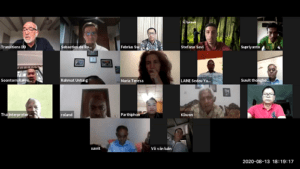
13 August 2020 – Kliwon is a natural rubber smallholder from Jambi Province, Indonesia, whose work with natural rubber started in the 80s. This evening, however, he’s doing something quite different from his usual rubber farming activities. Dressed in a light brown shirt of traditional Indonesian batik, Kliwon’s wiry frame and distinct head of white hair is visible on the computer and mobile phone screens of over 20 other natural rubber smallholders from around the world. He is one of the participants in GPSNR’s first international call for smallholder members to prepare them for the upcoming General Assembly.

At 68, Kliwon is one of the more experienced smallholder members in GPSNR. Today, he is being joined by other smallholders. Some, like H Nasoro Nie, a fresh-faced young lady from Vietnamese province of Dak Lak, are as young as 24, almost one third Kliwon’s age. Despite the difference in years, these smallholders all have something in common. They recognize the increasing importance of a sustainable global natural rubber value chain, and are actively participating in efforts to transform the industry.

It is the first time that the smallholders are meeting each other on an international level. Prior to this, they have been engaged in national level calls, making their presentations to their fellow natural rubber farmers from the same country. More than 20 natural rubber smallholders are present on the call – a handful are unable to join as they live in remote locations where access to the internet is not always a given. Unfortunately, the four smallholders from Myanmar are unable to connect due to heavy flooding in the areas where they live.

As with any meet-and-greet, communication is of paramount importance, and this includes being able to understand and be understood regardless of the language you speak. Here, five foreign languages come into play: Bahasa Indonesia, French, Myanmar, Thai and Vietnamese. Using Zoom’s in-built interpretation feature, the smallholders are able to access special audio channels within the meeting, where they can hear everything that is said, interpreted into their local language. Thanks to sustained funding from Partnerships for Forests (P4F), a UK aid funded program, GPSNR was able to engage interpreters to perform this simultaneous interpretation remotely. The funds were also channeled to the appointment of Transitions, a sustainable development consultancy agency, who is facilitating the international sessions with smallholders.

The call begins with opening remarks by GPSNR Director Stefano Savi, followed by a quick runthrough of the agenda and an overview of the global natural rubber market. 

Then, the smallholders start to introduce themselves. We hear from those from Indonesia, then Thailand, Vietnam, Côte d’Ivoire, Ghana and Brazil. They share about the size of their natural rubber plantations, their activities around rubber farming. Many of them are actively involved in the natural rubber scene in their country, from Baroan Roland, who is the Chairman of the Association of Natural Rubber Producers of Côte d’Ivoire (APROCANCI) to Thailand’s Soontorn Rakrong, who has been involved in initiating dialogue with the Thai government for policy development around fair tenure and land use rights. As one smallholder speaks in their native language, the interpreter interprets, in real-time, their words into English for the rest of the participants. The other interpreters, picking up the English interpretation, convey it to the other smallholders in their respective native languages.

All too soon, two hours fly by. There is just enough time for a short Question and Answer segment. At the end of the night, it’s clear that the smallholders are excited to have more opportunities to get to know each other and further discuss the issues around natural rubber that they all similarly share regardless of geography. —

The 2nd GPSNR Smallholder International Call will take place on 27 August 2020.

Read More »
News

General Assembly 2020 Information for Members

With less than a month to go to GPSNR’s General Assembly (GA) 2020, the Secretariat has published an Information Booklet for all GPSNR members, containing key details around the event, including proposed resolutions and a list of candidates running for the Executive Committee Elections. 

This year’s GA will be convened virtually on 23 September 2020. GPSNR Ordinary Members will go to the polls two weeks before the event, to cast their votes on proposed resolutions which include, amongst others, the formation of a new membership category for natural rubber smallholders, and a policy framework for natural rubber production and sourcing for GPSNR member companies. Each membership category will also elect representatives to fill upcoming vacancies in the Executive Committee.

Members may access the GA Info Booklet via the mailer that was sent out on Friday, 21 August 2020. Any members encountering issues with the mailer and links may reach out to the Secretariat (info@gpsnr.org) for assistance.

Read More »
News

GPSNR Policy Framework

The Policy Components were approved as part of a resolution for the endorsement of a GPSNR policy framework for natural rubber production and sourcing for ordinary member companies.

A booklet containing the Policy Components can be found here.

Read More »
News

Preparing Smallholders for their Role in GPSNR

Following the announcement that the GPSNR General Assembly (GA) will take place in September, the Smallholders Representation Group has quickly adapted its plans around onboarding smallholder members prior to the GA. With restrictions around COVID-19 necessitating a virtual format for the GA, likewise the sessions involving smallholders would follow suit.

The onboarding will be conducted via a series of national and international calls starting from late July until the end of September. There will be a total of 3 calls amongst smallholders at the national level, and another 3 calls at the international level. 

The first national calls have already been conducted for all seven countries: Brazil, Côte d’Ivoire, Ghana, Indonesia, Myanmar, Thailand and Vietnam. During this first call, the smallholders were introduced to the video conference platform with a quick tutorial on its functions. Next, they were given an update on developments and projects within GPSNR before learning more about the upcoming GA, including the onboarding schedule, the process for Executive Committee elections and an overview of the resolutions. 

The Country Champions are providing immense support through coordination of the calls, conducting the calls in the local language and in some cases reaching out to the smallholders individually to help them overcome the barriers of using new technology.

The Working Group will be engaging an experienced facilitator who will be able to foster relationships as well as trigger and encourage discussion amongst the smallholders  in an international and multilingual setting. A Request for Proposal was posted on the GPSNR website and social media channels, and the Secretariat is supporting the Working Group in finalizing the selection of proposals.  

The next national call will see smallholders sharing about themselves and their work in natural rubber production, an activity designed to assist them each in articulating their thoughts and vision as potential election candidates for the Executive Committee.

Read More »
News

GPSNR Policy Components: Demonstrating a Commitment to Sustainable Natural Rubber

The Member Consultation period for the proposed GPSNR Policy Components and Baseline Reporting Requirements closed on 3 July 2020. All comments received as part of the consultation exercise were discussed by the Policy Toolbox Working Group over several rounds of calls. There has also been healthy dialogue between various membership categories and the Working Group on the alignment of the Policy Components. 

Meanwhile, pilot testing for the Baseline Reporting Requirements is in progress, with 10 GPSNR member volunteers participating in the exercise. The Secretariat will be interviewing each of the volunteers in the coming weeks to gather feedback on their experience in submitting the Baseline Reporting Requirements data. More updates will be shared in due course.

At this stage, finalized versions of the Policy Components and related documents have been submitted by the Policy Toolbox Working Group to the Executive Committee for review and further discussion at the Executive Committee level. The Policy Components will then be brought to the GPSNR General Assembly for voting.

The formulation of Policy Components is a critical piece in fulfilling GPSNR’s vision of a fair, equitable and environmentally sound natural rubber value chain. 

All GPSNR members, at the time of joining the Platform, committed to this very vision, as well as 12 principles of sustainable natural rubber as defined by GPSNR. The Policy Components were developed to provide more specificity to the 12 Sustainable Natural Rubber Principles. Within the proposed Policy Components are key commitment details to no deforestation/ conversion/ degradation, upholding human rights, supply chain transparency and monitoring and reporting. 

If approved, the Policy Components will act as a clear and guiding framework for GPSNR company members to establish or update supply chain commitments through their natural rubber purchasing policies. 

Adopting a policy allows a company to signal that the issues covered by the policy are important to the company, and that resources and capacities will be dedicated to addressing the issues in order to comply with the policy. Policies, while illuminating the goals that a company is working towards, also enables these commitments to be channelled upstream to suppliers and downstream to buyers, with the potential to transform the entire supply chain.

Following the Policy Toolbox Working Group’s observation that common questions and concerns were raised by GPSNR members during the Members Consultation period, the Working Group has developed a supplementary FAQ document to provide detailed responses to address these concerns, in a bid to provide greater clarity on the Policy Components. These will be circulated to the GPSNR membership in August, along with all other proposed resolutions.

Read More »
News

Proposing National Strategies for Capacity Building

Following several rounds of further consultation amongst its members, the Capacity Building Working Group has finalized proposals for capacity building strategies for the four previously identified focus countries: Côte d’Ivoire, Indonesia, Myanmar and Thailand. Within each of these proposals, the Working Group has defined key strategic approaches to best allow for immediate engagement and implementation. 

Each proposal sets out the issues that have been identified as threatening the sustainable production of natural rubber, underlying causes for these issues, as well as a main objective. Within each proposal, the Working Group has suggested various strategic approaches, providing a rationale for chosen actions, and proposing impacts and resources required. While the Working Group recognizes that the issues do not represent the full list of challenges that stand in the way of national rubber production becoming sustainable, it highlights that the focus is on strategic approaches that allow for immediate engagement and implementation.

These proposals have been submitted to the Executive Committee for review and approval, while the Working Group concurrently addresses final concerns around the proposed strategy around a CO2 compensation scheme.   

Looking ahead, detailed implementation plans and timelines will have to be developed upon approval of the proposed strategies. These are issues that the Working Group will be exploring in the weeks to come.

Read More »
Scroll to Top