

Addressing the Impact of COVID-19 on Natural Rubber Smallholders

Share This Post

Many are calling these “unprecedented times”, and undeniably so. The COVID-19 pandemic has brought the world many firsts – from the closing of international borders to country-wide lockdowns and quarantines, and extreme social distancing measures applied to everyday activities such as exercising and grocery shopping. In this sense, many of the impacts of COVID-19 have been unprecedented. 

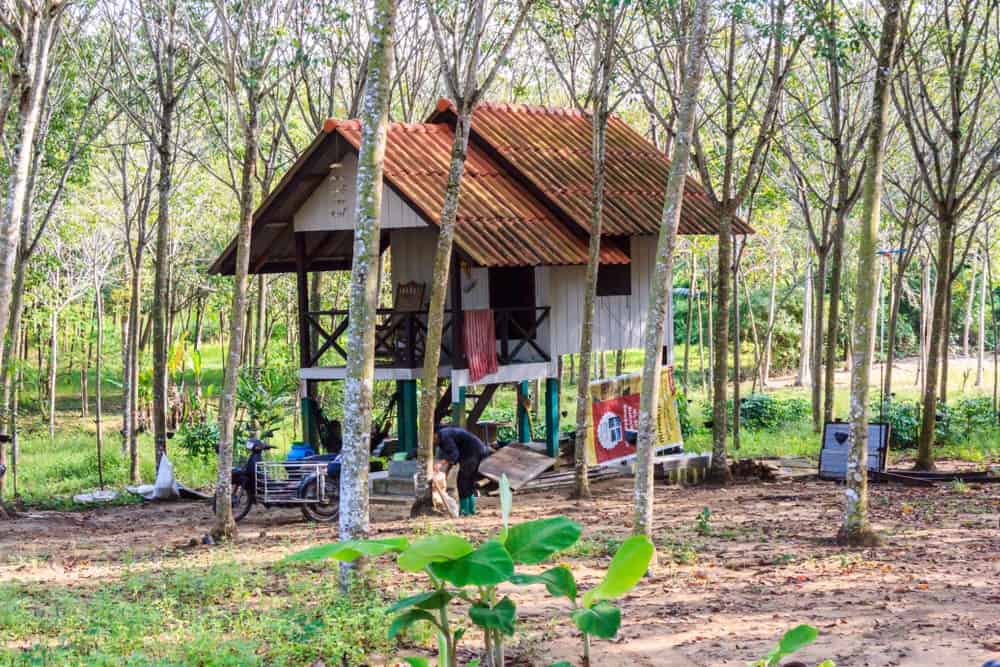
‘Unprecedented’, however, does not necessarily translate into ‘unexpected’. This is especially true for a significant link of the natural rubber value chain: the millions of smallholders and farm workers that supply the world with around 85% of its natural rubber. These smallholders, seasonal workers and their families are some of the most vulnerable people within the natural rubber sector, living in poverty and without adequate access to social services. Poor diversification of farmers’ incomes means that farmers are solely dependent on tapping rubber trees to make a living. When a pandemic occurs and global demand for natural rubber falls, it comes as no surprise that smallholders are the hardest hit. 

The Equity sub-Working Group was formed to look into the issue of equity in the natural rubber value chain and to define what GPSNR’s role will be in promoting equity along the supply chain. It is chaired by Robert Meyer (Halcyon Agri) and co-chaired by Hendrike Braun-Issa (GIZ). The sub-Group has, in its first few calls, recognized the importance of addressing the impact that COVID-19 has on the supply chain, in particular the natural rubber smallholders. In view of this, discussions have been centered around producing a set of short-term recommendations to counter the impact of the COVID-19 crisis. These recommendations are particularly aimed at supporting small-scale natural rubber farmers and their families.

The International Rubber Study Group (IRSG), represented by Secretary-General Salvatore Pinizzotto, is also participating in the sub-Group discussions to provide advice in the area of cooperation with Governments. 

Along with the short-term recommendations, the sub-Group is also looking at long-term efforts to address the underlying systemic issues, and are carrying out a study to inform the Platform on the subjects of Living Wage and Living Income.

Improving the capacity and livelihoods of smallholders is just one of the strategies undertaken by GPSNR. It is equally important for the other players in the industry to advance GPSNR’s vision of a sustainable natural rubber value chain. The Policy Toolbox Working Group continues to finalize the proposed member policy requirements and reporting requirements, with consultation from all member categories. Meanwhile, the Traceability and Transparency Working Group is focused on acquiring a better understanding of tools to achieve greater traceability and transparency within supply chains. Both groups will be aligning on key issues such as supply chain risk assessment.
More To Explore

News

GPSNR Working Groups Update: December 2020

Strategy and Objectives Working Group

The Working Group has received several bids in response to the Request for Proposal (RFP) for a study on environmental impacts, and risks, in the natural rubber value chain that was published in November. The Working Group has shortlisted three candidates and, as part of the evaluation process, will be conducting with these candidates in January 2021 before awarding the bid to the successful candidate. 

The Working Group is also starting on the Theory of Change document update, an exercise which will involve all other Working Groups. This will take place in January 2021. The Equity sub-Group is preparing summary documents for the living income studies and is planning to present the studies to GPSNR members in early 2021.

‘Policy Toolbox’ Working Group

The Working Group has finalized the Baseline Reporting Requirements and these will go to the Executive Committee for review. The Working Group is also developing a Request for Proposal for a consultant to work on the implementation guidance and reporting requirements.

‘Capacity Building’ Working Group

Since the last update, the Good Agricultural Practices (GAP) Task Force has had their first kickoff call and is beginning the work to identify and/or refine guiding principles for GAPs appropriate for the sustainable production of natural rubber.

The Working Group is also engaging the Executive Committee on their comments regarding the proposed capacity building strategies for four focus countries.

‘Traceability and Transparency’ Working Group

In early December, the Working Group onboarded smallholders from Indonesia and Côte d’Ivoire into the group, with the smallholders participating in their first meeting on 10 December. 

Aside from reviewing the Working Group’s Terms of Reference (ToR) and its objectives moving forward, the Working Group will also be starting to develop recommendations for members on traceability and transparency tools in early 2021.

Smallholder Representation Working Group

The revised ToR for the Working Group is undergoing a final review, following which it will be sent to the Executive Committee for approval. 

The Working Group has also formalised a document that defines the role and key tasks of a Country Champion. So far, Country Champions have been actively involved in organizing and arranging national calls, supporting smallholder engagement, and providing technical and linguistic assistance.   

As part of the Working Group’s revamp, it will be undergoing a membership refresh. Part of this will also involve smallholders being onboarded into the Working Group in 2021.  The Working Group is also looking into onboarding smallholders from Cambodia. Any GPSNR members who have operations in Cambodia or partners working in Cambodia who can help to identify potential smallholders for an onboarding workshop are welcome to reach out to the Working Group’s Co-Chairs, Ulrich Antoni and Julian Oram.

News

Smallholders Representation Working Group Update – October 2019

Several challenges of sustainable natural rubber production were brought up and discussed among rubber farmers and GPSNR members, but front and foremost was the issue of livelihoods and future of labour. After the field visit and 3 days workshop, the rubber farmers both in Indonesia and Thailand agreed that to solve such issues, smallholders should be put at the center of the solution.  They agreed that including smallholders’ representatives in the new governance model is the way forward to achieve this.  As for the criteria of the organizations, apart from having a personnel with extensive knowledge around rubber from cultivation, transportation to processing, the farmers also said that it is important that any representing organization should have a democratic governance. The smallholders also pointed out to a few farmers from different regions that could directly represent smallholders in GPSNR.  A few organization names were also proposed which will then be followed up by Smallholders representation working group to ensure active engagement for further collaboration.

“I am happy to hear that the downstream of natural rubber users like tire makers wish to establish a direct relationship with the upstream natural rubber producers like us. Personally I believe that sustainable supply chain will work only when every actor in the chain work together to find potential solutions together.” said one rubber smallholder in Thailand. Smallholders also emphasised on the importance for engagement to be long term if results are to be achieved.

The dates for the last 3 smallholder workshops have been confirmed and will be held in Brazil (20 – 21 Nov), Cote d’Ivoire (26 – 28 Nov) and Vietnam (16 – 18 Dec) respectively. The aim of the workshops is to gain a better understanding of smallholders, how smallholders can be meaningfully represented within GPSNR and to further explore the future of sustainable natural rubber production from a smallholders perspective at local level.

We will keep you posted on our progress in our upcoming newsletters. Stay tuned !

Scroll to Top