

Different Plans for Different Countries: Getting Capacity Building Right

Share This Post

What are the challenges that prevent the production of sustainable natural rubber in rubber-producing countries, and why do they exist?

What initiatives can be taken, and by whom, to effectively overcome these challenges?

How can GPSNR best support the natural rubber sector in becoming more sustainable?

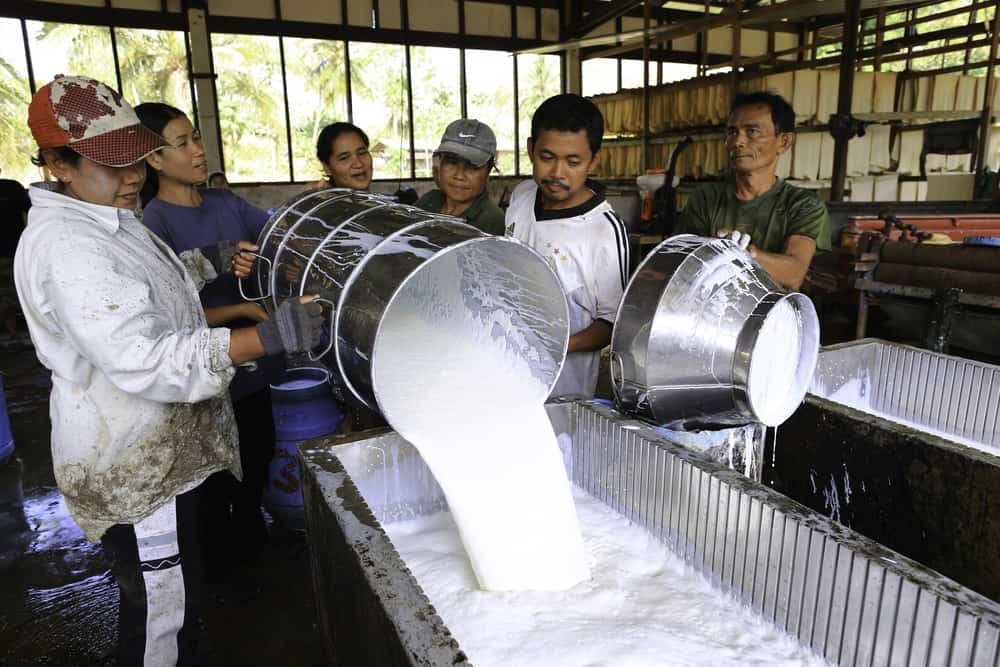
In setting out to find the answers to these questions, the Capacity Building Working Group has established four regional sub-Working Groups to focus on developing country-specific capacity building goals and strategies for the following countries: Indonesia, Thailand, Côte d’Ivoire and Myanmar. 

Since the first week of April, the regional sub-Groups have been holding weekly calls to get their respective projects started. Their first order of business? Identify the main challenges preventing the adoption of sustainable natural rubber practices within their countries of focus. Already, some commonalities have been revealed: the lack of implementation of best agricultural practices and poor diversification of farmers’ income. While challenges may be similar across the countries, proposed initiatives may differ due to a variety of factors such as technology and infrastructure, culture, degree of (or lack of) government support. The role that GPSNR can play in supporting these strategies would also depend on the particular conditions within each country.  

The sub-Groups are currently working on prioritizing the identified challenges to capacity building, and will be linking expected outcomes to the components of the GPSNR Desired State.

Roland Baroan is the first GPSNR smallholder member to take part in a Working Group discussion. A rubber farmer with 37 hectares of land and current President of the Association of Natural Rubber Producers of Côte d’Ivoire (APROCANCI), Roland lends his local expertise and knowledge to the Côte d’Ivoire regional sub-Group. Smallholders from the other countries of focus will also be involved via a consultation process.

While we hope to see more smallholders participating in and contributing to the work of GPSNR, we must also ensure that the right support systems are in place for them to effectively connect and communicate with all members. To this end, the Smallholders Representation Working Group is finetuning a proposed programme to onboard our smallholder members. The Working Group is also discussing a suitable funding mechanism for future smallholder participation in GPSNR.

By laying the groundwork for smallholder inclusivity, we can support the natural rubber value chain in its efforts to become more sustainable, and thus more resilient to global catastrophes.
More To Explore

News

GPSNR Working Groups Update: September 2024

Assurance Model Task Force: As we approach the General Assembly in 2024 where the Assurance Model will be put up for voting, the taskforce is meeting regularly to discuss comments and incorporate comments from the second public consultation which is currently ongoing. This consultation focusses on feedback on Assessment Checklist, Assurance Protocol and Remediation Protocol, and will be accepting comments till 27 September 2024.  You can access the documents here and provide feedback here


Smallholders Representation and Capacity Building (SCB) Working Group: To operationalise projects with the funds collected from the Shared Investment Mechanism, the working group is setting up a project management subgroup to help in reviewing and monitoring projects under the SIM. The TOR is available here, and interested members should email cheewei@gpsrn.org by 11 October 2024. 

Additionally, Smallholders from all GPSNR member countries have nominated representatives for two positions following internal discussions within their countries: the Shared Investment Panel and the Project Management Subgroup. The final international voting is anticipated to conclude by the end of September 2024.


Shared Responsibility Working Group: The nominations for voting seats for the Shared Investment Panel are now open. Five voting seats will be allocated to manufacturers, while four voting seats will be reserved for non-manufacturers. To ensure equitable representation, each eligible member category will nominate one member to take up a voting seat.  All GPSNR member categories are currenting discussing this internally and will choose a nominee by October 2024. Please reach out to your EC representative for more details if you are not already in the discussions. 

Please note that nominees should ideally not submit capacity-building proposals this year, as they would need to recuse themselves from voting. If a category is unable to reach an agreement on a nominee, all seats will be opened for self-nominations from any member, regardless of category. In this case, the Executive Committee will vote to decide the final allocation of seats, which may result in multiple seats being held by members of the same category. 

News

GPSNR Working Groups Update: May 2024

Strategy and Objectives Working Group: Feedback on the Assurance Model resolution has closed, and the finalised resolution has been released along with other voting materials. Public consultation on the documents up for discussion can be found here. Members will vote on the Assurance Model resolution at the Extraordinary General Assembly and are encouraged to participate in the in-person meetings to provide input on the Assurance Model content.

Smallholders Representation and Capacity Building (SCB) Working Group: The SCB Working Group meetings in April provided updates on the Thailand Agroforestry, Thailand GAP, and Indonesia GAP projects. The final workshop for the Income Diversification and Rubber Agroforestry Taskforce in Liberia was completed. Calls for capacity-building project proposals and funding were issued and interested members are welcome to contact cheewei@gpsnr.org.

The SCB WG will continue maintaining oversight of all ongoing projects. The Pre-EGA Smallholder Webinar will run from 8 PM to 10 PM SGT on 30 May 2024. The final report for Indonesia GAP (Phase 1) and the mid-term report for the Digital Knowledge Sharing Platform are in progress and will be distributed by the Secretariat once received. The Digital Knowledge Sharing Platform Task Force will meet with the project partner, Koltiva, for remediation planning and technical review meetings. The Income Diversification and Rubber Agroforestry Taskforce will finalise their reports and prepare for the final presentation.

Shared Responsibility Working Group: The Value Transfer Group has held subsequent meetings to discuss the value transfer proposal. The group continues to meet to refine the proposal, which will be presented at the in-person meetings in June.

Scroll to Top