Smallholders Representation Working Group Update – October 2019

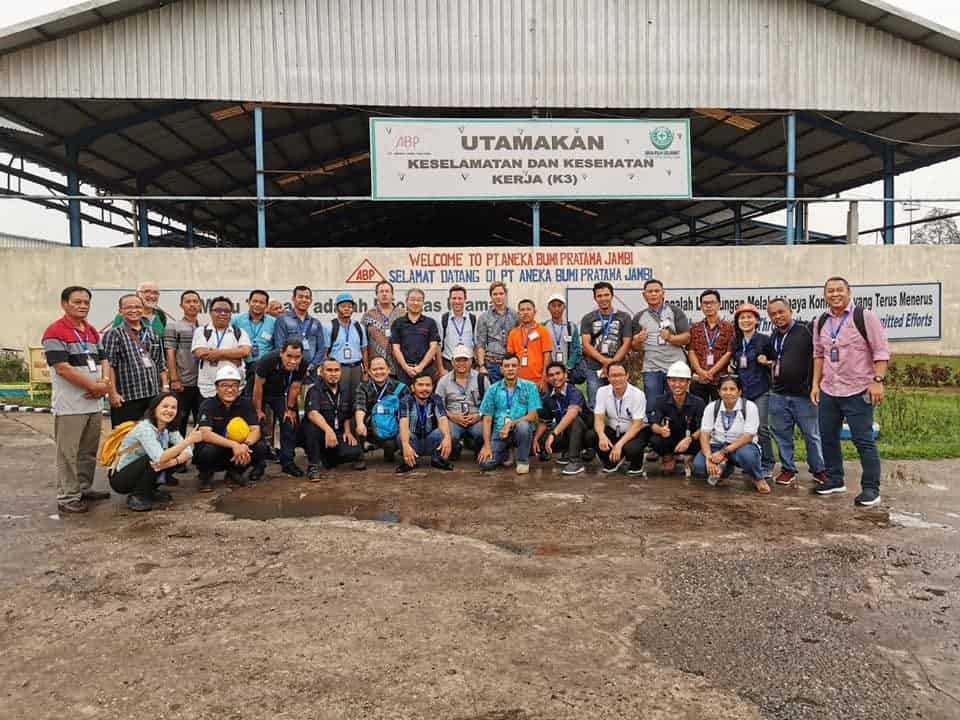
Two workshops have been successfully held. More than 20 rubber smallholders from all over Indonesia - Kalimantan, South Sumatra, West Sumatra and Jambi gathered during the workshop in October 7th - 9th. The workshop in Thailand just finished with a fruitful discussion on collaboration opportunities between rubber smallholders and GPSNR.

Share This Post

Several challenges of sustainable natural rubber production were brought up and discussed among rubber farmers and GPSNR members, but front and foremost was the issue of livelihoods and future of labour. After the field visit and 3 days workshop, the rubber farmers both in Indonesia and Thailand agreed that to solve such issues, smallholders should be put at the center of the solution.  They agreed that including smallholders’ representatives in the new governance model is the way forward to achieve this.  As for the criteria of the organizations, apart from having a personnel with extensive knowledge around rubber from cultivation, transportation to processing, the farmers also said that it is important that any representing organization should have a democratic governance. The smallholders also pointed out to a few farmers from different regions that could directly represent smallholders in GPSNR.  A few organization names were also proposed which will then be followed up by Smallholders representation working group to ensure active engagement for further collaboration.

“I am happy to hear that the downstream of natural rubber users like tire makers wish to establish a direct relationship with the upstream natural rubber producers like us. Personally I believe that sustainable supply chain will work only when every actor in the chain work together to find potential solutions together.” said one rubber smallholder in Thailand. Smallholders also emphasised on the importance for engagement to be long term if results are to be achieved.

The dates for the last 3 smallholder workshops have been confirmed and will be held in Brazil (20 – 21 Nov), Cote d’Ivoire (26 – 28 Nov) and Vietnam (16 – 18 Dec) respectively. The aim of the workshops is to gain a better understanding of smallholders, how smallholders can be meaningfully represented within GPSNR and to further explore the future of sustainable natural rubber production from a smallholders perspective at local level.

We will keep you posted on our progress in our upcoming newsletters. Stay tuned !

More To Explore

News

Updates from the Working Groups

Strategy and Objectives Working Group

The study on Human Rights and Labour Rights’ Risk Mapping in the Global Natural Rubber Value Chains conducted by independent consultants James Griffiths & Associates Sàrl has been submitted to the Working Group. The full study will be published on the GPSNR website shortly, and the document will be open to stakeholders for comments.

Meanwhile, the Strategy and Objectives Working Group has started to engage with the rest of the Working Groups on aligning with the Theory of Change, and developing platform KPIs. 

The Equity sub-Group has collected comments from the Strategy and Objectives Working Group on the proposed definition of equity. The sub-Group is also exploring engaging consultant James Griffiths to conduct research into equity risks along the natural rubber supply chain, with the plan to have the findings of this study feed into the definition. The sub-Group is currently in the process of establishing an operational plan to define the various workstreams, processes, timelines, and  responsibilities for the Living Income study. The first phase of the study will involve collecting existing benchmark data and doing desk research on national poverty lines, minimum wages, and other relevant information. For greater alignment with the Capacity Building Working Group’s scope, the Equity sub-Group has decided to focus on the same four countries: Côte d’Ivoire, Indonesia, Myanmar and Thailand. 

‘Policy Toolbox’ Working Group

The proposed Policy Components and Baseline Reporting Requirements are open for member consultation until 3 July 2020. Find out more here

‘Capacity Building’ Working Group

The regional sub-Groups described the various findings and recommendations in a presentation to the larger Working Group at the end of May. Eight initiatives were proposed to be shared across the four focus countries, each corresponding to a critical issue identified through stakeholder interviews. These eight initiatives are: access to pure certified (re)planting material, promote the CO2 compensation scheme, promote value rubber wood, improve access to finance, disease fighting, dissemination of Good Agricultural Practices (GAP), income diversification, and improve reach and quality of extension services. Depending on the initiatives recommended for each country, three priority actions have been suggested, forming the basis for a 3-year programme.

The sub-Group for Thailand organized a call with some of Thai smallholder members to seek their opinion on the proposed initiatives. The discussion proved to be a fruitful one, with the smallholders providing advice and suggesting alternative initiatives for the sub-Group to consider. The subgroup for Côte d’Ivoire, which has a smallholder member who is a representative from a local producer association in participation, has also contextualized the proposed initiatives to the local conditions of smallholders and industrial plantations.

The other sub-Groups are also planning to get smallholder members’ input on the capacity building initiatives for their respective countries of focus.

‘Traceability and Transparency’ Working Group

The Working Group has started discussions on risk assessment, and will be linking up with the Policy Toolbox Working Group as well as consultant James Griffiths on the results of the social risks study.

The terms of reference for the two pilot proposals have been finalized after several rounds of additional revision. The documents will be submitted soon to the Executive Committee. 

Smallholders Representation Working Group

The Working Group continues to plan and prepare for the smallholders programme prior to the General Assembly. In particular, terms of reference are being drafted for a professional facilitator to manage the smallholder workshop sessions for the pre-GA programme.

Rubber, representation and reform – What smallholders bring to the sustainability conversation

By Febrius Wibisana, GPSNR Executive Committee Member & Co-Chair, GPSNR Smallholder Inclusion Working Group

For those who do not know me yet, my name is Febrius Wibisana and I have been a rubber smallholder in Indonesia for over 25 years. At GPSNR, I represent the smallholder category at the Executive Committee level. I am also the co-chair of the Smallholders Representation working group.

In June 2022, I was invited by the Partnership for Forests or P4F to the P4F Forum with their partners and projects from across the world. They wanted me to speak about my experience at GPSNR on smallholder inclusion in the sustainability conversation in natural rubber. The experience gave me the opportunity to put some thought into our work over the last three years – the challenges, the successes and carving the path forward.

I am writing this to share some of those reflections with my fellow GPSNR members.

Reflection 1: It is impossible to have holistic sustainability solutions in natural rubber without smallholder participation
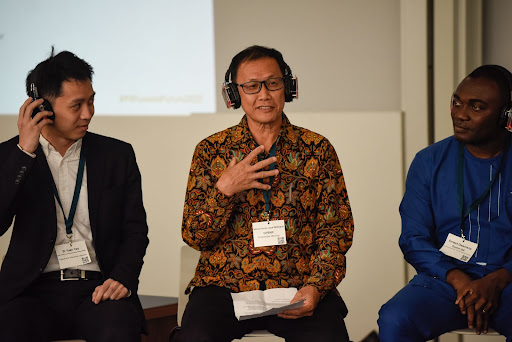
GPSNR Impacts & Assurance Associate Si Yuan and myself at the P4F Forum in London

We live in a world where 6 million smallholder farmers produce almost 90% of the world’s natural rubber. In such a world, any conversation on change in this supply chain has to include smallholders. 

In its second General Assembly in 2020, GPSNR members passed a resolution to include smallholders as a category within the membership. We started with 28 odd smallholders, including myself, engaging in conversations on sustainability, capacity building and the meaning of true inclusion and having the smallholder voice heard at various decision making levels. Today, I represent over 130 smallholders across 10 countries in the GPSNR Executive Committee. 

To bring smallholders into each conversation, we work closely with country level champions and local government entities for outreach and engagement. Interpretation facilities and key documents being translated to smallholder languages are some small but significant steps we take at GPSNR to further facilitate smallholder participation.

Reflection 2: Membership does not guarantee active participation

While many of our smallholder members are actively engaged in core decision making and at the working group level, many find it difficult to do so. The digital divide, language barriers and a skewed equation of structural power could be some key reasons for this. Some smallholders simply may not have the time for it. 

Yet, as we embark on transforming the entire supply chain, we need active smallholder voices to join and remain in the GPSNR fold. To this end, the smallholder representation working group has put forward a resolution with proposed changes in smallholder membership structure, where smallholders will have to participate in the General Assembly to take up ordinary membership. All others will be classified as affiliate members by default. You can take a look at the resolution here

Reflection 3: Making a supply chain sustainable requires thorough capacity building at all levels

There are more than 2 million smallholders in Indonesia. Yet, despite being the largest producer, it has the lowest productivity in the world. This is because of diseases and poor planting materials. Many other rubber producing nations face similar problems. 

If we are to make this supply chain sustainable, equitable and fair, and achieve the desired state that the GPSNR Theory of Change spells out, smallholders have to be equipped with the skills and resources. The capacity building working group has already kicked-off the first such projects in Indonesia with SNV-Proforest and Koltiva. GPSNR has also received funding pledges from Renault, Goodyear, Michelin and Pirelli for other projects, but scaling them requires more. Funding information is available here for any one in the natural rubber industry. 

Capacity building will also equip smallholders to participate further in GPSNR decision making and other processes. 

As we move forward, I am energised by the progress GPSNR has made so far on smallholder participation. In our attempt to move towards more active engagement, we need the support of all our members. Our ability to meet in person will further strengthen this support, and I look forward to working with all of you to transform the supply chain. 

Scroll to Top