From Strategy to Implementation: Next Steps for Capacity Building

Share This Post

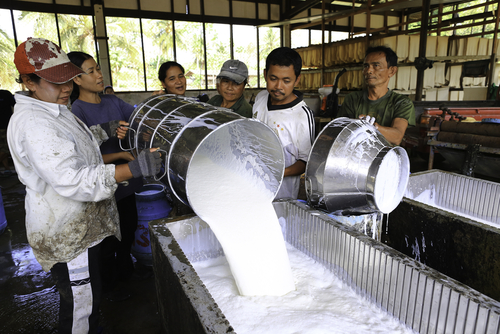
One of the key strategies identified by GPSNR to achieve our vision of a fair, equitable and environmentally sound natural rubber value chain is to ensure that there is capacity amongst smallholders and industrial plantations to adopt best practices in natural rubber production.  

In 2020, the Capacity Building Working Group, through various stakeholder interviews and Working Group discussions, proposed a set of country-specific capacity building activities for four countries as a start: Côte d’Ivoire, Indonesia, Myanmar and Thailand. In developing these strategies, the Working Group sought to first identify threats to the sustainable production of natural rubber within the different local contexts, as well as the underlying causes for these threats. From this initial research, the working group developed proposed capacity building actions, along with main objectives and rationales for each chosen action. The approach adopted by the Working Group in designing these actions is to allow for immediate engagement and implementation on the ground. 

Following the Executive Committee’s endorsement of the Working Group’s capacity building proposals, the Working Group will be conducting a sharing session for all GPSNR members, during which more details about each national capacity building strategy will be presented.

Recruiting Members to Capacity Building National Sub-Groups

Now that the capacity building strategies are in place, the Working Group is inviting interested GPSNR members to join the soon-to-be-created National Sub-Groups that will be mandated to oversee, guide and implement the national capacity building strategies and to promote GPSNR policies and initiatives.  

The development of the National Sub-Groups recognizes existing local capacity building initiatives in the rubber sector and their independence of GPSNR and aims to cooperate with local efforts and stakeholders to achieve mutually agreed outcomes.

More To Explore

News

GPSNR Working Groups Update: November 2023

Strategy and Objectives Working Group: Following the approval of the Assurance Model resolution (5b), the Assurance Model Task Force is working with ASI in developing the Assurance Model including aligning with current normative documents, engaging members for consultation, and pilot testing.

In parallel, the Risk Subgroup hosted a webinar focused on traceability and shared findings from their traceability pilot projects. 

The Risk subgroup has decided to temporarily pause its activities until December, allowing time for ASI to complete the Assurance Model alignment. ASI has commenced its task of aligning key GPSNR documents. These documents aim to lay a solid foundation for the complete Assurance Model. Upon the completion of this alignment process, the fully drafted Assurance Model will be presented to the members for consideration and approval.

Smallholders Representation and Capacity Building (SCB) Working Group: The Indonesian subgroup presented their quarterly reports for two GAP Coaching projects and one Disease Fighting project on October 27, 2023. In addition, GPSNR secured a joint collaboration letter with RAOT and invited all member companies to participate in the Thailand GAP coaching project in Bueng Kan and Chiang Rai provinces. The Thailand agroforestry project also received additional funding for further sub-projects.

The Digital Knowledge Sharing Platform (KSP) task force conducted a pilot user acceptance test and initiated socialisation sessions and training for smallholder farmers in Indonesia. They also announced a Request for Proposal (RFP) for KSP’s third phase, focusing on content development, with submissions due by November 24, 2023.

Rubber agroforestry workshops were held in Côte d’Ivoire from October 25-27, 2023, and information on capacity-building projects open for funding was shared with all members. The SCB WG will continue to oversee all ongoing projects, with efforts to plan logistics for smallholder representatives attending events in Thailand and France. The Thailand agroforestry subgroup is working on a supplemental agreement for additional projects.

Members interested in the Thailand GAP project in Chiang Rai and Bueng Kan are encouraged to contact cheewei@gpsnr.org for more information. The KSP task force plans to continue socialisation sessions and training in Indonesia and Thailand, aiming for the final user acceptance test by the end of November 2023. By the end of November, the task force will begin evaluating proposals for KSP’s third phase.

The Income Diversification and Rubber Agroforestry task force is preparing for its second Indonesian agroforestry workshop of 2023, scheduled for November 22-24. Additionally, a webinar is planned for November 30, 2023, to present findings from the HCSA-HCVN field trial.

Policy Toolbox Working Group: On November 22nd, WG1 met to discuss the  quantification of the RR, data aggregation methodologies, and updates relating to the RR in the context of the Assurance Model. During the meeting, operational timelines and survey to gather information were set up.

Currently, Agridence is developing the digital platform, and the Secretariat plans to provide updates on the RR to ensure the platform is operational before the 2024 reporting cycle.

WG1 is also working on revising the Code of Conduct to include non-conformance measures for failing to update the Reporting Requirements, in line with the non-conformance measures approved by the Executive Committee in 2022.

Lastly, following the approval of the revised reporting requirements, the WG will proceed to develop the disclosure requirements for the Year 3 reporting cycle.

Shared Responsibility Working Group: The Assurance Model will be meeting with ASI to provide feedback on the proposed Assurance Model under development. Additionally, the Working Group has an open co-chair seat and is calling for volunteers to fill this position.


News

Highlights from General Assembly 2020

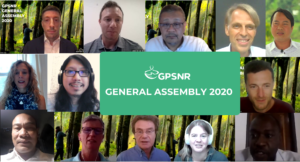
GPSNR’s second General Assembly was opened by Director Stefano Savi, who wished everyone a warm welcome to the virtual event. 

Next on the agenda was a message from Dr Gerd Müller, the German Federal Minister for Economic Cooperation and Development. The message was delivered via video by Sebastian Lesch, Head of Unit – International Agricultural Policy, Agriculture, Innovation, from the German Federal Ministry for Economic Cooperation and Development (BMZ). In his message, Dr Müller underscored BMZ’s support for GPSNR as a member and donor. He also urged all links in the natural rubber supply chain to continue to work towards comprehensive sustainability. 

Stefano also took the opportunity to acknowledge and thank BMZ and other donor partners such as Partnerships for Forests (P4F), a UK aid funded program, for their continued support, as well as WBCSD and the Tire Industry Project for their support in the Platform’s launch phase.

The opening remarks were delivered by Segsarn Trai-Ukos, Chair of the GPSNR Executive Committee. In his remarks, Segsarn summarized the achievements of the Platform over the past 18 months, recognising the dedication and effort put in by members of the Working Groups and the Executive Committee despite the global pandemic. “We have accomplished much in our first 18 months, and I’m excited to see our continued progress as we move forward.” he concluded.

After the opening remarks, Stefano gave a Secretariat Update, showing how GPSNR has grown since the first General Assembly. Membership has almost tripled, and engagement remains high. On the Communications front, GPSNR maintains a global outreach with its website, and has seen an increase in social media followers, along with mentions and features by numerous media outlets. Stefano also touched upon GPSNR’s financial status, which he described as healthy. 

The various Co-Chairs of the respective Working Groups then proceeded to give a brief update on what they have achieved so far, as well as the next steps. For a more detailed look at what comes next for our Working Groups, check out the article ‘The Road Ahead for GPSNR’s Working Groups’.

And finally, the moment everyone had been waiting for – the results of the voting. 

The verdict for each resolution was revealed one at a time, with the number of votes for, against and abstained, displayed for each resolution. All proposed resolutions were passed with overwhelming majorities.

Up next to be revealed were the results of the Executive Committee elections. These were announced by category, with the elected representatives giving a short speech after being introduced. For a look at GPSNR’s second Executive Committee, check out our article ‘A First Look at GPSNR’s second Executive Committee’.

Lastly, Co-Chair of the GPSNR Executive Committee, Amy Smith, delivered some heartfelt words as part of her closing remarks. “We all have the responsibility to drive sustainability in the global marketplace because our forests, wildlife, climate, communities and businesses depend on it,” she said. “And GPSNR has the ability to effect that transformational change.”

Scroll to Top