
In favour of disagreement

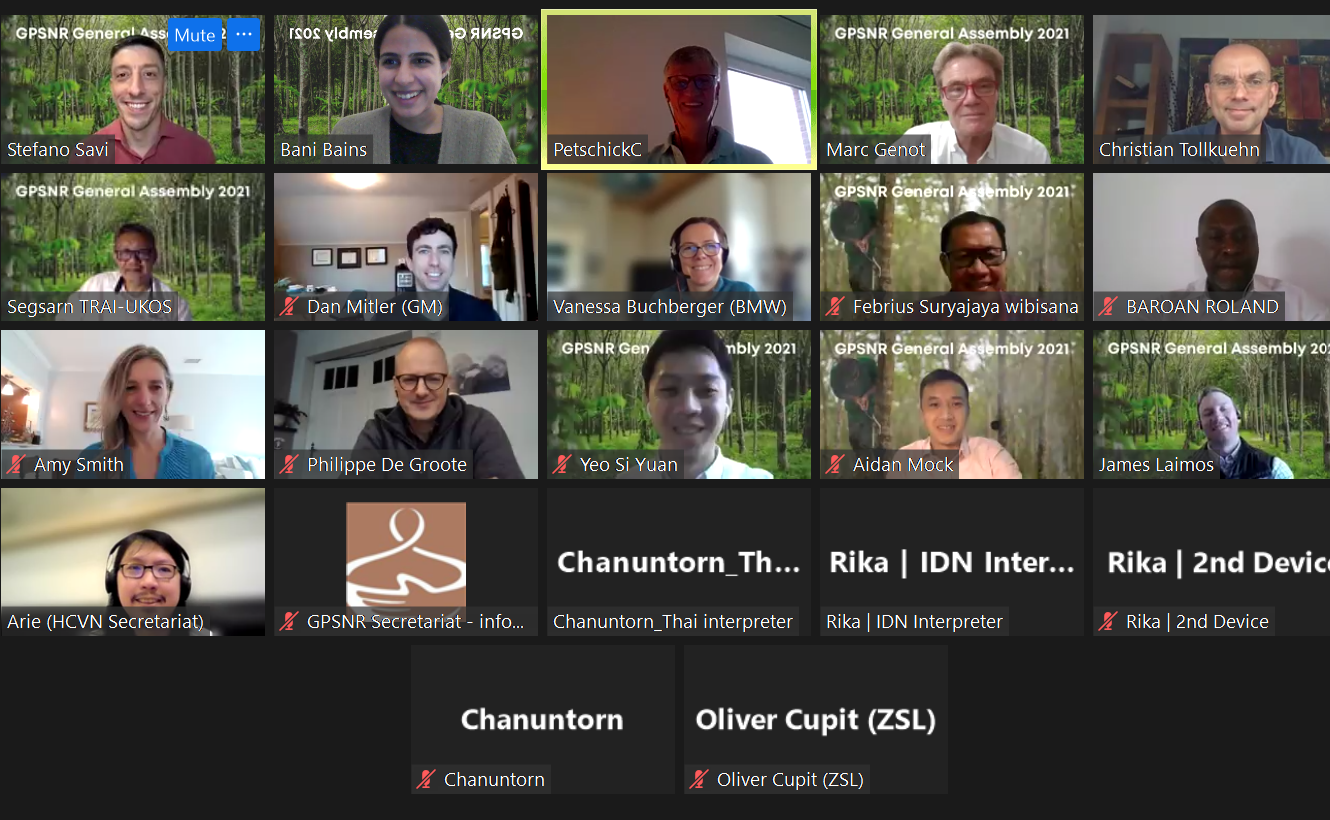
Image 1: GPSNR’s Executive Committee at the latest General Assembly

Share This Post

Why conflict is crucial for meaningful sustainability initiatives

Aidan Mock, Impacts and Assurance Manager

Since joining the Global Platform for Sustainable Natural Rubber in July 2020, I have spent about 3,000 hours working for the organization. Malcolm Gladwell popularized the controversial idea that it takes 10,000 hours to become an expert at something which means that I still have a long way to go. Reflecting on these two numbers at the end of last year, I started to wonder how much time it takes GPSNR as a whole to demonstrate progress. I was most curious about our brand new Reporting Requirements (RRs) which were approved at the General Assembly last year. The RRs will ensure that all GPSNR members have standardised sustainability data which can be tracked, monitored, and analysed to meet our goals on sustainability and equity. Needless to say, this is a crucial piece of work for the global rubber industry.

 In June 2021, ZSL conducted 1.5-hour long focus group calls with each stakeholder category within GPSNR on the RRs. On average a total of 72 work hours were spent on this segment alone, with 12 people attending each of the four calls (12 x 4 x 1.5). In July, the Working Group convened its first meeting to discuss the proposed RRs in detail,  resulting in another 43.5 work hours spent on the RRs. 

The truly difficult months were October and November, where members met almost daily. An average of 19 people joined each of the 22 calls, which lasted about 1 hour and 45 minutes each time. In these two months, members spent a staggering 750 work hours discussing and negotiating the questions. 

By the time Reporting Requirements were sent out for General Assembly vote, GPSNR members had spent more than a thousand hours discussing the RRs at the working group level. The actual number is likely higher as I didn’t include the time spent in category-specific meetings, executive committee discussions, and meetings that ran over their intended time limit. The time taken to complete the RRs eventually amounted to a third of the time that I’ve been working at GPSNR.

Image 2: A screenshot of the tabulation on hours spent discussing the RRs

With members all across the world, these meetings meant sacrificing hundreds of hours of family dinners, early morning sleep, and mid-afternoon siestas! Yet members made the choice to show up for meetings day-after-day, demonstrating remarkable commitment to the mission of GPSNR.

From an outside perspective, one thousand work hours of meetings were needed to create 100 questions, which means we had a progress rate of 10 work hours per question! Sceptics of GPSNR would be quick to point out this “slow progress”, and I will admit that there are faster ways to formulate a hundred questions. However, if you want to get more than 100 members across different stakeholder categories to agree on reporting questions for the entire industry, this is the fastest that it can go. I observed something similar at a grand scale at the COP 26 negotiations in Glasgow in October. Parties spent hours discussing the choice of wording in key phrases and some even used valuable time to simply express disagreement with the text. 

If we are to achieve multi-stakeholder progress, we must adopt the same philosophy and spend time listening to the concerns and disagreements of all parties before we collaboratively develop  solutions to address these concerns. This process of listening to each other and finding solutions will take time, maybe even a thousand hours, but this is the fastest and most thorough way to do it while still honouring the multi-stakeholder principles of the platform.

One of our greatest strengths at GPSNR is that members can disagree with each other openly. I believe that disagreement and healthy negotiation is a sign of a diverse membership that trusts each other to listen and address their concerns. Being able to work towards solutions across “category lines” is also a sign that GPSNR is maturing as we approach our 10,000 work hours of collective practice. I hope we can carry forward this momentum and growth into the new year. I hope we continue to treat the disagreements that will inevitably arise as opportunities to listen, demonstrate empathy, and build trust. I hope we come to see the multi-stakeholder enterprise as one that is conflicting by design and slow by default.

This year, we will work to define the Implementation Guidance and the Transparency Roadmap for the reporting requirements and I expect these topics to involve extensive discussions and quite possibly extensive disagreement. For members already part of this work, I look forward to speaking with you on our calls. If you are not yet part of these discussions but feel  excited by the idea , feel free to write to us and we will ensure that you are included in the meetings that are soon to follow.

See you on a Zoom call soon!
More To Explore

News

GPSNR Working Groups Update: September 2021

What an interesting month has passed us by! As we step closer to the General Assembly of 2021, here’s what the working groups have on their plate:

Strategy and Objectives Working Group

After conducting 2 sessions of the Theory of Change (ToC) Workshop this month, the Strategy and Objectives working group will soon finalise the ToC document and potentially identify new strategies for GPSNR.

Smallholder Representation Working Group

After two successful smallholder onboarding workshops for smallholders from Indonesia and Cambodia, the working group is formally incorporating new smallholders from the two countries as GPSNR members. The group is also conducting onboarding workshops for India at the end of September and Sri Lanka and Thailand in October. 

At the same time, they are developing workshops to onboard more smallholders from Vietnam, Thailand, Ivory Coast, and Ghana and organizing the third Smallholders International Call next month. 

Policy Toolbox Working Group

As the General Assembly of 2021 comes closer, the group is continuing to develop the Implementation Guidance, Reporting Requirements and Compliance Panel Guidance. 

Capacity Building Working Group

As they develop key deliverables and milestones for Thailand National Subgroup and the Agroforestry Task Force, the Capacity Building Working Group is also busy with the Good Agricultural Practices (GAP), a system to monitor impacts of capacity building activities and implementation plans for Ivory Coast and Indonesia.

Traceability and Transparency Working Group

This working group has developed a Traceability Benchmark to support member uptake of traceability and provided draft input and received feedback for Implementation Guidance on traceability. They are now working on finalising the draft and conducting member consultations on the Benchmark. 

Shared Responsibility Working Group

The group is currently exploring and discussing detailed  solutions to identified root causes for each focus area of shared responsibility. It is also drafting activities and a framework for Shared Responsibility for integration into other processes such as the Implementation Guidance.

News

GPSNR Working Groups Update: February 2021

Strategy and Objectives Working Group

Further to the receipt of several submissions in response to the Environmental Risk Study request for Proposals, the Strategy and Objectives Working Group has now  selected the Proforest team, together with consultant Liza Murphy, to conduct the environmental risk study. The team will be reaching out to GPSNR members to have initial scoping conversations in support of the study.

The Equity Sub-Working Group has drafted a summary for the Living Income studies undertaken in Thailand and Indonesia next year. Pending approval from the Sub-Working Group and S&O Working Group Members, the summary will be released to all GPSNR members and a webinar will be held to present the responses.

Representatives from each of the platform’s other Working Groups have started to draft their Working Group’s Theory of Change. At the end of the month, the Strategy and Objectives Working Group will consolidate this information and develop a platform-wide Theory of Change.

‘Policy Toolbox’ Working Group

The Policy Toolbox Working group has received initial proposals for the development of Implementation Guidance request for proposals (RFP) and will be meeting to discuss and select a proposal.

The Working Group will be setting up focus groups for category members to participate in the development of the implementation guidance. The call to join will be in the newsletter and also in the other article to be published.

In the next weeks, the Working Group will also be developing a new RFP for a consultant to help refine the reporting requirements based on the BRR pilot done last year. The consultant will work to bring the questions into alignment with other reporting systems (e.g. CDP and Ecovadis) and ensure that the questions are phrased in a suitable manner.

‘Capacity Building’ Working Group

The Capacity Building Working Group conducted a webinar to share about the national CB strategies and recruit members to the national sub-groups.

‘Traceability and Transparency’ Working Group

The ‘Traceability and Transparency’ Working Group has now set up 3 sub-groups that will focus on different tasks: refining the WG theory of change, developing a definition of traceability and minimum acceptable levels of traceability, and developing a data collection process with Policy Toolbox Working Group members.

Smallholder Representation Working Group

The Smallholder Representation Working Group has completed logistical organization of the Smallholders caucus call, that will happen tomorrow, 25th February. The caucus call will allow sharing and collaboration among smallholders across national lines.

Scroll to Top