

GPSNR Working Groups Update: December 2020

Share This Post

Strategy and Objectives Working Group

The Working Group has received several bids in response to the Request for Proposal (RFP) for a study on environmental impacts, and risks, in the natural rubber value chain that was published in November. The Working Group has shortlisted three candidates and, as part of the evaluation process, will be conducting with these candidates in January 2021 before awarding the bid to the successful candidate. 

The Working Group is also starting on the Theory of Change document update, an exercise which will involve all other Working Groups. This will take place in January 2021. The Equity sub-Group is preparing summary documents for the living income studies and is planning to present the studies to GPSNR members in early 2021.

‘Policy Toolbox’ Working Group

The Working Group has finalized the Baseline Reporting Requirements and these will go to the Executive Committee for review. The Working Group is also developing a Request for Proposal for a consultant to work on the implementation guidance and reporting requirements.

‘Capacity Building’ Working Group

Since the last update, the Good Agricultural Practices (GAP) Task Force has had their first kickoff call and is beginning the work to identify and/or refine guiding principles for GAPs appropriate for the sustainable production of natural rubber.

The Working Group is also engaging the Executive Committee on their comments regarding the proposed capacity building strategies for four focus countries.

‘Traceability and Transparency’ Working Group

In early December, the Working Group onboarded smallholders from Indonesia and Côte d’Ivoire into the group, with the smallholders participating in their first meeting on 10 December. 

Aside from reviewing the Working Group’s Terms of Reference (ToR) and its objectives moving forward, the Working Group will also be starting to develop recommendations for members on traceability and transparency tools in early 2021.

Smallholder Representation Working Group

The revised ToR for the Working Group is undergoing a final review, following which it will be sent to the Executive Committee for approval. 

The Working Group has also formalised a document that defines the role and key tasks of a Country Champion. So far, Country Champions have been actively involved in organizing and arranging national calls, supporting smallholder engagement, and providing technical and linguistic assistance.   

As part of the Working Group’s revamp, it will be undergoing a membership refresh. Part of this will also involve smallholders being onboarded into the Working Group in 2021.  The Working Group is also looking into onboarding smallholders from Cambodia. Any GPSNR members who have operations in Cambodia or partners working in Cambodia who can help to identify potential smallholders for an onboarding workshop are welcome to reach out to the Working Group’s Co-Chairs, Ulrich Antoni and Julian Oram.
More To Explore

News

Stakeholders launch Global Platform for Sustainable Natural Rubber

Stakeholders including tire manufacturers, other rubber users, suppliers and processors, vehicle makers and NGOs, contributed to the development of the Global Platform for Sustainable Natural Rubber (GPSNR). This included alignment on a wide-reaching set of priorities for the natural rubber supply chain. The GPSNR will work to harmonize standards to improve respect for human rights, prevent land-grabbing and deforestation, protect biodiversity and water resources, improve yields, and increase supply chain transparency and traceability.

Development of the platform was initiated by the CEOs of the World Business Council for Sustainable Development (WBCSD) Tire Industry Project (TIP) in November 2017 and has since been led by a Working Group of TIP member companies. TIP members continue to work to ensure the sustainable production and supply of natural rubber, and in joining the platform they commit to be able to demonstrate the integration of principles for sustainable natural rubber into their purchasing and/or operational activities. The GPSNR is open to applications for membership from other natural rubber stakeholders.

Speaking at the launch Peter Bakker, President and CEO of WBCSD said “The tire industry consumes around 70 percent of natural rubber and demand is growing. This throws into sharp relief the social, economic and environmental opportunities associated with this important commodity. The GPSNR will consider the people, communities and natural resources touched by natural rubber production and supply – they all stand to benefit from the creation and adoption of sustainable and responsible practices.”

The ceremonial launch included the signing of a GPSNR Member Statement by the 11 members of TIP, and Ford Motor Company, Halcyon Agri Corporation Limited, ITOCHU Corporation, Kirana Megatara, SIPEF, The Socfin Group, and Southland Global PTE Ltd.

Bakker praised the efforts of founding and prospective GPSNR members in bringing the platform to launch, adding “This spirit of collaboration will define the actions of the platform going forward – there is strength in diversity, and the various interests and expertise within the GPSNR can deliver a truly sustainable natural rubber supply chain.”

The WBCSD’s TIP spearheaded development of the GPSNR and will financially support the platform during start-up and its first two years of operation – a level of support necessary to ensure basic operations while a paying membership base is established. Despite industry backing the GPSNR will maintain its independence, underlined Anne-Cécile Remont, Director WBCSD TIP– “Once officially launched, the platform will be independently managed, with governance and decision making overseen by a representative group of stakeholders.”

Building upon past work, in developing the platform, a review of comparable supply chain sustainability initiatives, including natural rubber, revealed that meaningful change was best achieved through the mainstreaming of good practices and this was central to discussions around the GPSNR’s governance structure, explained Remont. “Successful mainstreaming requires actionable commitment from the entire supply chain. Best results are found where the various contributions of stakeholder groups are relative to their ownership of supply chain opportunities, their relevant expertise and their capacity to implement meaningful change,” she said.

To be headquartered in Singapore, a dedicated GPSNR secretariat will kick-off operations in March 2019 with an inaugural GPSNR General Assembly.

News

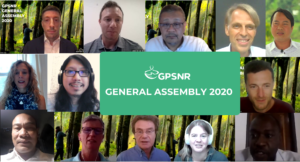
Highlights from General Assembly 2020

GPSNR’s second General Assembly was opened by Director Stefano Savi, who wished everyone a warm welcome to the virtual event. 

Next on the agenda was a message from Dr Gerd Müller, the German Federal Minister for Economic Cooperation and Development. The message was delivered via video by Sebastian Lesch, Head of Unit – International Agricultural Policy, Agriculture, Innovation, from the German Federal Ministry for Economic Cooperation and Development (BMZ). In his message, Dr Müller underscored BMZ’s support for GPSNR as a member and donor. He also urged all links in the natural rubber supply chain to continue to work towards comprehensive sustainability. 

Stefano also took the opportunity to acknowledge and thank BMZ and other donor partners such as Partnerships for Forests (P4F), a UK aid funded program, for their continued support, as well as WBCSD and the Tire Industry Project for their support in the Platform’s launch phase.

The opening remarks were delivered by Segsarn Trai-Ukos, Chair of the GPSNR Executive Committee. In his remarks, Segsarn summarized the achievements of the Platform over the past 18 months, recognising the dedication and effort put in by members of the Working Groups and the Executive Committee despite the global pandemic. “We have accomplished much in our first 18 months, and I’m excited to see our continued progress as we move forward.” he concluded.

After the opening remarks, Stefano gave a Secretariat Update, showing how GPSNR has grown since the first General Assembly. Membership has almost tripled, and engagement remains high. On the Communications front, GPSNR maintains a global outreach with its website, and has seen an increase in social media followers, along with mentions and features by numerous media outlets. Stefano also touched upon GPSNR’s financial status, which he described as healthy. 

The various Co-Chairs of the respective Working Groups then proceeded to give a brief update on what they have achieved so far, as well as the next steps. For a more detailed look at what comes next for our Working Groups, check out the article ‘The Road Ahead for GPSNR’s Working Groups’.

And finally, the moment everyone had been waiting for – the results of the voting. 

The verdict for each resolution was revealed one at a time, with the number of votes for, against and abstained, displayed for each resolution. All proposed resolutions were passed with overwhelming majorities.

Up next to be revealed were the results of the Executive Committee elections. These were announced by category, with the elected representatives giving a short speech after being introduced. For a look at GPSNR’s second Executive Committee, check out our article ‘A First Look at GPSNR’s second Executive Committee’.

Lastly, Co-Chair of the GPSNR Executive Committee, Amy Smith, delivered some heartfelt words as part of her closing remarks. “We all have the responsibility to drive sustainability in the global marketplace because our forests, wildlife, climate, communities and businesses depend on it,” she said. “And GPSNR has the ability to effect that transformational change.”

Scroll to Top