

Following the Conversation with GPSNR Topic Talks! (Members Version)

Share This Post

You must be logged in to view this content

More To Explore

Natural Rubber Supply Chain comes together to build unique sustainability assurance benchmark

PRESS RELEASE

Natural Rubber Supply Chain comes together to build unique sustainability assurance benchmark 

Singapore, 20 June 2024: Members of the Global Platform for Sustainable Natural Rubber (GPSNR), who represent almost 60% of the value chain, have agreed on an industry wide assurance system in an Extraordinary General Assembly held yesterday. Through this agreement, the natural rubber industry now has a standardized stage-by-stage process through which companies can commit to, implement and verify strong sustainability standards and practices in their operations.
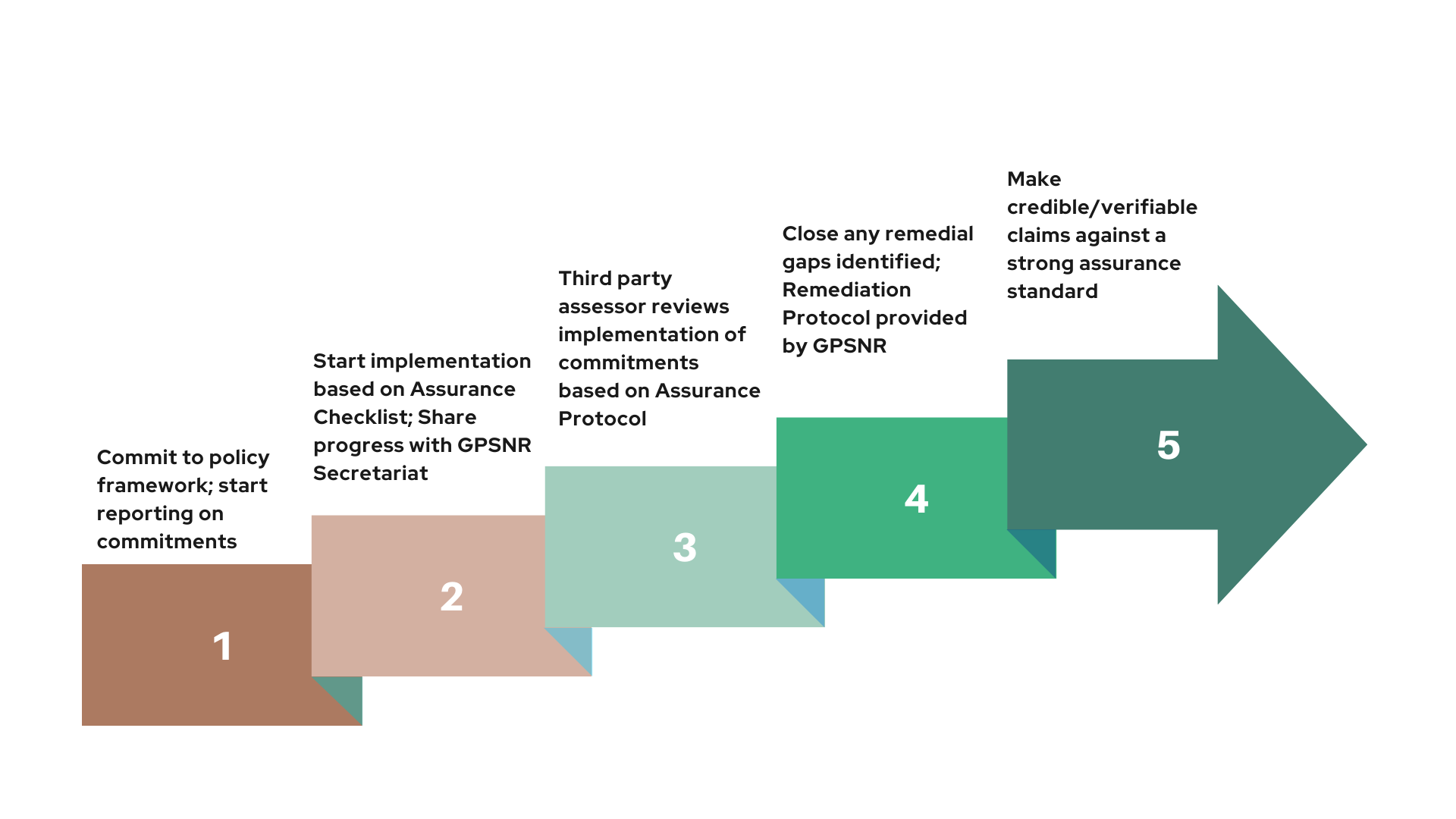
GPSNR members’ stage-by-stage progression towards verified sustainability assurance 

The Assurance system is currently being piloted by some volunteer manufacturers and processors until August 2024. Concurrently, three of its four mandatory elements have also been put up on a public consultation to seek comments and additional inputs that will help finetune the different aspects of the model. The feedback collected via the pilots and the public consultation will be integrated into the assurance model and put up for members’ review at the Annual General Assembly in October 2024. By 2025, all GPSNR members will be using this model in their operations. 

The model covers four mandatory elements – an Assurance Assessment checklist which will spell out the minimum requirements that members will have to meet on all aspects of the GPSNR policy framework, an Assurance Protocol which will provide guidelines to external assessors, a Remediation Protocol that includes actions and timelines to close the gaps identified by the assessors and a Members Journey or broad timeline to achieve these requirements.  Additionally, the model also includes supplementary tools that will support members in putting the assurance model into practice, like a due diligence framework and national risk assessments, amongst others.

‘’Having a system that can verify and cross check the implementation of our members’ commitments has always been our overarching goal at GPSNR. With the voting in of the Assurance Model structure, our members have demonstrated their intent to deliver on their sustainability promises. I am especially proud of the multistakeholder nature in which the assurance model has been agreed on, keeping in mind the practical position of each member category.’’ said Stefano Savi, GPSNR’s Platform Director.

GPSNR’s membership is meeting next week in Singapore to iron out the details of the minimum requirements spelt out in the Assurance Model checklist, the nature of the claims that can be made, the feedback from the pilots and the assurance protocol for third party assessors.

END

About GPSNR: 

GPSNR is an international membership driven platform set up to define sustainability for the natural rubber value chain. It brings together various stakeholders to a common ground based on fairness, equity and environmental sustainability. More on sustainablenaturalrubber.org

For more information, please contact:

Bani Bains

Communications Manager

Email: bani.bains@gpsnr.org

Ph: +65 97268165
Rubber, representation and reform – What smallholders bring to the sustainability conversation

By Febrius Wibisana, GPSNR Executive Committee Member & Co-Chair, GPSNR Smallholder Inclusion Working Group

For those who do not know me yet, my name is Febrius Wibisana and I have been a rubber smallholder in Indonesia for over 25 years. At GPSNR, I represent the smallholder category at the Executive Committee level. I am also the co-chair of the Smallholders Representation working group.

In June 2022, I was invited by the Partnership for Forests or P4F to the P4F Forum with their partners and projects from across the world. They wanted me to speak about my experience at GPSNR on smallholder inclusion in the sustainability conversation in natural rubber. The experience gave me the opportunity to put some thought into our work over the last three years – the challenges, the successes and carving the path forward.

I am writing this to share some of those reflections with my fellow GPSNR members.

Reflection 1: It is impossible to have holistic sustainability solutions in natural rubber without smallholder participation

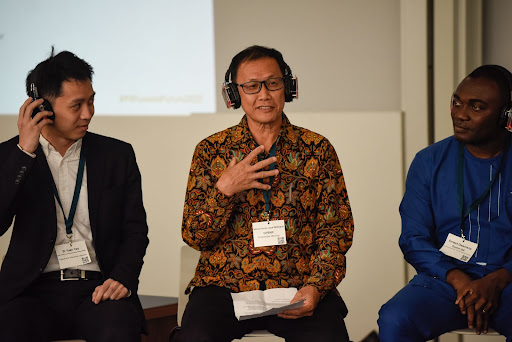
GPSNR Impacts & Assurance Associate Si Yuan and myself at the P4F Forum in London

We live in a world where 6 million smallholder farmers produce almost 90% of the world’s natural rubber. In such a world, any conversation on change in this supply chain has to include smallholders. 

In its second General Assembly in 2020, GPSNR members passed a resolution to include smallholders as a category within the membership. We started with 28 odd smallholders, including myself, engaging in conversations on sustainability, capacity building and the meaning of true inclusion and having the smallholder voice heard at various decision making levels. Today, I represent over 130 smallholders across 10 countries in the GPSNR Executive Committee. 

To bring smallholders into each conversation, we work closely with country level champions and local government entities for outreach and engagement. Interpretation facilities and key documents being translated to smallholder languages are some small but significant steps we take at GPSNR to further facilitate smallholder participation.

Reflection 2: Membership does not guarantee active participation

While many of our smallholder members are actively engaged in core decision making and at the working group level, many find it difficult to do so. The digital divide, language barriers and a skewed equation of structural power could be some key reasons for this. Some smallholders simply may not have the time for it. 

Yet, as we embark on transforming the entire supply chain, we need active smallholder voices to join and remain in the GPSNR fold. To this end, the smallholder representation working group has put forward a resolution with proposed changes in smallholder membership structure, where smallholders will have to participate in the General Assembly to take up ordinary membership. All others will be classified as affiliate members by default. You can take a look at the resolution here

Reflection 3: Making a supply chain sustainable requires thorough capacity building at all levels

There are more than 2 million smallholders in Indonesia. Yet, despite being the largest producer, it has the lowest productivity in the world. This is because of diseases and poor planting materials. Many other rubber producing nations face similar problems. 

If we are to make this supply chain sustainable, equitable and fair, and achieve the desired state that the GPSNR Theory of Change spells out, smallholders have to be equipped with the skills and resources. The capacity building working group has already kicked-off the first such projects in Indonesia with SNV-Proforest and Koltiva. GPSNR has also received funding pledges from Renault, Goodyear, Michelin and Pirelli for other projects, but scaling them requires more. Funding information is available here for any one in the natural rubber industry. 

Capacity building will also equip smallholders to participate further in GPSNR decision making and other processes. 

As we move forward, I am energised by the progress GPSNR has made so far on smallholder participation. In our attempt to move towards more active engagement, we need the support of all our members. Our ability to meet in person will further strengthen this support, and I look forward to working with all of you to transform the supply chain. 

Scroll to Top