PUBLIC CONSULTATION: GPSNR’s Assurance Model

Share This Post

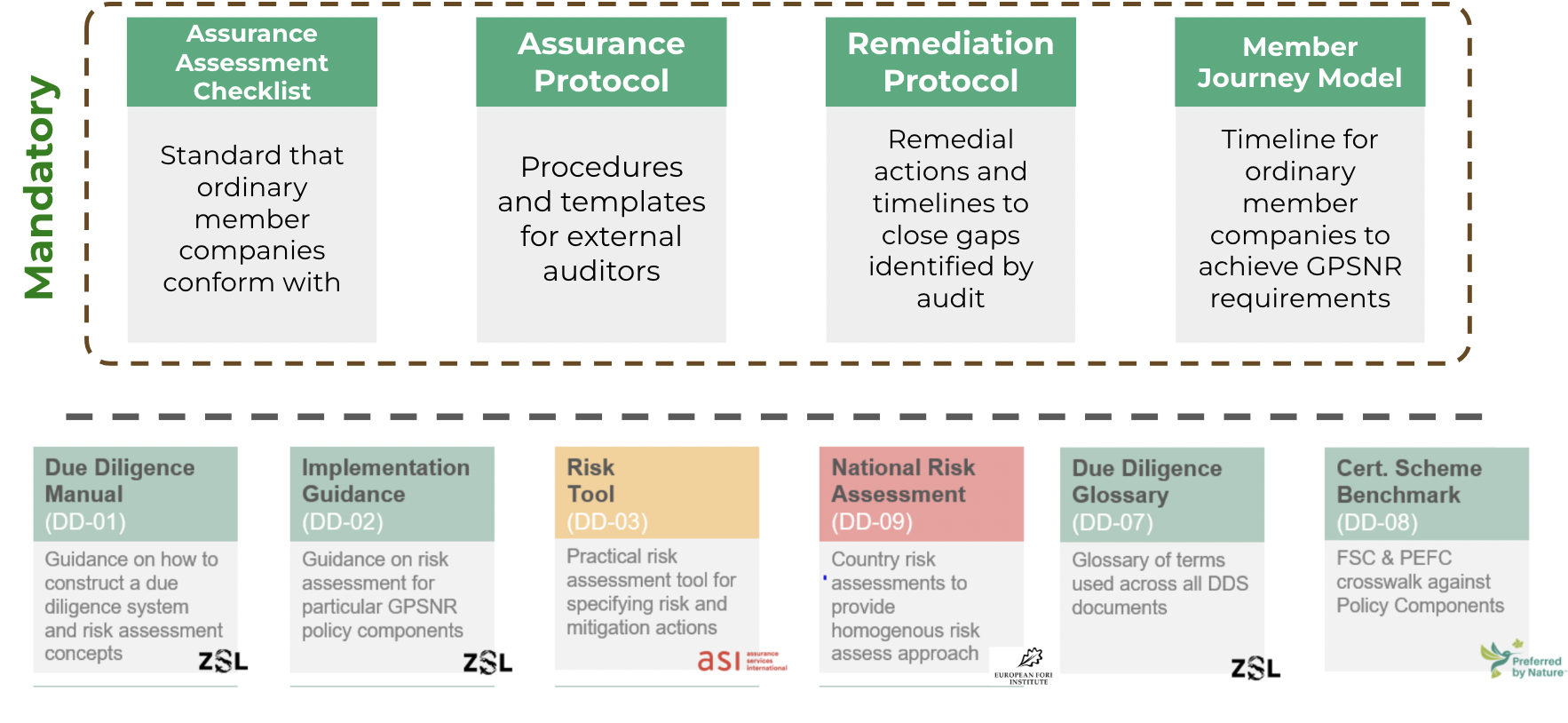
To develop and implement an assurance system that will support GPSNR in demonstrating its long-term positive impact on the natural rubber industry and help GPSNR members companies validate their sustainability claims and commitments, GPSNR is conducting a 60 day public consultation from 1 May to 30 June 2024 on the three of the four mandatory elements of its Assurance Model. This includes the Assurance Assessment Checklist, Assurance Protocol, and Remediation Protocol. The Assurance Assessment Checklist captures the themes and minimum requirements that were previously discussed during the platform’s in-person meetings in February 2024. The Members Journey Model (MJM) can be found here, the MJM has already been developed and is being put forward for vote at the upcoming Extraordinary General Assembly. The Members Journey Model outlines the development path that members are expected to take once they join GPSNR.


GPSNR Assurance Model Structure (pending Extraordinary General Assembly vote)


After the consultation, the GPSNR Secretariat will review the comments from this public consultation, feedback from the GPSNR in-person meetings in June, and the learnings from the Assurance Model pilots which will be ongoing till July 31st and make necessary changes. A second 30-day consultation will be conducted after the documents have been revised in Q3 of 2024.


Any feedback on the documents should be added to this file by 30 June 2024.


Document Name

Link 

Feedback Link 

Assurance Assessment Checklist 

Linked here

See here

Assurance Protocol 

Linked here

Remediation Protocol 

Linked here

More To Explore

News

GPSNR’s new Policy Framework drives members commitment to sustainable rubber production and sourcing

Singapore, 23 September 2020: On Wednesday, members of the Global Platform for Sustainable Natural Rubber (GPSNR) convened the annual General Assembly, which saw the approval of a members’ sustainability policy framework and the creation of a new membership category for smallholder producers of natural rubber.

The newly approved policy framework will help GPSNR member companies, who account for almost 50% of global natural rubber volume, to establish or update strong supply chain sustainability commitments through their natural rubber purchasing policies, on all aspects of sustainability: economic, environmental, and social. Modeled around the Platform’s 12 Principles of Sustainable Natural Rubber, the new policy framework sets out eight overarching themes that include commitments to legal compliance, community livelihoods, healthy, functioning ecosystems (including no deforestation), and respecting all human rights.

“This is a tremendous milestone for the Platform and for the natural rubber industry. In just under two years, GPSNR members developed and approved concrete policy commitments for companies to integrate into their sustainable natural rubber policies. Today, and despite the challenges we all faced during this global pandemic, GPSNR members send a signal to the world about their commitment to achieving a fair, equitable and environmentally sound future” said GPSNR Director Stefano Savi.

Around 85% of the world’s natural rubber is produced by smallholders. In order to transform a sector that is primarily reliant on smallholder producers, GPSNR is embracing smallholder inclusivity and a concept of shared responsibility through the establishment of a Shared Responsibility Working Group, which will identify how the responsibilities and costs of implementation can be equitably distributed across all stakeholder categories, with the understanding that smallholders should not carry the burden of a higher cost to implement sustainability activities in complying with the policy or implementation guidance to be developed.

“Smallholders are a crucial link in the natural rubber value chain, and they have a key role to play in driving awareness on-the-ground and setting the global agenda for sustainable natural rubber” remarked Director Savi.

This year, GPSNR welcomed 28 smallholder members from seven rubber-producing countries. These smallholders now constitute a newly approved standalone category and play an equal role in decision-making within GPSNR alongside the other four categories: producers, processors, and traders; tire manufacturers and other natural rubber makers/buyers; car manufacturers, other downstream users and financial institutions; and civil society.

GPSNR’s virtual General Assembly drew more than 120 attendees, including members of the Platform, partners and invited guests. In addition to voting on resolutions, GPSNR members also elected representatives to the 2020-2021 Executive Committee, which comprises representatives from each of the membership categories. And for the first time, three newly elected smallholder producers with diverse geographical backgrounds will participate in Executive Committee discussions and decision-making.


News

GPSNR Working Groups Update: January 2024

Strategy and Objectives Working Group: ASI finished the initial draft of the Assurance Model proposal and presented it to Working Group (WG) members in December for their feedback. To gather more specific insights, feedback calls were arranged with various categories. Based on the feedback received, ASI plans to revise the draft and present it for further discussion at the February in-person meetings.

Smallholders Representation and Capacity Building (SCB) Working Group: Smallholder representatives attended the 5th Sustainable Rubber Plantation and International Conference in Buriram, Thailand, from December 13-15, 2023, to discuss sustainable practices. A consultation on the assurance model was held on January 25, 2024. Both SNV-Proforest’s Indonesia GAP and SNV-IRRI’s Disease Fighting project concluded in December 2023, with final reports submitted. Koltiva’s Indonesia GAP project, extended until September 2024, received additional funding from Goodyear. 

The Thailand agroforestry project signed a supplemental agreement for more projects. Southland and Sri Trang joined the Thailand GAP project as processors, with training material under review. 

The Digital Knowledge Sharing Platform (KSP) task force completed its user acceptance test, releasing the Rubber Wiki app on the Google Play Store. Koltiva was awarded the third phase of KSP for content development with the task force’s content development phase kicking off on January 25, 2024.

Continental pledged funds for capacity-building in Cote d’Ivoire. The Cote d’Ivoire subgroup will discuss new Continental-funded projects.

Two SCB WG meetings were scheduled on December 26 and 31 for final presentations and updates on various projects, including endorsements. The Thailand Agroforestry project plans training for late January 2024, and the Thailand GAP project aims to start training in late January or February 2024. The Income Diversification and Rubber Agroforestry task force is planning its third agroforestry workshop in Liberia from May 22-24, 2024.

Shared Responsibility Working Group: The Working Group is initiating initial steps to explore ways to develop a value transfer mechanism in GPSNR. The Secretariat has discussed possible paths with the co-chair, who will present these plans to the EC in the near future.

Executive Committee: The EC convened for an in-person strategy planning session in Paris, where they identified and outlined key strategic priorities in a Gantt chart. he Secretariat, along with members and WGs, will collaborate to implement these strategic priorities set forth by the EC.

Scroll to Top