News

Strategy and Objectives Working Group Update – September 2019

Strategy 1 “Policy Toolbox” working group will work on:

Establishing a Policy Toolbox that defines the environmental, social and economic criteria that members should be required to include in their policies along with a Policy Implementation Template, and Policy Checklist for those with existing policies to ensure they incorporate all appropriate aspects of a natural rubber sustainability policy;

Making a recommendation on the required timeline for members of GPSNR to establish their sustainability policies, the implementation plan for their policies, and what the reporting requirements should be for policy implementation;

Identifying the appropriate Assurance Model for GPSNR to implement to monitor progress of members and the industry to achieving the mission of GPSNR.

Strategy 3 “Enhancing Transparency and Traceability” working group will work on recommending tools to trace, assess the risk, and achieve transparency of any given natural rubber product buyer’s supply chain.

Strategy 1 and Strategy 3 working group members recruitment is open now until end of September.  Ideally we expect to have a combination of at least 1 car maker, 2 tyre makers, 2 producers and 2 CSOs per working group.  The participation of the core working group is limited to the ordinary members only but the experts and/or affiliate members will be invited upon the topic.  

Please feel free to drop us an e-mail on the topic you would like to contribute, the expertise you would like to share with the working group members. For more information, please contact kobrat@gpsnr.org.

Read More »
News

Secretariat Update – September 2019

This update was prepared by Assel Mussagaliyeva, Industry Relations and Academic Projects Manager, Essec Asia Pacific.

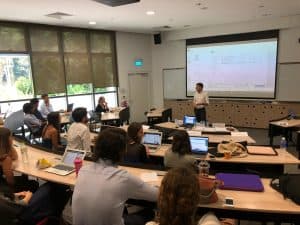
ESSEC Asia Pacific partnered with the Global Platform for Sustainable Natural Rubber for their first Global Manager in Asia (GMA) project. The GMA Project included diverse multinational companies and startups with strong Asian core: International Finance Corporation (IFC Fintech Group), Grab for Business, ACT Genomics, Creatella Ventures and GPSNR. Involving 148 ESSEC Master in Management students, the Project took place on 1 July – 11 September 2019, followed by the Final Jury.

The project results were in line with GPSNR priorities in the three Asian markets. The 6 student teams under the close guidance of Stefano Savi and Kobrat Sawasdivorn explored the challenges of the smallholder farmers affecting equity of the rubber supply chain in Thailand, China and Indonesia. The results of the student research will be presented to the GPSNR Working Groups.

Assel Mussagaliyeva, Industry Relations and Academic Projects Manager, said it was a good project both from a teaching perspective as well as practical experience for the students. Firstly, it was hands on experience challenging students to think ‘out of the box’ as it involved multiple layers: a variety of stakeholders, unfamiliar context, lack of industry knowledge and limited country data. Secondly, it was a great chance for the students to work on a big picture issue, especially in today’s world of climate change challenges. The project itself was well focused and narrow enough for the students to have an opportunity to make a tangible difference.

“ESSEC Asia Pacific is grateful to GPSNR for our collaboration on multiple levels,” said Mussagaliyeva. In March 2019, GPSNR participated at the ESSEC APAC Talent Day and offered internship for the Global BBA student Tanmay Daga. Following that, Stefano Savi participated in the first ESSEC APAC student-led TedX event as an invited speaker on sustainability. Soon after, the GMA Project scope was discussed.

“We look forward to working with GPSNR in the future,” said Mussagaliyeva. The mission of ESSEC Business School is to create and disseminate cutting-edge knowledge, to train and develop bold pioneers and influential leaders for both the business world and society. We encourage the students and programme participants to anticipate – and meet – the economic, managerial, social, environmental and ethical challenges of an increasingly uncertain world. These values align with GPSNR mission as sustainability is an integral part of responsible innovation. 

The Secretariat has also published the executive summary of minutes of each working group in the “News and Publications” section of the website. All members of the platform can login to the website to view the documents under the Members Only section. There are currently 2 working groups, the Strategy & Objectives working group chaired by James Laimos of Goodyear and the Smallholders Representation working group chaired by Ulrich Antoni of Pirelli. The executive summary of each working group will be updated on a bi-weekly basis. If you have any issues accessing the website, please send us an email at info@gpsnr.org.

Read More »
News

Smallholders Representation Working Group Update – August 2019

Smallholders account for 85% of world rubber production. To come up with sustainable rubber production solutions, it is crucial for GPSNR to include the voice of rubber smallholders into our governance model. Realizing the challenges in language and cultural differences, the power game between different players in the rubber value chain, the perception of and by smallholders, the working group has decided to organize regional workshops. The 5 workshops to be held in Thailand, Indonesia, Vietnam, Africa (TBC) and Latin America (TBC) will be tailor made to ensure that smallholders can play a meaningful role within GPSNR.  A combination of smallholders, smallholder organizations, smallholder representation working group members (reflecting the mix of the group members) and, where possible, a representative of the GPSNR Strategy & Objectives Working Group will come together to join those regional workshops. Main aim of the workshop is to be a 2-way communication platform for conducting research, with the farmer’s needs at the center.

The primary objectives of the workshops will be to:

  • Understand the local needs and motivations of the smallholder farmers;
  • Understand and recommend solutions to the barriers for smallholders and their representative organizations to join and actively participate in the GPSNR;
  • Observe and explain the interaction and chemistry between farmers and representative organizations.

Translation and moderation will be available to ensure a smooth communication.

Those first 5 workshops are to be held between October and November 2019 and possibly extended to other regions in a second step.  

If you are a rubber smallholder or an organization that represents rubber smallholders, promoting the interests of rubber smallholders, having a mission/vision that aligns with GPSNR’s 12 principles, believing in a bottom-up approach as a solution to solve the issues, please feel free to contact the GPSNR Secretariat.  For more information, contact kobrat@gpsnr.org.

Read More »
News

Strategy and Objectives Working Group Update – August 2019

We have already had the chance to discuss some updates on the work of the GPSNR Strategy and Objectives working group in our first newsletter in July 2019, available here.

Since then, the Strategy and Objectives Working Group has continued to build out the scope and desired deliverables for the first 3 strategies that GPSNR should implement, namely: 1) Natural Rubber Sustainability Policy Toolbox and Best Practices Guidance; 2) Capacity Building for Smallholders and Rubber Plantations supplying Natural Rubber; 3) Improving Transparency and Traceability within the Natural Rubber Supply Chain.

Strategy 1, “Sustainability Policy Toolbox and Best Practices Guidance”, has now been finalized within the Strategy and Objectives Working Group members. The estimated timeline for the completion of this work has been laid out to ensure that the final approval by the Executive Committee is granted in time, and the deliverables of this strategy can be put forward for consideration by the General Assembly in March 2020. In order to achieve this, the first step will be for the strategy document to be submitted to the GPSNR Executive Committee for approval in August, so that the recruitment to form the sub-working group for Strategy 1 can start as soon as possible.

While the Working Group is still in the initial stages of clarifying the scope for Strategy 2, “Capacity Building”, Strategy 3, “Improving Transparency and Traceability” is under the final revision process by the Strategy and Objectives Working Group members. Once this document is agreed internally, it will be submitted to the Executive Committee for approval. The work on Strategy 3 will also be informed by a study GPSNR plans to commission in the next weeks, to better compare and understand transparency and assurance tools that are currently available, that can be applied to the Natural Rubber supply chain.

The Strategy and Objectives Working Group members are holding bi-weekly catch-up calls to progress the work on these strategies, and ensure that GPSNR has a system that benefits smallholders and and all stakeholders in the natural rubber value chain, adding a credible assurance model which enhances transparency. Every voice is crucial to accomplish this mission, so we welcome you to hop on board and help GPSNR being a better, more inclusive platform. For more information on how to join GPSNR or the Working Groups, contact kobrat@gpsnr.org.

Read More »
News

Secretariat Update – August 2019

The signing of the MoU took place at IRSG’s Office in Singapore, on the 6 August 2019 by Mr Salvatore Pinizzotto, IRSG Secretary General and Mr Stefano Savi, GPSNR Director. The MoU will have the aim of consolidating, developing and detailing the cooperation between the two organisations. It will also contribute to the effectiveness to achieve the organisations’ common objectives in the field of sustainable production and consumption of natural rubber.

The cooperation will have a focus on Sustainability in the Natural Rubber Value Chain, particularly in relation to socio-economic and environmental aspects linked to the natural rubber sustainable production and consumption. Immediate opportunities for collaboration have been identified in the following areas: 

  1. Definition of Natural Rubber Sustainability and identification of appropriate standards, building on the activity carried out from IRSG in the SNR-i project.
  2. Natural Rubber Sustainability and socio-economic impacts on smallholders in producing countries.
  3. Land tenure right and sustainable income of smallholders in producing countries.
  4. Impact of climate change in rubber plantations and mitigation of risks.

The International Rubber Study Group (IRSG) was established in 1944 and is the only intergovernmental organization that brings the world’s rubber producing and consuming stakeholders together. The IRSG is the forum for the discussion of matters affecting the supply and demand for natural as well as synthetic rubber. IRSG is at the forefront in conducting activities and research on the sustainability of the natural rubber economy. IRSG has 36 member Governments and more than 700 industry members covering the whole natural rubber value chain.

The Global Platform for Sustainable Natural Rubber (GPSNR) is an international, multistakeholder, voluntary membership organization, with a mission to lead improvements in the socioeconomic and environmental performance of the natural rubber value chain. Development of the GPSNR was initiated by the CEOs of the World Business Council for Sustainable Development (WBCSD) Tire Industry Project (TIP) in November 2017. Currently the Platform has 51 Members including Producers, Processors & Traders, Tire makers and other rubber makers/buyers, Carmakers, other downstream users and Financial Institutions, and Civil society.

Representatives from each of these stakeholder groups have contributed to the development of the Singapore-based platform and the wide-reaching set of priorities that will define GPSNR strategy and objectives.

Read More »
News

Smallholders Representation Working Group Update – July 2019

Since its establishment a few months ago, the Smallholders Representation Working Group has been working consistently and collectively to accomplish its mission. The group has been actively involved in understanding, strategizing and testing the methods by which the platform can ensure adequate and relevant smallholder inclusion. 

In its work to date, the group has selected 11 Working Group members as “Country Champions” who have extensive regional knowledge regarding the rubber supply chain. These members have been in charge of conducting interviews of various smallholder associations and organizations in their assigned country or region. The Working Group also refers to these “Country Champions” as “GPSNR Ambassadors” because of the role they play in creating awareness about the platform. In the past few months, they have helped promote the platform internationally, specifically in Natural Rubber producing countries, by interacting with several organizations, companies and government authorities in different regions of the world. This in turn has helped create curiosity and interest regarding the platform with local stakeholders and in the international rubber community.  

To further this process, the Working Group is currently planning on organizing a series of workshops in various rubber producing regions of the world, including Indonesia, Thailand and Vietnam in Asia Pacific, Brazil in Latin America and Cote d’Ivoire, Ghana and Liberia in Africa. The objective of these workshops will be to understand the local needs and motivations of smallholders and onboard organizations representing  smallholders to join the platform. The Working Group agreed these workshops will be a chance to facilitate an open and constructive discussion between the participants, including smallholders, smallholder representatives and other rubber stakeholders. By organizing multiple workshops in different regions of the world, the Working Group is trying to ensure appropriate coverage of the vast and diverse global natural rubber supply chain.  

Through these workshops and the onboarding work done by the Country Champions, the group will be able to identify relevant smallholder representatives, in view of onboarding them as GPSNR members, to ensure smallholders representation in the GPSNR governance is achieved by the next General Assembly in March 2020.

It has been encouraging to see volunteer members of the Working Group actively participate and contribute to fulfill the tasks and responsibilities assigned to the team. Going forward, the Working Group Co-chair expects more involvement of the members as the group implements its developed action plan of organizing regular events like the regional workshops aimed at the betterment of Rubber Smallholders.

Read More »
News

Strategy and Objectives Working Group Update – July 2019

The first draft of the “desired state” document has been shared with the Executive Committee in their monthly meeting in June for further consultation. To avoid overlooking any important steps and details necessary for the development of strategies and objectives, a terms of reference was also created by the Working Group and approved by the Executive Committee, defining the scope, objectives, and outcomes which will be enabled by the process. 

The completion of the “Theory of Change Workshop” in March, where the group met in Singapore to collaborate on building out “What Good Looks Like” when it comes to sustainable natural rubber, contributed to the start of the work on the “Theory of Change” for natural rubber, a process aimed at identifying the root causes for the current state of the natural rubber industry as well as identify the Key Strategies that the Working Group believes the platform should start working on. 

Currently, the Working Group is in the process of finalizing the recommendations for launching these strategies, including  timelines for implementation in 2019/2020. The focus for the next 6 months will be on launching and pursuing three main strategies: 1) Sustainability Policy Tool Box and Best Practices; 2) Capacity Building for Smallholders and Rubber Plantations to support the incorporation of more sustainable practices; 3) Improving Transparency and Traceability within the Natural Rubber Supply Chain. 

We would like to thank the members who participated and encourage all others to actively  participate in the Working Group’s undertakings. In order to meet the high expectations set for GPSNR, we need members to attend the meetings frequently, participate consistently, and contribute in a timely manner.

Read More »
News

Secretariat Update – July 2019

This full-time educational program enrolls a talented pool of diverse students from across the globe and includes academic courses such as Geopolitics, Economics, Asian Cultures and International Business in Asia. For the course ‘Company Project’, which is aimed at giving the participants broad practical knowledge, students interact and work closely with corporate companies and organizations. For the 2019 course, students had the option of choosing from a list of 5 unique partner companies/organisations, which ranged from the likes of International Finance Corporation (IFC) and South East Asia based mobility service provider Grab, and which were involved in different types of sectors including NGOs, FinTech, Healthcare, Mobility. 30 Students who were interested in working with non-profit organizations in Asia were selected to work with GPSNR as their host organization.

As a partner organization for the program, GPSNR was given the responsibility of assigning a research project to the selected group of highly motivated students, who will work on the given topic for a duration of two and a half months. After discussions with the strategy and objective Working Group, ‘Equity in the Natural Rubber supply chain’ in Asia, with main focus on China, Thailand and Indonesia, was concluded to be the chosen main topic of research for the participants. The research will focus on better understanding the cost benefit analysis at different levels of the supply chain, including social and environmental externalities. Students will work on this research project, the findings of which will be submitted to the platform by 12 September 2019.  

Increasing engagement with research organizations and academic institutions such as ESSEC Business School in Singapore, to ensure a science based approach to sustainability in the rubber industry, will remain a key objective for the Platform.

Read More »
News

Stretching the conversation about sustainable natural rubber

By 2050, the number of cars in the world is expected to more than double as urban population growth and rising incomes lead to increased demand for mobility. This has led to louder calls for a more environmentally friendly, energy efficient transport sector.

But what’s been missing from the conversation on sustainable transport so far is a key material that cars and other vehicles literally run on: rubber.

Around 70 per cent of the world’s supply of natural rubber is used to manufacture the wheels that move cars and enable airplanes to take off and land. In the last two decades, the consumption of natural rubber, which is primarily produced in the world’s tropical regions, has been increasing at a steady rate of 5 per cent every year.

Ideal climate and soil conditions in Thailand, Malaysia, Indonesia and Vietnam have made Southeast Asia the epicentre of global rubber production. Ninety per cent of the 13.960 million tonnes of rubber tapped last year came from this part of the world. The last 10 years have also witnessed the expansion of industrial rubber practices in Cambodia and Laos, after land in China and Vietnam began to deteriorate as a result of large-scale rubber production.

On a recent trip to Bintan, an Indonesian island located an hour from Singapore’s shores, Eco-Business got a first-hand look at the reality of smallholder rubber farming in Asia and the challenges of charting a sustainable path for rubber.

Although natural rubber has not received as much attention as fellow tropical commodity palm oil, it creates a similar set of social and environmental problems, from contributing to rapid deforestation to a history of land grabs and human rights violations in the Mekong.

However, unlike palm oil, which is mainly produced in large estates owned by big, family-owned corporations, close to 85 per cent of global rubber is produced by smallholders in Asia, making traceability a major issue in the industry’s quest for sustainability.

“Natural rubber is a crucial element of tyre production, driving the importance of its sustainability,” William Dusseau, manager of technical relations at Cooper tyre and rubber company, told Eco-Business. “A coordinated, universal and standard industry approach is the way to drive solutions in establishing and promoting sustainable natural rubber practices.”

He added that the launch of the Global Platform on Sustainable Natural Rubber (GPSNR), which took place last Thursday at the World Rubber Summit in Singapore, was a significant step in developing and maintaining sustainable rubber standards.

Members of the new platform include major brand tyre companies such as Cooper, Michelin, Pirelli, and Bridgestone and global car manufacturers including BMW Group, Ford Motor Company and General Motors.

GPSNR also includes international non-profit and civil society organisations such as Mighty Earth, Birdlife International and World Wide Fund for Nature (WWF).

According to Jean Bakouma, head of the Forest Program at WWF-France, since the rubber value chain is primarily driven by buyers, tyre manufacturers hold the greatest leverage for improving both the socioeconomic and environmental performance of natural rubber production.

“A robust sustainability policy that is thoroughly implemented by tyre manufacturers must consider sustainable natural rubber as a natural and responsible way to protect forests with high conservation value and high carbon stock, as well as foster other environmental services,” he said.

Read More »
News

Global Platform for Sustainable Natural Rubber holds inaugural General Assembly, appoints Executive Committee

Singapore, 21 March 2019: Today, natural rubber stakeholders convened for the inaugural General Assembly of the Global Platform for Sustainable Natural Rubber (GPSNR) – an independent platform that will lead improvements in the socio-economic and environmental performance of the natural rubber value chain.

Development of the GPSNR was initiated by the CEOs of the World Business Council for Sustainable Development (WBCSD) Tire Industry Project (TIP) in November 2017.

Members of the platform include tire manufacturers, rubber suppliers and processors, vehicle makers and NGOs. Representatives from each of these stakeholder groups have contributed to the development of the Singapore-based platform and the wide-reaching set of priorities that will define GPSNR strategy and objectives.

Following a ceremonial launch in October 2018 interest in the GPSNR has seen membership grow to 39 Founding Members including recruitment of the platform’s first civil society members. The GPSNR remains open to membership applications from all natural rubber stakeholders.

The General Assembly saw the approval of organizational Statutes and Code of Conduct, and the formation of an Executive Committee that has the mandate of overseeing the strategic and operational activities of the GPSNR. As required by the Statutes, the Executive Committee comprises representatives from each of the four GPSNR membership categories – 1. Rubber producers, processors and traders; 2. Car makers, Other downstream users of natural rubber, and financial institutions; 3. Tire makers and other natural rubber makers/buyers ; and, 4. Civil society organizations.

Reacting to the formation of the Executive Committee, GPSNR Director Stefano Savi, said “The appointment of the Executive Committee is a critical piece to a landmark achievement. It has taken considerable effort from all stakeholders to bring us to this point. We know that the real hard work lies ahead, but today from Singapore we send a clear message – the GPSNR is open for business.”

The platform is working to finalize its operational strategy, guided by the stakeholder-agreed GPSNR priorities of harmonizing standards to improve respect for human rights, preventing land-grabbing and deforestation, protecting biodiversity and water resources, improving yields, and increasing supply chain transparency and traceability.

Following proceedings from Geneva, Peter Bakker, WBCSD’s President and CEO said “We are enormously proud to see the GPSNR take this important step. The commitment of TIP members to achieve sustainable natural rubber has been a crucial driving force in taking the GPSNR from concept to reality. Today, our members are joined by a growing and increasingly well-balanced GPSNR membership of rubber value chain and civil society members – the actors are in place, and the foundations for transformative action along the natural rubber value chain have been laid. Now the real work can begin.”

For membership enquiries and more information on the GPSNR, please contact info@gpsnr.org

GPSNR Founding Members at the time of the platform’s inaugural General Assembly, March 2019, per GPSNR membership category, alphabetical order:

Producers, processors and traders:

Halcyon Agri Corporation, ITOCHU Corporation, Kirana Megatara, MARDEC, PRASIDHA, SIPEF, SIPH, Socfin Group, Southland Global, Thai Eastern

Car Makers, Other Downstream Users, and Financial Institutions:

BMW Group, Ford Motor Company, General Motors

Tire Makers and Other Natural Rubber Makers/Buyers:

Bridgestone Corporation, Continental AG, Cooper Tire & Rubber Company, The Goodyear Tire & Rubber Company, Hankook Tire Co., Ltd., Kumho Tire Company Inc., Michelin, Nokian Tyres, Pirelli & C. S.p.A., Sumitomo Rubber Industries, Ltd., Toyo Tire Corporation, The Yokohama Rubber Co., Ltd.

Civil Society organizations:

BirdLife International, Conservation International, HCV Resource Network, FSC, Mighty Earth, PEFC, Rainforest Alliance, RESOURCETRUST NETWORK, SNV, World Resources Institute, WWF

Affiliate Member Organizations:

Tanintharyi Region Rubber Planters and Producers Association (TRRPPA), ProForest, Control Union

For membership enquiries and more information on the GPSNR, please contact info@gpsnr.org

Read More »
Scroll to Top