

Secretariat Update – September 2019

ESSEC Asia Pacific partnered with the Global Platform for Sustainable Natural Rubber for their first Global Manager in Asia (GMA) project.

Share This Post

This update was prepared by Assel Mussagaliyeva, Industry Relations and Academic Projects Manager, Essec Asia Pacific.

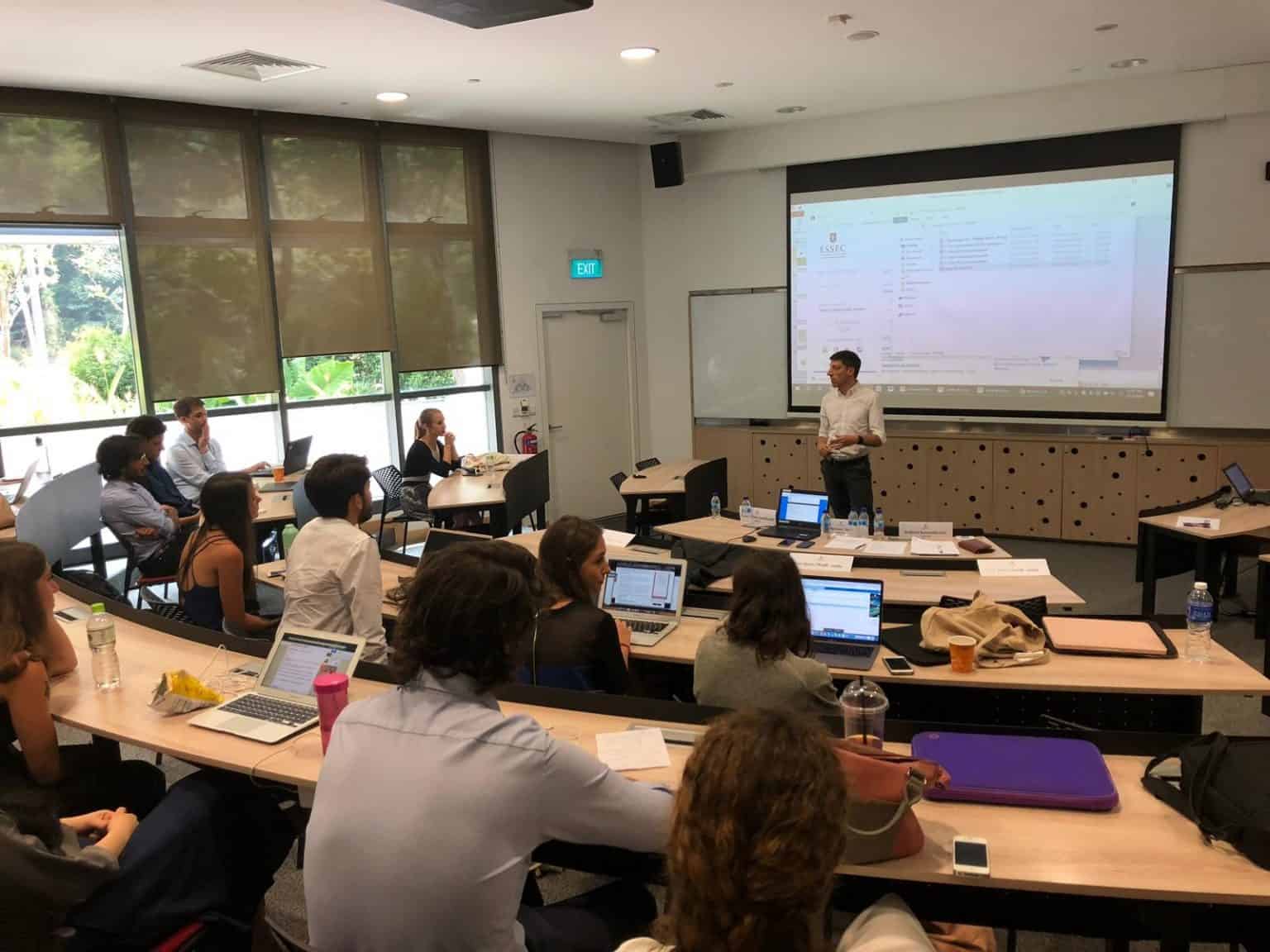
ESSEC Asia Pacific partnered with the Global Platform for Sustainable Natural Rubber for their first Global Manager in Asia (GMA) project. The GMA Project included diverse multinational companies and startups with strong Asian core: International Finance Corporation (IFC Fintech Group), Grab for Business, ACT Genomics, Creatella Ventures and GPSNR. Involving 148 ESSEC Master in Management students, the Project took place on 1 July – 11 September 2019, followed by the Final Jury.

The project results were in line with GPSNR priorities in the three Asian markets. The 6 student teams under the close guidance of Stefano Savi and Kobrat Sawasdivorn explored the challenges of the smallholder farmers affecting equity of the rubber supply chain in Thailand, China and Indonesia. The results of the student research will be presented to the GPSNR Working Groups.

Assel Mussagaliyeva, Industry Relations and Academic Projects Manager, said it was a good project both from a teaching perspective as well as practical experience for the students. Firstly, it was hands on experience challenging students to think ‘out of the box’ as it involved multiple layers: a variety of stakeholders, unfamiliar context, lack of industry knowledge and limited country data. Secondly, it was a great chance for the students to work on a big picture issue, especially in today’s world of climate change challenges. The project itself was well focused and narrow enough for the students to have an opportunity to make a tangible difference.

“ESSEC Asia Pacific is grateful to GPSNR for our collaboration on multiple levels,” said Mussagaliyeva. In March 2019, GPSNR participated at the ESSEC APAC Talent Day and offered internship for the Global BBA student Tanmay Daga. Following that, Stefano Savi participated in the first ESSEC APAC student-led TedX event as an invited speaker on sustainability. Soon after, the GMA Project scope was discussed.

“We look forward to working with GPSNR in the future,” said Mussagaliyeva. The mission of ESSEC Business School is to create and disseminate cutting-edge knowledge, to train and develop bold pioneers and influential leaders for both the business world and society. We encourage the students and programme participants to anticipate – and meet – the economic, managerial, social, environmental and ethical challenges of an increasingly uncertain world. These values align with GPSNR mission as sustainability is an integral part of responsible innovation. 

The Secretariat has also published the executive summary of minutes of each working group in the “News and Publications” section of the website. All members of the platform can login to the website to view the documents under the Members Only section. There are currently 2 working groups, the Strategy & Objectives working group chaired by James Laimos of Goodyear and the Smallholders Representation working group chaired by Ulrich Antoni of Pirelli. The executive summary of each working group will be updated on a bi-weekly basis. If you have any issues accessing the website, please send us an email at info@gpsnr.org.

More To Explore

News

GPSNR Working Groups Update: October 2024

Assurance Model Task Force: The Executive Committee (EC) has reviewed the Assurance Model documents and approved them to be submitted to the General Assembly for a vote. The EC has also identified several topics that will require further discussion and finalisation next year. These include minimum requirements, the mechanism for third-party oversight of assessor accreditation, the format and content of assessment result disclosures, the process for assigning third-party assessors, claims, refinements to the classification system for major non-conformities, and a risk-based approach to assessment scheduling. These topics will be presented for a vote at the 2025 General Assembly. For further context, here is the link to the compilation of feedback on the Assurance Model documents received since June, along with responses and changes made based on these comments: https://rubberplatform.sharepoint.com/:b:/s/GPSNRMembers/EWLmS86xDkxMtce9wKEuLjwByB6hU_QXrROu_XJ9DuK0kA?e=ZYYike

Additionally, the EC has agreed that the first three years of assessments (2027-2029) will be conducted annually, with mandatory public disclosure of a category-level summary of the assessments, while company-level disclosure will be optional for those being assessed.


Smallholders Representation and Capacity Building (SCB) Working Group: 18 members from Ghana were approved this month, with an onboarding call held on 10 October 2024. Additionally, the EC Election Campaign call for smallholders took place on 29 October 2024.

Koltiva submitted the final report for the Indonesia GAP Coaching Project (Phase 2) and delivered a final presentation on 17 October 2024. The third phase of the Indonesia GAP Coaching Project is now underway and is currently in the preparation stage. For the Thailand GAP Coaching Project, Koltiva presented the first full-year project results on 22 October 2024. Meanwhile, RAFs completed training for 1,000 farmers ahead of schedule in the Thailand Agroforestry Project. Furthermore, a curated content list and promotional poster for Rubber Wiki have been created to engage smallholders through the Knowledge Sharing Platform.

Looking ahead, a Pre-GA Webinar for smallholders is scheduled for 18 November 2024, and 10 new Cambodian smallholders have applied for membership and are awaiting approval.

For Capacity Building Projects, SCB WG members are requested to review and provide feedback on the final report for the Indonesia GAP Coaching Project (Phase 2) by 28 October 2024. Koltiva will also submit agricultural calendars and training materials for the third phase of this project for SCB WG review by the same date. For the Thailand GAP Coaching Project, Koltiva is revising the full-year review report based on feedback from SCB WG members. Additionally, the Project Management Subgroup will hold its kick-off meeting on 23 October 2024.


Shared Responsibility Working Group: The Shared Investment Panel (SIP) has officially been established following approval from the GPSNR Executive Committee.

The Secretariat is continuing to support the implementation of the Shared Investment Mechanism, with the Project Management Subgroup currently reviewing the proposals received. The SIP will select its co-chairs and plans to hold its kick-off meeting early next month.

Regarding the Value Transfer mechanism, the Executive Committee will form a task force with one representative from each ordinary member category. This task force will work on the next steps to finalise a revised proposal, with the aim to present it at the in-person meeting in February 2025.

Members

Developing a GPSNR Assurance Model (Members Version)

Assurance is defined as demonstrable evidence that specified requirements relating to a product, process, system, person or body are fulfilled. In other words, thinking about Assurance is to ponder the question: how do we protect the credibility of our claim?

The Executive Committee (EC) has been working on an Assurance model concept since late 2019. Following the request for proposal put up in August 2019, an external consultant was engaged to conduct a review of the options for various Assurance Models that would support the desired outcomes of the Platform. In early 2020, the report from the consultant, which discussed existing approaches to Assurance and included recommendations for GPSNR’s approach to Assurance, was submitted to the EC. 

The EC considered the input from the report and expanded upon its findings by conducting a thorough benchmarking of existing Assurance model approaches. Following this exercise, the EC identified and defined several key characteristics that merit inclusion in GPSNR’s Assurance model concept.

In the process of developing these key characteristics, the EC also took into account the purpose, value and benefits of an Assurance model. 

A robust Assurance model would provide a credible and effective system to manage risks by supporting the achievement of sustainability impacts, focusing on accurate assessments of compliance, ensuring the effectiveness of its assurance strategies through good information management systems, and finding additional ways to create value for stakeholders.

A webinar will be held on Friday, 26 June 2020 to introduce GPSNR members to a proposed Assurance model concept. To register for the webinar, please click here.

A tabled summary of the process and timelines around the development of the Assurance model concept up until now is included below:

January 2020 Consultant report submitted to EC for review
January – February 2020 EC discussions
March 2020 Deep dive into Assurance model benchmark by EC sub-group
April 2020 EC agrees on basic characteristics to build Assurance model from
April – June 2020 Design, discussion and refinement within EC

Both the report by the external consultant and benchmark exercise completed by the EC are available to members upon request.

Scroll to Top