
In favour of disagreement

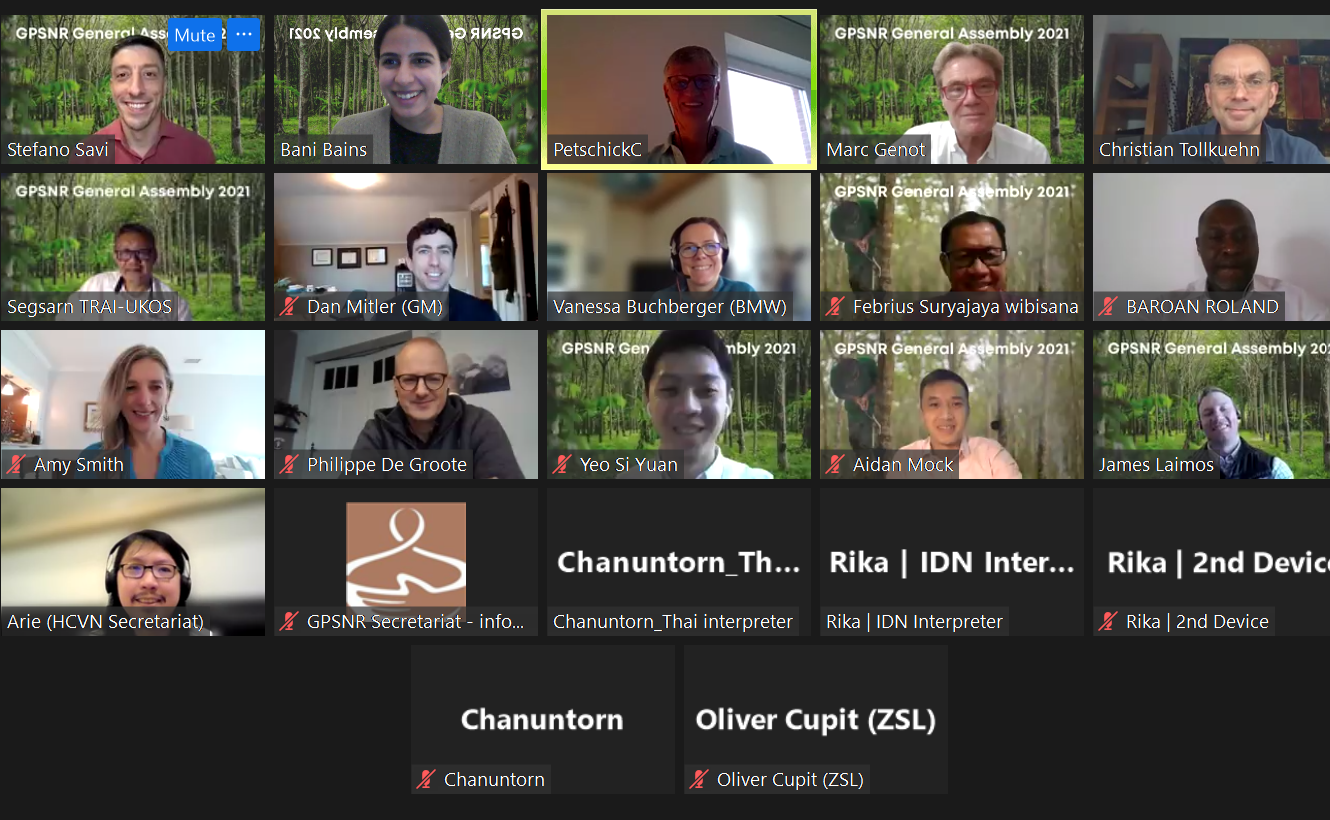
Image 1: GPSNR’s Executive Committee at the latest General Assembly

Share This Post

Why conflict is crucial for meaningful sustainability initiatives

Aidan Mock, Impacts and Assurance Manager

Since joining the Global Platform for Sustainable Natural Rubber in July 2020, I have spent about 3,000 hours working for the organization. Malcolm Gladwell popularized the controversial idea that it takes 10,000 hours to become an expert at something which means that I still have a long way to go. Reflecting on these two numbers at the end of last year, I started to wonder how much time it takes GPSNR as a whole to demonstrate progress. I was most curious about our brand new Reporting Requirements (RRs) which were approved at the General Assembly last year. The RRs will ensure that all GPSNR members have standardised sustainability data which can be tracked, monitored, and analysed to meet our goals on sustainability and equity. Needless to say, this is a crucial piece of work for the global rubber industry.

 In June 2021, ZSL conducted 1.5-hour long focus group calls with each stakeholder category within GPSNR on the RRs. On average a total of 72 work hours were spent on this segment alone, with 12 people attending each of the four calls (12 x 4 x 1.5). In July, the Working Group convened its first meeting to discuss the proposed RRs in detail,  resulting in another 43.5 work hours spent on the RRs. 

The truly difficult months were October and November, where members met almost daily. An average of 19 people joined each of the 22 calls, which lasted about 1 hour and 45 minutes each time. In these two months, members spent a staggering 750 work hours discussing and negotiating the questions. 

By the time Reporting Requirements were sent out for General Assembly vote, GPSNR members had spent more than a thousand hours discussing the RRs at the working group level. The actual number is likely higher as I didn’t include the time spent in category-specific meetings, executive committee discussions, and meetings that ran over their intended time limit. The time taken to complete the RRs eventually amounted to a third of the time that I’ve been working at GPSNR.

Image 2: A screenshot of the tabulation on hours spent discussing the RRs

With members all across the world, these meetings meant sacrificing hundreds of hours of family dinners, early morning sleep, and mid-afternoon siestas! Yet members made the choice to show up for meetings day-after-day, demonstrating remarkable commitment to the mission of GPSNR.

From an outside perspective, one thousand work hours of meetings were needed to create 100 questions, which means we had a progress rate of 10 work hours per question! Sceptics of GPSNR would be quick to point out this “slow progress”, and I will admit that there are faster ways to formulate a hundred questions. However, if you want to get more than 100 members across different stakeholder categories to agree on reporting questions for the entire industry, this is the fastest that it can go. I observed something similar at a grand scale at the COP 26 negotiations in Glasgow in October. Parties spent hours discussing the choice of wording in key phrases and some even used valuable time to simply express disagreement with the text. 

If we are to achieve multi-stakeholder progress, we must adopt the same philosophy and spend time listening to the concerns and disagreements of all parties before we collaboratively develop  solutions to address these concerns. This process of listening to each other and finding solutions will take time, maybe even a thousand hours, but this is the fastest and most thorough way to do it while still honouring the multi-stakeholder principles of the platform.

One of our greatest strengths at GPSNR is that members can disagree with each other openly. I believe that disagreement and healthy negotiation is a sign of a diverse membership that trusts each other to listen and address their concerns. Being able to work towards solutions across “category lines” is also a sign that GPSNR is maturing as we approach our 10,000 work hours of collective practice. I hope we can carry forward this momentum and growth into the new year. I hope we continue to treat the disagreements that will inevitably arise as opportunities to listen, demonstrate empathy, and build trust. I hope we come to see the multi-stakeholder enterprise as one that is conflicting by design and slow by default.

This year, we will work to define the Implementation Guidance and the Transparency Roadmap for the reporting requirements and I expect these topics to involve extensive discussions and quite possibly extensive disagreement. For members already part of this work, I look forward to speaking with you on our calls. If you are not yet part of these discussions but feel  excited by the idea , feel free to write to us and we will ensure that you are included in the meetings that are soon to follow.

See you on a Zoom call soon!
More To Explore

News

Secretariat Update – January 2020

We can draw parallels to the coffee industry, which similarly comprises small plantation owners and more profitable downstream actors. In his recent sustainability report on the coffee industry, economist Jeffrey Sachs’ proposal for a global fund to fill the financial gaps for sustainability investments in coffee producing regions garnered vivid discussion.  

Currently, low and unpredictable rubber prices are a constraint to smallholders who produce the bulk of global rubber output. Transparency is critical in the purchasing process, and this kind of disruption typically comes hand in hand with embracing new strategies. 

Under the purview of the Strategy & Objectives Working Group, capacity building and extension services have been identified as potential measures to mitigate the root causes of the social and environmental impact from the natural rubber supply market. Implementing these at scale for the whole industry will require considerable financial investment.   

With the above considerations in mind, GPSNR is exploring new approaches to funding that would not be borne by a single segment of the industry, but in a manner incorporating the spirit of our shared responsibility. 

Enterprise Singapore organized an industry meeting on 14 January 2020, and invited GPSNR and Singapore Exchange to better understand the available options of an e-trading platform that could contribute to our funds. The meeting also discussed what could be the options, through GPSNR, to increase the uptake of the e-trading platform.

Tapping the vast potential of digitalization could present an exciting avenue of possibilities for GPSNR to better advance our vision of a fair, equitable and environmentally sound rubber value chain.      

The meeting was initiated by representatives from Enterprise Singapore, and panel speakers comprised representatives from GPSNR, Singapore Exchange and HeveaConnect. Participants included GPSNR members as well as other Natural Rubber buyers, producers, processors and traders .

News

GPSNR Working Groups Update: February 2022

All GPSNR working groups have a large chunk of work ahead of them. Here are all their updates: 

Strategy and Objectives Working Group

After completing the intensive task of publishing the Theory of Change, the strategy and objectives group is working on developing its own next steps based on this Theory of Change. In the same spirit, the group has also updated its own Terms of Reference and membership. It is now focused on developing the RFP for the Economic Risk Study, which will be published soon. Currently, they are developing GPSNR’s approach to managing and evaluating risk (commonly known as the risk-based approach in meetings!). 

Smallholder Representation Working Group

Apart from initiating outreach to smallholders with a view to organise onboarding workshops in countries such as Liberia, Ghana, Malaysia and Colombia, the group is focussed on its newly formed task force to develop the GPSNR Smallholders Policy Framework. The first meeting of this task force will be in March 2022. The group is also preparing for the first Smallholders International Call of the year in March 2022.

Policy Toolbox Working Group

This group has already recruited new members for three of its subgroups: Transparent reporting roadmap, Implementation Guidance and RR Guidance & Tools. In the coming months, they will be developing guidance for the reporting requirements and a transparency reporting roadmap before the reporting cycle begins in the middle of 2022. 

At the same time, the group continues to refine a major part of the assurance model: the Implementation Guidance, which it aims to have ready before the General Assembly of 2022. Additionally, this group is busy finalising the compliance panel’s operational guidance.

Capacity Building Working Group

As we begin a year of implementation in Thailand, this group is working on reviewing and finalising strategy and approach for Capacity Building in Thailand, including the integration with Agroforestry Task Force workstream based on discussions with the Rubber Authority of Thailand on 24 February 2022.

The working group is also continuing to develop and implement capacity building plans for Indonesia and Ivory Coast, and will soon appoint service providers for GAP Coaching in Indonesia

Traceability and Transparency Working Group

Having received members’ input on the traceability guidance, representatives from the working group are now finalizing the benchmark based on the feedback.

Shared Responsibility Working Group

The Shared Responsibility working group has completed the first draft of the Shared Responsibility (SR) framework, and has presented the same to the Executive Committee. The consultant is now working on incorporating feedback from the Executive Committee into this draft.

Scroll to Top