
Natural Rubber Supply Chain comes together to build unique sustainability assurance benchmark

Share This Post

PRESS RELEASE

Natural Rubber Supply Chain comes together to build unique sustainability assurance benchmark 

Singapore, 20 June 2024: Members of the Global Platform for Sustainable Natural Rubber (GPSNR), who represent almost 60% of the value chain, have agreed on an industry wide assurance system in an Extraordinary General Assembly held yesterday. Through this agreement, the natural rubber industry now has a standardized stage-by-stage process through which companies can commit to, implement and verify strong sustainability standards and practices in their operations. 
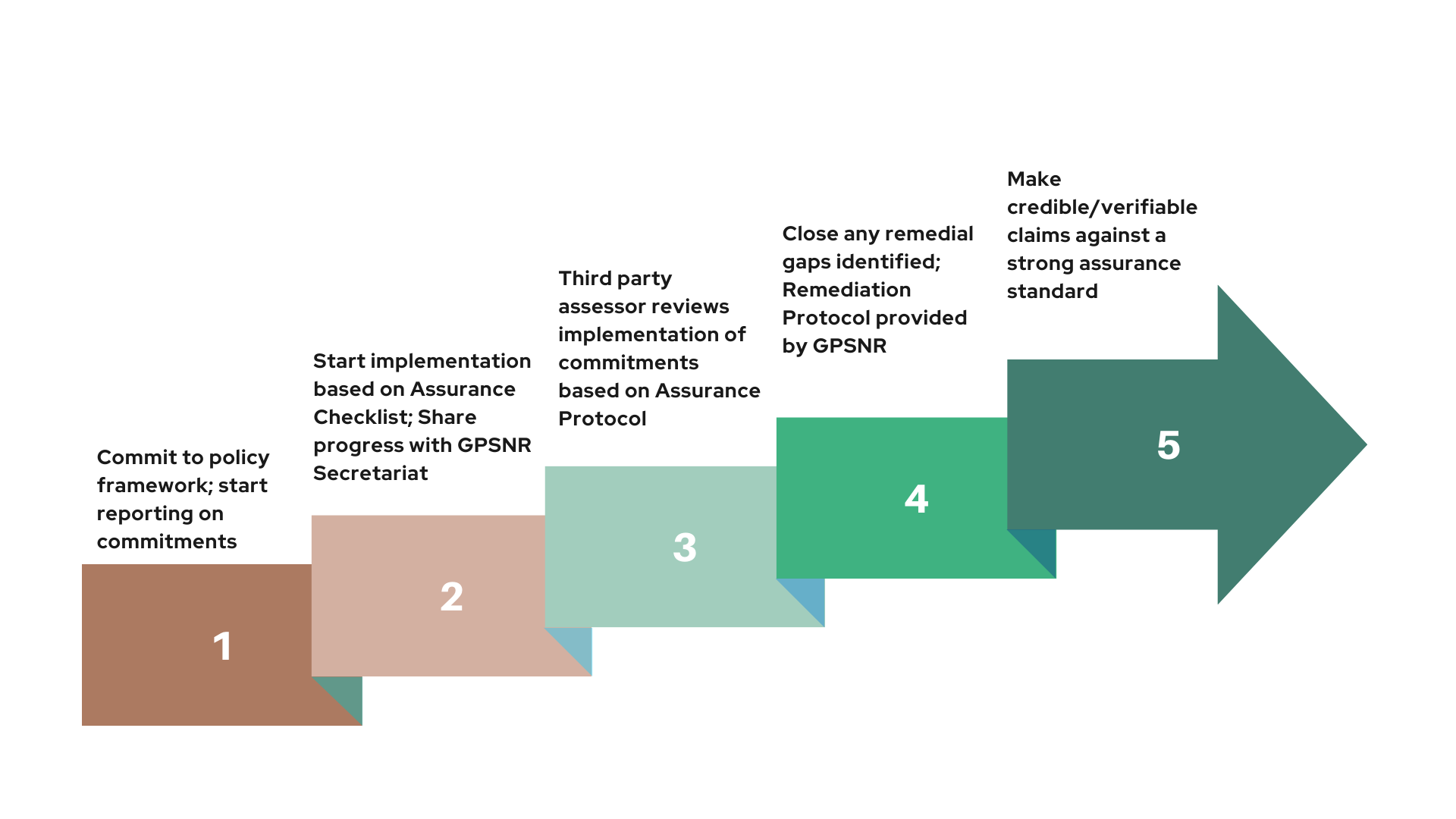
GPSNR members’ stage-by-stage progression towards verified sustainability assurance 

The Assurance system is currently being piloted by some volunteer manufacturers and processors until August 2024. Concurrently, three of its four mandatory elements have also been put up on a public consultation to seek comments and additional inputs that will help finetune the different aspects of the model. The feedback collected via the pilots and the public consultation will be integrated into the assurance model and put up for members’ review at the Annual General Assembly in October 2024. By 2025, all GPSNR members will be using this model in their operations. 

The model covers four mandatory elements – an Assurance Assessment checklist which will spell out the minimum requirements that members will have to meet on all aspects of the GPSNR policy framework, an Assurance Protocol which will provide guidelines to external assessors, a Remediation Protocol that includes actions and timelines to close the gaps identified by the assessors and a Members Journey or broad timeline to achieve these requirements.  Additionally, the model also includes supplementary tools that will support members in putting the assurance model into practice, like a due diligence framework and national risk assessments, amongst others. 

‘’Having a system that can verify and cross check the implementation of our members’ commitments has always been our overarching goal at GPSNR. With the voting in of the Assurance Model structure, our members have demonstrated their intent to deliver on their sustainability promises. I am especially proud of the multistakeholder nature in which the assurance model has been agreed on, keeping in mind the practical position of each member category.’’ said Stefano Savi, GPSNR’s Platform Director. 

GPSNR’s membership is meeting next week in Singapore to iron out the details of the minimum requirements spelt out in the Assurance Model checklist, the nature of the claims that can be made, the feedback from the pilots and the assurance protocol for third party assessors. 

END

About GPSNR: 

GPSNR is an international membership driven platform set up to define sustainability for the natural rubber value chain. It brings together various stakeholders to a common ground based on fairness, equity and environmental sustainability. More on sustainablenaturalrubber.org

For more information, please contact:

Bani Bains

Communications Manager

Email: bani.bains@gpsnr.org

Ph: +65 97268165
More To Explore

Members

Updates from the Working Groups (Members Version)

Strategy and Objectives Working Group

The study on Human Rights and Labour Rights’ Risk Mapping in the Global Natural Rubber Value Chains conducted by independent consultants James Griffiths & Associates Sàrl has been submitted to the Working Group. The full study will be published on the GPSNR website shortly, and the document will be open to stakeholders for comments.

Meanwhile, the Strategy and Objectives Working Group has started to engage with the rest of the Working Groups on aligning with the Theory of Change, and developing platform KPIs. 

The Equity sub-Group has collected comments from the Strategy and Objectives Working Group on the proposed definition of equity. The sub-Group is also exploring engaging consultant James Griffiths to conduct research into equity risks along the natural rubber supply chain, with the plan to have the findings of this study feed into the definition. The sub-Group is currently in the process of establishing an operational plan to define the various workstreams, processes, timelines, and  responsibilities for the Living Income study. The first phase of the study will involve collecting existing benchmark data and doing desk research on national poverty lines, minimum wages, and other relevant information. For greater alignment with the Capacity Building Working Group’s scope, the Equity sub-Group has decided to focus on the same four countries: Côte d’Ivoire, Indonesia, Myanmar and Thailand. 

‘Policy Toolbox’ Working Group

The proposed Policy Components and Baseline Reporting Requirements are open for member consultation until 3 July 2020. Find out more here

‘Capacity Building’ Working Group

The regional sub-Groups described the various findings and recommendations in a presentation to the larger Working Group at the end of May. Eight initiatives were proposed to be shared across the four focus countries, each corresponding to a critical issue identified through stakeholder interviews. These eight initiatives are: access to pure certified (re)planting material, promote the CO2 compensation scheme, promote value rubber wood, improve access to finance, disease fighting, dissemination of Good Agricultural Practices (GAP), income diversification, and improve reach and quality of extension services. Depending on the initiatives recommended for each country, three priority actions have been suggested, forming the basis for a 3-year programme.

The sub-Group for Thailand organized a call with some of Thai smallholder members to seek their opinion on the proposed initiatives. The discussion proved to be a fruitful one, with the smallholders providing advice and suggesting alternative initiatives for the sub-Group to consider. The subgroup for Côte d’Ivoire, which has a smallholder member who is a representative from a local producer association in participation, has also contextualized the proposed initiatives to the local conditions of smallholders and industrial plantations.

The other sub-Groups are also planning to get smallholder members’ input on the capacity building initiatives for their respective countries of focus.

‘Traceability and Transparency’ Working Group

The Working Group has started discussions on risk assessment, and will be linking up with the Policy Toolbox Working Group as well as consultant James Griffiths on the results of the social risks study.

The terms of reference for the two pilot proposals have been finalized after several rounds of additional revision. The documents will be submitted soon to the Executive Committee. 

Smallholders Representation Working Group

The Working Group continues to plan and prepare for the smallholders programme prior to the General Assembly. In particular, terms of reference are being drafted for a professional facilitator to manage the smallholder workshop sessions for the pre-GA programme.

News

Member Consultation on proposed GPSNR Policy Components and Baseline Reporting Requirements

Natural rubber faces a similar set of environmental, social and economic issues as other agricultural commodities such as palm oil, but the spotlight on sustainability has only been recently turned towards this key raw material, 70% of which goes into tire production. The launch of GPSNR marked a significant step towards developing sustainable standards for natural rubber, with member organizations making a commitment to 12 Sustainable Natural Rubber Principles. 

The Policy Toolbox Working Group was established to develop a guiding framework for GPSNR members to implement policies and practices that align with the 12 Principles. Two key documents, the Policy Components and Baseline Reporting Requirements, have emerged after a year of discussion and drafting. 

The Policy Components outline specific commitments that GPSNR company members should include in their sustainable natural rubber policies, while the  Baseline Reporting Requirements indicate qualitative and quantitative sustainability data to be reported to the Secretariat for the first year of reporting.

A members webinar was held on 16 June, where the Co-Chairs of the Policy Toolbox Working Group explained the purpose, process and next steps surrounding the two documents. 

Several members have volunteered to participate in an ongoing pilot testing of the Baseline Reporting Requirements. The goal of the pilot is to refine and finalize the Baseline Reporting Requirements based on company feedback.

The proposed Policy Components and Baseline Reporting Requirements are now open for member consultation until 3 July 2020.

Scroll to Top