Smallholders Representation Working Group Update – February 2020

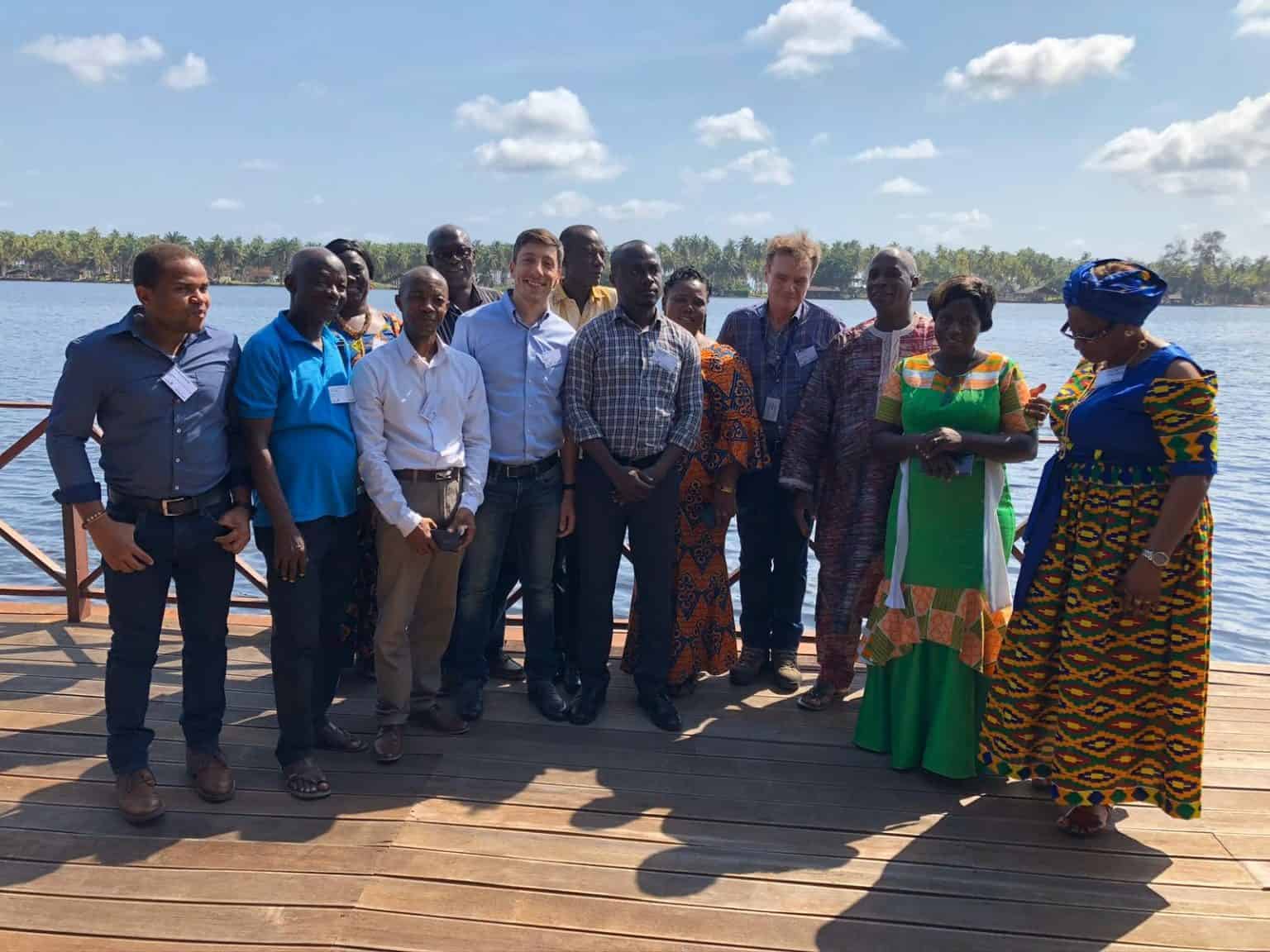
The Smallholders Representation Working Group will soon actively engage our smallholder members in several sessions with the aim of thoroughly briefing them on the Platform’s operations, including key documents such as GPSNR Statutes and Code of Conduct.

Share This Post

These documents have now been translated into several languages to cater to the geographical diversity of the group. Ensuring that the smallholders have a good foundational understanding of GPSNR’s aims, structure and bodies of the Platform and the roles of those bodies, is key to inclusion and participation. 

A sub-Working Group has been specially established to focus on preparations for the General Assembly and related sessions. The sub-Working Group will have its first session in early March, and will discuss matters such as agenda, potential facilitators, translation services, as well as plans to hold two half-day orientation sessions with the smallholders prior to the General Assembly. 

Due to the ongoing coronavirus situation, the Working Group will revise its timeline for continuing its plans to organize smallholder workshops in additional countries like India and Malaysia. Up for consideration is a partnership with the Capacity Building Working Group on possible short-term projects that can be implemented in the meantime.

More To Explore

Members

From Strategy to Implementation: Next Steps for Capacity Building (Members Version)

One of the key strategies identified by GPSNR to achieve our vision of a fair, equitable and environmentally sound natural rubber value chain is to ensure that there is capacity amongst smallholders and industrial plantations to adopt best practices in natural rubber production.

In 2020, the Capacity Building Working Group, through various stakeholder interviews and Working Group discussions, proposed a set of country-specific capacity building activities for four countries as a start: Côte d’Ivoire, Indonesia, Myanmar and Thailand. In developing these strategies, the Working Group sought to first identify threats to the sustainable production of natural rubber within the different local contexts, as well as the underlying causes for these threats. From this initial research, the working group developed proposed capacity building actions, along with main objectives and rationales for each chosen action. The approach adopted by the Working Group in designing these actions is to allow for immediate engagement and implementation on the ground.

Following the Executive Committee’s endorsement of the Working Group’s capacity building proposals, the Working Group will be conducting a sharing session for all GPSNR members, during which more details about each national capacity building strategy will be presented.

Recruiting Members to Capacity Building National Sub-Groups

Now that the capacity building strategies are in place, the Working Group is inviting interested GPSNR members to join the soon-to-be-created National Sub-Groups that will be mandated to oversee, guide and implement the national capacity building strategies and to promote GPSNR policies and initiatives. 

The development of the National Sub-Groups recognizes existing local capacity building initiatives in the rubber sector and their independence of GPSNR and aims to cooperate with local efforts and stakeholders to achieve mutually agreed outcomes.

To learn more about the Working Group’s strategies and about how to participate in their operationalization, please register for the webinar which will be held on Wednesday, 17 February at 8:00pm (GMT+8).

News

Platform Updates for August

Baseline Reporting Requirements Pilot Testing

The Baseline Reporting Requirements, developed by the Policy Toolbox Working Group, is a document that indicates certain qualitative and quantitative sustainability data to be reported to the Secretariat. Back in June, we invited GPSNR members to volunteer to be part of a pilot testing for these Baseline Reporting Requirements. Since then, we have had 12 member companies coming forward to contribute their time and efforts to the exercise. These member companies consist of processors, tire makers and one car maker. As part of the pilot testing, each company was given access to a secure reporting platform where they could input the necessary reporting data.  

The Secretariat has conducted in-depth interviews with ten of the volunteer members so far. Following this, all feedback and data received will be reviewed, with the view to refine the Baseline Reporting Requirements in preparation for the formal launch in the near future.

Strategy and Objectives Working Group

The Working Group has commenced an extension of the study on Human Rights and Labour Rights’ Risk Mapping in the Global Natural Rubber Value Chains conducted by independent consultants James Griffiths & Associates Sàrl. This extension will see the consultant preparing an Annex to the main report that focuses on “equity issues” in the global natural rubber value chain. The objective of this extension is to understand current levels of equity (or inequity) along the natural rubber supply chain and identify where these could pose a threat to ecological, social and economic sustainability.

The report will also touch on how GPSNR’s current definition of “equity” compares to definitions used by others in related sectors or related risk assessments, providing suggested revisions to GPSNR’s definition where appropriate.

The Equity sub-Group published four Requests for Proposals (RFPs) in mid August, for studies on the Living Income Gap in the global natural rubber value chain. These initial studies will focus on collecting information and metrics from four countries: Côte d’Ivoire, Indonesia, Myanmar and Thailand. The deadline for submission of proposals is over. The Secretariat has received several proposals and will be evaluating them before presenting them to the sub-Working Group for consideration.

‘Traceability and Transparency’ Working Group

The two Requests for Proposals (RFPs) that the Working Group has been developing were also published in mid August. The deadline for submission of proposals was last week.

The first RFP is for a study that will assess the methodologies of existing traceability and transparency tools and how they match up against the traceability and transparency requirements of GPSNR members. 

The second RFP is for a study that will compare existing and currently under-development GIS databases and mapping tools along with their mapping approaches through research and interviews.

The Secretariat has received several proposals and is in the process of evaluating them. The Working Group will make the final decision thereafter.


Scroll to Top