
Secretariat Update – September 2019
This update was prepared by Assel Mussagaliyeva, Industry Relations and Academic Projects Manager, Essec Asia Pacific.
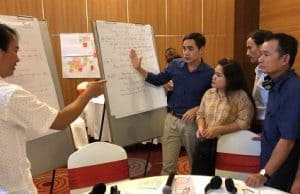
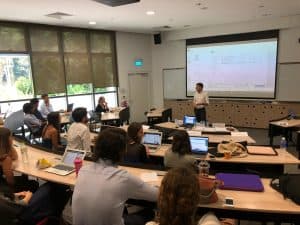
ESSEC Asia Pacific partnered with the Global Platform for Sustainable Natural Rubber for their first Global Manager in Asia (GMA) project. The GMA Project included diverse multinational companies and startups with strong Asian core: International Finance Corporation (IFC Fintech Group), Grab for Business, ACT Genomics, Creatella Ventures and GPSNR. Involving 148 ESSEC Master in Management students, the Project took place on 1 July – 11 September 2019, followed by the Final Jury.
The project results were in line with GPSNR priorities in the three Asian markets. The 6 student teams under the close guidance of Stefano Savi and Kobrat Sawasdivorn explored the challenges of the smallholder farmers affecting equity of the rubber supply chain in Thailand, China and Indonesia. The results of the student research will be presented to the GPSNR Working Groups.
Assel Mussagaliyeva, Industry Relations and Academic Projects Manager, said it was a good project both from a teaching perspective as well as practical experience for the students. Firstly, it was hands on experience challenging students to think ‘out of the box’ as it involved multiple layers: a variety of stakeholders, unfamiliar context, lack of industry knowledge and limited country data. Secondly, it was a great chance for the students to work on a big picture issue, especially in today’s world of climate change challenges. The project itself was well focused and narrow enough for the students to have an opportunity to make a tangible difference.
“ESSEC Asia Pacific is grateful to GPSNR for our collaboration on multiple levels,” said Mussagaliyeva. In March 2019, GPSNR participated at the ESSEC APAC Talent Day and offered internship for the Global BBA student Tanmay Daga. Following that, Stefano Savi participated in the first ESSEC APAC student-led TedX event as an invited speaker on sustainability. Soon after, the GMA Project scope was discussed.
“We look forward to working with GPSNR in the future,” said Mussagaliyeva. The mission of ESSEC Business School is to create and disseminate cutting-edge knowledge, to train and develop bold pioneers and influential leaders for both the business world and society. We encourage the students and programme participants to anticipate – and meet – the economic, managerial, social, environmental and ethical challenges of an increasingly uncertain world. These values align with GPSNR mission as sustainability is an integral part of responsible innovation.
The Secretariat has also published the executive summary of minutes of each working group in the “News and Publications” section of the website. All members of the platform can login to the website to view the documents under the Members Only section. There are currently 2 working groups, the Strategy & Objectives working group chaired by James Laimos of Goodyear and the Smallholders Representation working group chaired by Ulrich Antoni of Pirelli. The executive summary of each working group will be updated on a bi-weekly basis. If you have any issues accessing the website, please send us an email at info@gpsnr.org.