
GPSNR Celebrates a Landmark Year and Strengthens Collective Commitment at 7th General Assembly

Share This Post

Singapore, 15 December 2025 — Members of the Global Platform for Sustainable Natural Rubber (GPSNR) gathered today for the organisation’s 7th General Assembly, marking a landmark year of progress in collective responsibility, accountability, and member-driven sustainability across the natural rubber value chain.

A major milestone in 2025 was the launch of GPSNR’s risk-based Assurance System, which sets clear sustainability expectations, introduces independent verification, and promotes continuous improvement beyond compliance. Developed collaboratively over several years, the system provides a credible, globally relevant framework for advancing sustainability in the sector. At this GA, End User companies reaffirmed their support and agreed on a structured pathway toward full implementation in their category.

“This year marks a turning point for GPSNR,” said Stefano Savi, CEO of GPSNR. “The Assurance System gives our members a shared and trusted foundation for demonstrating progress across the value chain.”

Members also marked the first year of the Shared Investment Mechanism, an innovative model enabling manufacturers to equitably share the costs of large-scale capacity-building projects, ensuring long-term benefits for upstream actors, particularly smallholders.

“Sustainability cannot be achieved by one part of the value chain alone,” Savi added. “By investing together, our members are enabling more inclusive and impactful outcomes worldwide.”

Looking ahead to 2026, GPSNR will support implementation of the Assurance System through data gathering, member learning, and cross-stakeholder dialogue to ensure the system reflects on-the-ground realities and diverse business models. 

The Assembly concluded with renewed commitment from members to advance equitable, resilient, and sustainable natural rubber supply chains.

About GPSNR:

The Global Platform for Sustainable Natural Rubber (GPSNR) is a multi-stakeholder, member-driven initiative working to advance sustainability across the natural rubber value chain.

More at sustainablenaturalrubber.org

Media contact:

 Bani Bains, Communications Director
bani.bains@gpsnr.org | +65 9726 8165
More To Explore

News

Smallholders Representation Working Group Update – November 2019

With the input from the workshop in Indonesia, Thailand, Brazil (and soon Cote d’Ivoire and Vietnam), the smallholders representation working group is finalizing the definition of ‘smallholders’ which will be needed to open up a new category of membership. Recognizing the experience and effort that IRSG/SNRi had already invested in this work, Smallholders Representation Working Group invited IRSG to discuss the definition of ‘smallholders’.  

While many countries have their own definition of ‘smallholders’ based on the size of their land, the Smallholders representation Working Group agreed other characteristics of smallholders (such as income provenance, level of dependency on family labour, economic constraints, etc) should also be considered. 

As the definition of ‘smallholders’ are affiliated to the work scope Strategy 2 – Capacity Building Working Group, the Smallholders Representation Working Group members are working closely with Strategy 2 – Capacity Building Working Group members to ensure that there is alignment in definition between smallholders in the natural rubber supply chain and smallholders that will become GPSNR member.

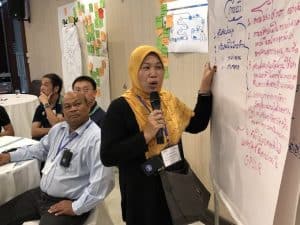
In the meantime, a successful third workshop in Brazil concluded this week, with a series of learnings for GPSNR on the organisation of farmers in the region, and their expectations from the future collaboration with the Platform. The workshop also achieved good progress on the identification of potential candidates for membership in GPSNR, both by single farmers and producers associations.

News

Strategy and Objectives Working Group Update – January 2020

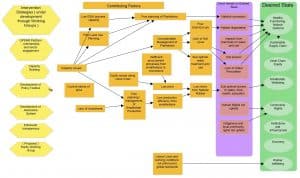
Using the Theory of Change model, the Working Group identified root causes that prevent the natural rubber supply chain from achieving the desired state. Once these root causes were agreed upon, effective strategies could be designed to mitigate them.

Considering that the natural rubber industry and the world around it is not static but changes with time, the Working Group has planned for the Theory of Change to be a living document that GPSNR members will continually update and maintain. This will ensure its relevance and role in realizing the vision of GPSNR.

In addition to the above, the Working Group is drafting the Terms of Reference (ToR) for the Equity sub-Working Group. The sub-Working Group’s focus will be on how we can ensure equity along the supply chain.

‘Policy Toolbox’ Working Group

Working Group members’ comments on the first draft of the top line policy components were consolidated and incorporated into an updated draft. For ease of understanding, it was agreed that the policy components and implementation components would be displayed in separate tables. This would allow members to more easily distinguish the policy commitments they should adopt, and the corresponding actions they should implement.

The Working Group aims to have the top line policy components finalized by the end of January for the Executive Committee’s approval.  

‘Capacity Building’ Working Group

The Working Group has designed the questionnaire on which it will base the interviews of stakeholders conducting capacity building activities in rubber-producing countries. Volunteers from the Working Group as well as the GPSNR Secretariat will contact the previously identified stakeholders and seek their input on past and existing capacity building initiatives, evaluating the success of the activities and exploring the role that GPSNR can play in ensuring that the initiatives fulfill their objectives.

‘Traceability and Transparency’ Working Group

Using the Theory of Change document as an anchor to their discussions, the Working Group was able to analyze how the lack of traceability and transparency in the natural rubber supply chain would constitute a threat to sustainability, and how to tackle the associating challenges. Next, the Working Group will start on the design of pilot studies for tools currently employed to assess supply chain risks and/or achieve supply chain traceability or transparency.

Scroll to Top