

From Strategy to Implementation: Next Steps for Capacity Building

Share This Post

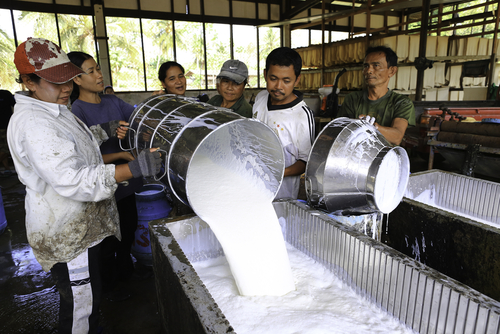
One of the key strategies identified by GPSNR to achieve our vision of a fair, equitable and environmentally sound natural rubber value chain is to ensure that there is capacity amongst smallholders and industrial plantations to adopt best practices in natural rubber production.  

In 2020, the Capacity Building Working Group, through various stakeholder interviews and Working Group discussions, proposed a set of country-specific capacity building activities for four countries as a start: Côte d’Ivoire, Indonesia, Myanmar and Thailand. In developing these strategies, the Working Group sought to first identify threats to the sustainable production of natural rubber within the different local contexts, as well as the underlying causes for these threats. From this initial research, the working group developed proposed capacity building actions, along with main objectives and rationales for each chosen action. The approach adopted by the Working Group in designing these actions is to allow for immediate engagement and implementation on the ground. 

Following the Executive Committee’s endorsement of the Working Group’s capacity building proposals, the Working Group will be conducting a sharing session for all GPSNR members, during which more details about each national capacity building strategy will be presented.

Recruiting Members to Capacity Building National Sub-Groups

Now that the capacity building strategies are in place, the Working Group is inviting interested GPSNR members to join the soon-to-be-created National Sub-Groups that will be mandated to oversee, guide and implement the national capacity building strategies and to promote GPSNR policies and initiatives.  

The development of the National Sub-Groups recognizes existing local capacity building initiatives in the rubber sector and their independence of GPSNR and aims to cooperate with local efforts and stakeholders to achieve mutually agreed outcomes.

More To Explore

News

Following the Conversation with GPSNR Topic Talks!

The GPSNR Topic Talks webinar series is organised by the GPSNR Secretariat and presented by GPSNR members. The webinars cover several themes around sustainability and the global natural rubber supply chain.

The series kicked off on 27 October with a presentation by Philippe Thaler from CIRAD, on the implications of EU legislation on imported deforestation.

The second webinar’s theme was on smallholder solutions and featured two separate presentations. “A landscape-level approach to inclusion and capacity building for rubber smallholders” was presented by Rizki Permana from SNV, Widyantoko Sumarlin from Kirana Megatara, and Tony Hill from Proforest. Speaking from experience with the Kelola-Sendang project in South Sumatra, the presenters explained how SNV, with Proforest support, worked with rubber smallholder groups in the jurisdictional initiative, which helped to forge new links between the smallholders and a crumb rubber factory buyer in the Kirana group. 

Next, “Exploring Smallholder Solutions in the Rubber Sector – The Processing and Sale of Rubberwood to Support Smallholder Financing in Indonesia” was presented by Amy Smith from WWF, Gerald Tan from HeveaConnect, with Renée Corstens and Remco Geervliet from Financial Access. This presentation shared the findings of a study which analyzed the potential of rubberwood to serve as a mechanism to support smallholder financing in Indonesia.

The next theme is Assurance and smallholders, and how we can learn from existing schemes. PEFC’s CEO Ben Gunneberg presented a webinar last night, elaborating on PEFC’s approach to standard-setting and certification. He also showcased PEFC’s current collaborative projects with their national members and companies to support smallholder producers, and how these will benefit GPSNR members and the work GPSNR is engaged in.

Continuing with the theme of Assurance and smallholders, FSC will be presenting on 8 December, an overview of smallholder certification solutions.

We are also pleased to announce an addition to the Topic Talks lineup: ‘REDD+, are carbon credits impacts overstated?’. This new presentation, jointly organized with GIZ and which will be held on 10 December, puts the spotlight on reducing emissions from deforestation and forest degradation (REDD+) with an introduction to the REDD+ methodology, followed by a discussion with the authors of a recently published study, “Overstated carbon emission reductions from voluntary REDD+ projects in the Brazilian Amazon”. 

GPSNR members may contact the Secretariat to register for the upcoming Topic Talks.


Assurance and Smallholders: Learning from Existing Schemes Part 2

“FSC Smallholder Certification Solutions”

8 December | 7PM (GMT+8)

Presented by: FSC

The presentation will cover FSC’s solutions for smallholders to become certified. First, an overview of the evaluation of certification solutions for smallholders will be given. FSC’s existing solutions will be covered, with a focus on the benefits for FSC Group Certification. Next, solutions in the pipeline will be covered, addressing the impact of pilot projects and highlighting success stories.

REDD+, are carbon credits impacts overstated?  

10 December | 3PM (GMT+8)

Jointly Organized by: GIZ 

Presented by: GIZ and authors of the study

Using REDD+ projects to offset carbon emissions through avoided deforestation and the financial support of local communities is popular but also highly debated. Especially, voluntary REDD+ projects are regularly criticized as inefficient or even greenwashing. This presentation will provide an introduction to the REDD+ methodology. The authors of a recent critical study, “Overstated carbon emission reductions from voluntary REDD+ projects in the Brazilian Amazon” will then present their findings and suggestions as a basis for discussion.

PUBLIC CONSULTATION: Second round of feedback on GPSNR’s Assurance Model

*Updated October 2024

After gathering member feedback on the Assurance Model documents in May and June, the GPSNR Secretariat has worked together with Hubert de Bonafos from ASI to revise the Assurance Model documents. The platform is now seeking a second round of input from stakeholders on the Assurance Model – a system designed to validate the sustainability efforts of member companies and measure the platform’s industry-wide impact.

This 30-day public consultation will again focus on the three core elements of the GPSNR Assurance Model: the Assurance Assessment Checklist, Assurance Protocol, and Remediation Protocol.

After this second round of consultation, GPSNR will review all inputs, make revisions and work within the Assurance Model Task Force to prepare a final version of the documents that will be put up for vote at the December General Assembly.

To contribute, please access the documents and submit your comments via the button below by 27th September 2024.
Comments have closed, please click on the link below to see feedback and responses to feedback.


Click here for Assurance Model Documents

Click here to see feedback and responses to feedback

Scroll to Top