

Empowering Smallholder Farmers: The Path to Deforestation-Free Rubber Supply Chains to Meet the EUDR

Share This Post

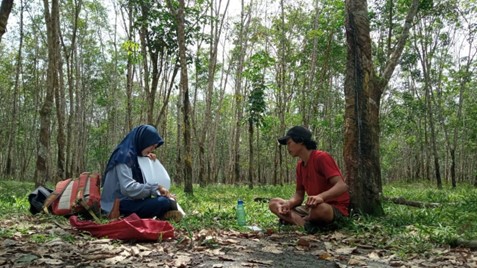
On Wednesday, 19 April 2023, the European Union approved the upcoming Deforestation-Free Regulation (EUDR) to prevent companies from placing products linked to deforestation onto the EU market. As part of the wider vision of the EU Green Deal, it will demand companies who import rubber or rubber-based products (e.g., tires) to verify that their supply chain is deforestation-free. It’s a push towards an era of environmental accountability, yet it also sparks debates about the path forward for the rubber industry.

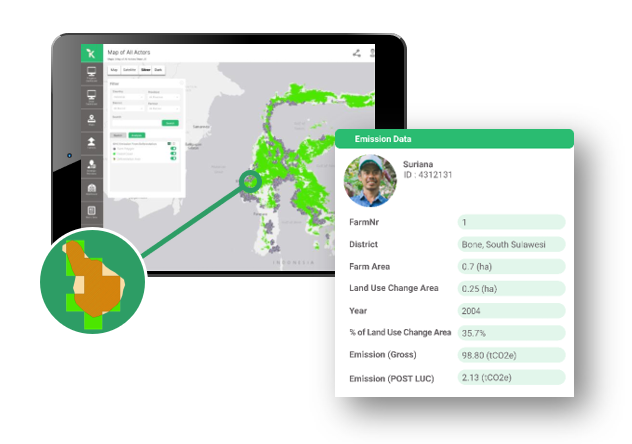
The EUDR requires companies to have traceability to the farm level, including geo-location data and proof of land legality. According to the regulation, every plot below 4 hectares requires at least a GPS point coordinate, while plots above 4 hectares must have a polygon.

Fulfilling these traceability requirements is no small feat. There is concern from the industry that smallholder farmers may be unintentionally excluded from global sustainable supply chains. Ensuring smallholder farmer inclusion requires a holistic sustainability approach.  There is no doubt that the rubber industry has begun moving towards sustainable rubber sourcing through combined industry efforts like the Global Platform for Sustainable Natural Rubber (GPSNR). However, the reality is that most imported rubber to the EU currently does not meet the regulatory requirements as the industry lacks traceability to the farm level. As 85% of the global natural rubber supply is supplied by approximately 6 million smallholder farmers, the implications of this regulation could be far-reaching and severe, particularly for these smallholder farmers.
However, there is a lot of hope.

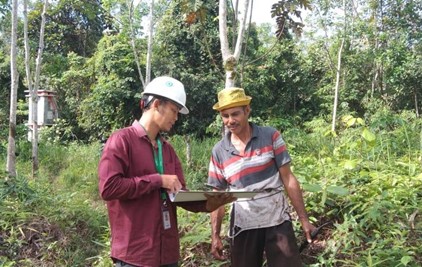
Firstly, even though it might seem challenging, traceability to the farm level is doable – even for the rubber industry. This has been demonstrated in a GPSNR-funded farmer training and coaching project primarily focused on supporting smallholders to apply Good Agriculture Practices (GAP). Koltiva, the company I am working for and who was selected to be the implementing partner for this project, has mapped more than 4,000 farmers and their farms to help them to prepare for the EUDR in less than a year.
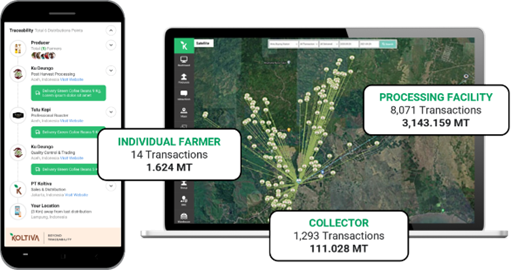
Secondly, we believe that traceability to the farm is scalable. In our work with clients in 51 countries, we were able to map almost 1 million smallholder farmers through our KoltiTrace platform. Platforms such as KoltiTrace allow companies to map and verify their supply chain, including transaction traceability from Seed to Tire and deforestation-free analysis.

Finally, EUDR could have a long-term positive impact on smallholder farmers. Currently, many rubber farmers do not have proper land titles. Due to the EUDR geolocation requirements, many smallholders will, for the first time, have access to a map of their own plantation, allowing them to legalize their land.

And it doesn’t stop there. Smallholders have largely been invisible in global supply chains. Traditional development programs have tried to engage them, but they have not reached the expected results. Many smallholders still have no access to knowledge, no access to capital,  and soon will also be excluded from the carbon economy.

I believe that it’s possible to bridge these gaps. Traceability to farm level and digitalizing the first mile of agricultural value chains can lay the foundation for holistic sustainability interventions. Enabled by technology and data, the sector can equip farmers with critical knowledge, improve their access to finance, actively support farmers to apply low-carbon practices and enable them to reap the benefits of the growing carbon economy.

While traceability cannot be achieved overnight, the rubber industry is in a unique position. At GPSNR, the major industry players are sitting at one table. Through combined efforts and data-sharing agreements of shared supplier data, the rubber industry can become a leading example of how to meet the EUDR.

About the Author:
Luca Fischer is Koltiva’s Program Manager, leading Koltiva’s boots-on-the-ground implementation projects in the rubber sector globally. He bridges the gap between the client, product, and field teams.

Luca has over five years of work experience in sustainable sourcing, smallholder livelihood, and climate-smart agriculture development. He graduated with an M.Sc. in Sustainable Resource Management from the Technical University of Munich, Germany.

About Koltiva (click here for more information)
Established in 2013, Koltiva is a leading agritech company for enterprises to make their global supply chains traceable, inclusive, and climate-smart. Backed by Koltiva’s human-centered technology with boots-on-the-ground professional service, Koltiva supports some of the largest multinational companies by digitizing and verifying global supply chains, focusing on enhancing traceability, inclusiveness, and sustainability. Koltiva combines triple-tech (AgriTech, FinTech, and ClimaTech) to improve producers’ outcomes and profitability while building more sustainable supply chains.

More To Explore

News

Different Plans for Different Countries: Getting Capacity Building Right

What are the challenges that prevent the production of sustainable natural rubber in rubber-producing countries, and why do they exist?

What initiatives can be taken, and by whom, to effectively overcome these challenges?

How can GPSNR best support the natural rubber sector in becoming more sustainable?

In setting out to find the answers to these questions, the Capacity Building Working Group has established four regional sub-Working Groups to focus on developing country-specific capacity building goals and strategies for the following countries: Indonesia, Thailand, Côte d’Ivoire and Myanmar. 

Since the first week of April, the regional sub-Groups have been holding weekly calls to get their respective projects started. Their first order of business? Identify the main challenges preventing the adoption of sustainable natural rubber practices within their countries of focus. Already, some commonalities have been revealed: the lack of implementation of best agricultural practices and poor diversification of farmers’ income. While challenges may be similar across the countries, proposed initiatives may differ due to a variety of factors such as technology and infrastructure, culture, degree of (or lack of) government support. The role that GPSNR can play in supporting these strategies would also depend on the particular conditions within each country.  

The sub-Groups are currently working on prioritizing the identified challenges to capacity building, and will be linking expected outcomes to the components of the GPSNR Desired State.

Roland Baroan is the first GPSNR smallholder member to take part in a Working Group discussion. A rubber farmer with 37 hectares of land and current President of the Association of Natural Rubber Producers of Côte d’Ivoire (APROCANCI), Roland lends his local expertise and knowledge to the Côte d’Ivoire regional sub-Group. Smallholders from the other countries of focus will also be involved via a consultation process.

While we hope to see more smallholders participating in and contributing to the work of GPSNR, we must also ensure that the right support systems are in place for them to effectively connect and communicate with all members. To this end, the Smallholders Representation Working Group is finetuning a proposed programme to onboard our smallholder members. The Working Group is also discussing a suitable funding mechanism for future smallholder participation in GPSNR.

By laying the groundwork for smallholder inclusivity, we can support the natural rubber value chain in its efforts to become more sustainable, and thus more resilient to global catastrophes.

GPSNR Working Groups Update: August 2023

Strategy and Objectives Working Group:

In recent developments within the Risk Subgroup, significant progress has been made. Consortiums Agridence and Koltiva have delivered their conclusive reports, which have been duly circulated among the members. The Risk Subgroup extended an invitation to ASI, requesting insights into the formulation of the Risk Assessment Framework. This move aims to ensure the adaptability of the framework to the many different risk tools that exist in the  Natural Rubber Industry. Collaborative efforts are also underway, as the Risk Subgroup and ASI work together on an inaugural pilot trial, focusing on setting Indonesia’s national risk parameters.

Meanwhile, significant strides have been taken in the realm of the Assurance Model Taskforce. Resolutions have been shared within the Strategy and Objectives Working Group, inviting constructive feedback. The completion of the Due Diligence System falls under the purview of ZSL, marking a substantial accomplishment.

The Risk Subgroup is engaging in early-stage discussions with the Basel Institution, exploring a potential collaboration concerning corruption risks within the supply chain.

Further negotiations between the Risk Subgroup and ASI encompass a range of key initiatives, including the preconfiguration of National Risk Levels, the refinement of the Risk Tool’s questionnaire, and harmonising National Risk levels with other established risk assessment tools used within the GPSNR community. ASI is entrusted with designing the GPSNR Assurance Model; and a draft Framework has been shared.

Smallholders Representation and Capacity Building (SCB) Working Group:

In recent updates, several advancements have occurred. The Indonesia National Subgroup has reported quarterly progress to the SCB WG for the GAP Coaching and Disease Fighting projects.

Meanwhile, in Thailand, the National Subgroup has completed proposal evaluations, leading to the selection of Koltiva for the Thailand GAP Coaching project.

A notable achievement is the official endorsement from the SCB WG for the final recommendations report of the Smallholders Policy-Equivalent (SPE).

Concurrently, the Agroforestry-Income Diversification taskforce has successfully finalised contractual arrangements and is actively overseeing projects in Indonesia.

Preparations are underway in the Thailand Agroforestry subgroup for upcoming training discussions scheduled for October 2023. Similarly, the Thailand GAP subgroup is taking steps to initiate its project.

On the technological front, the Digital Knowledge Sharing Platform (KSP) task force is making progress in developing features, anticipating the forthcoming piloting phase.

The HCSA-HCVN Field Trials task force is focused on refining the final report for subsequent submission to the SCB WG.

Looking ahead, the Agroforestry-Income Diversification Taskforce is gearing up for a series of agroforestry workshops planned for 2023-2024.

Cross-group collaboration is evident as the Thailand Agroforestry subgroup plans a knowledge exchange session with the Agroforestry-Income Diversification taskforce and Indonesian smallholder, Pak Febrius SW, with a focus on Rubber Agroforestry.

Lastly, the SCB WG is proactively organising calls with smallholders from diverse countries as part of their preparations for the upcoming October 2023 General Assembly.

Policy Toolbox Working Group:

A resolution along with its corresponding Annex was drafted, aiming for Year 2 Disclosure Requirements. These were slated for submission to the 5th General Assembly (GA).

Consultant Petra Westerlaan presented a proposal to the WG that outlined revisions to the GPSNR Reporting Framework. This proposal resulted from a comprehensive comparison with other reporting frameworks, including CDP Forest, GRI, and ZSL-SPOTT. The proposed revisions emphasised quantification, which would enhance data aggregation and simplify the assessment of annual progress.

Subsequent to the GA, the WG will scrutinise Petra’s proposed revisions and arrive at a consensus on changes to the Reporting Matrix.. Sufficient lead time is essential for companies to prepare their Year 3 data.

Once agreement is reached on revisions to the Reporting Matrix, the WG will proceed to define the disclosure requirements for Year 3 reporting. This sequential approach ensures a methodical and informed evolution of the GPSNR reporting process.

Shared Responsibility Working Group: 

During the face-to-face meeting, the Governance and guiding principles were introduced. Manufacturers are in the process of obtaining internal approval for the Governance Framework. They will subsequently furnish a final version for approval from the GPSNR Executive Committee (EC) and the General Assembly.

A draft resolution was shared with the Working Group (WG) and received approval for distribution to members for feedback.

Collaborating with the Capacity Building WG, the WG is developing a protocol to screen and assess proposals. This evaluation process will be based on the Equity definition and stakeholders as outlined by the EC.

One of the  co-chair seats in the Shared Responsibility WG is available, and a call for volunteers has been initiated.

Scroll to Top