News

Strategy and Objectives Working Group Update – March 2020

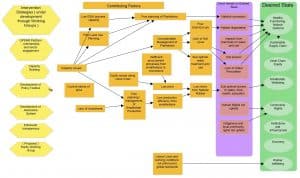
In driving forward the progress on the Theory of Change (ToC) and Desired State, the Chairs of the Strategy and Objectives Working Group are expected to lead discussions with the other Working Group Chairs. These discussions will focus on mapping the areas of work currently undertaken by the respective groups to the relevant sections of the ToC. Pulling together the detailed thinking within each group will enable the Working Group to flesh out the elements of each strategy and the linkage between each individual component. To package the ToC in a more user-friendly format, the Secretariat has developed a visual representation of the ToC, which gives a broad overview of the concept while allowing for a deeper dive into the details. The Working Group has reviewed the first draft of this document, and will be working with the Secretariat to finetune it. 

Following the initial survey that had gone out, consultant James Griffiths has started interviewing stakeholders on social risks priorities and mitigation solutions as part of the study on Human Rights and Labour Rights’ risk mapping in the global natural rubber value chain

The Equity sub-Group had their inaugural meeting this week. The members of the group agreed on the need to work with urgency and consider the approach of having a different work plan, one which would enable a move towards recommendations on a rapid basis. The importance of engaging governments was also highlighted in the discussion. The sub-Group will be meeting again next week to continue the conversation on equity.  

‘Policy Toolbox’ Working Group

The policy components and baseline reporting requirements are being circulated for comments among the various membership categories. The Producers, Processors and Traders had a teleconference organized by Socfin and Southland Global, and will also be collecting comments via email. The Tire Makers are submitting their inputs through an online survey and emails. The OEM members have also discussed the documents in a call and have consolidated their comments. Civil Society Organization members are engaged in discussions on these elements as well. The Working Group anticipates that it will be able to submit the deliverables to the Executive Committee for approval in May.

‘Capacity Building’ Working Group

In recognition of the need to prioritize an inclusive and pragmatic approach towards capacity building, the Working Group has decided to establish several regional sub-Working Groups, each of which will be responsible for developing country-specific capacity building objectives. The Working Group is exploring getting smallholders involved in some of these regional sub-Working Groups, which would be the first instance of smallholder participation at the working group level, and would be informative in the ongoing discussions on ways to integrate smallholders into the activities of GPSNR. The terms of reference for the regional sub-Working Groups are in the process of being finalised. 

The Working Group hopes to achieve greater alignment with the Theory of Change (ToC) developed by the Strategy and Objectives Working Group, through the establishment of ToCs at the working group and sub-working group level. This would allow each working group to contribute to the design of GPSNR’s ToC, with the aim to achieve the Desired State. Working groups can delve into more precise levels of identifying capacity building objectives and developing implementation plans to address the gaps in various target groups within a specific country.

‘Traceability and Transparency’ Working Group

After consulting with the Policy Toolbox Working Group on areas of risk, the finalized terms of reference for the two pilot proposals are being circulated for final feedback within the Traceability and Transparency Working Group.

The pilot study on satellite mapping and machine learning aims to make use of historical and current data and new technology to determine the risk of potential deforestation, along with other social and environmental risks that are the result of deforestation.

The traceability and transparency tool comparison study will assess, among others, the ability of the tool to identify risk and/or contribute to a risk assessment in the social, environmental and legal categories. 

The proposals will be submitted to the Executive Committee for approval in April. Moving forward, the Traceability and Transparency and Policy Toolbox Working Groups will work closely together on understanding risks in the natural rubber supply chain..

Read More »
News

Smallholders Representation Working Group Update – March 2020

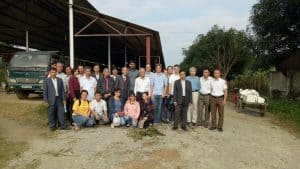
The appointed Country Champions have been in contact with the smallholders to ensure a good understanding of GPSNR through familiarization with the Statutes and Code of Conduct. These socialization efforts were carried out by means of teleconferencing, some taking place with the aid of interpreters. To complement these preliminary engagement sessions, the Working Group is creating a customised programme for the smallholders prior to this year’s General Assembly. It is important for the smallholders to meet face-to-face and have the chance to get to know each other, considering that some of them have never stepped foot outside their own country. As they will have to decide who will represent them in the Executive Committee if the new ‘Smallholder Producers’ membership category is approved, interaction with each other is imperative for them to make informed decisions.  

The sub-Group specially formed to focus on this issue has proposed a first draft of the programme, which was discussed at the recent Working Group meeting. At the moment, the programme includes sessions for the smallholders to learn more about each other, about GPSNR and the impact of their votes. They will also guide the smallholders in identifying their priorities and needs, and include sharing from GPSNR members in the other categories, so that smallholders can better understand how they can be effective members and work with others at both Working Group and Executive Committee levels. Aside from these proposed sessions, a half-day field trip is also being considered as a socio-cultural component. 

Looking towards the future, the Working Group is having ongoing discussions on how best to integrate smallholders into the various Working Groups. The language barrier has been identified as a key issue to address in order to achieve full inclusivity of smallholders. .

Read More »
News

Message from the Director: Updates on COVID-19

Dear Members,

Since our last update to you, the COVID-19 situation has escalated into a global pandemic, with Europe and the US some of the hardest hit areas. The implications for us as a multi-stakeholder platform, are many. Today, I am taking the opportunity to update you on how we have addressed the issues within our control.

Secretariat Operations
For the health and welfare of our staff, we have instituted a work from home recommendation. We are also complying with the local government travel advisory to defer all non-essential travel. Rest assured that these measures will have minimal disruption to the operations of the Secretariat, and we remain only an email or a teleconference call away.

Working Groups
All our Working Groups remain active and continue to make progress in their respective areas of focus despite the situation. They are taking the extra time to enhance their deliverables, and I am confident that we will have many sound proposals and resolutions to consider and approve as a Platform. I encourage you to read the updates on the News and Publications page of our website, so that you are aware of the achievements to date of our Strategy & Objectives and Smallholders Representation Working Groups.

General Assembly
The severity of this pandemic has caused inevitable delays to our 2nd General Assembly (GA). As the safety and wellbeing of our members is our utmost priority, we will not be able to hold the GA within the first half of the year as we had anticipated. Nevertheless, the Executive Committee is in ongoing discussions on plans for the GA, and, where necessary, will assist all Working Groups to finetune their proposals to ensure a smooth and productive GA. 

Finally, I would like to thank each and every one of you for your continued contribution and teamwork even in these trying times. I also appreciate your understanding and patience as we decide on the best way forward for the Platform in these unprecedented times. 

Our thoughts are with the natural rubber farmers and producers, and their families, whose livelihoods are being mostly impacted by COVID-19. To those whose family, friends or co-workers have been directly affected by the virus, our thoughts go out to you.

I urge you all to stay safe, stay vigilant, and stay positive.

All my support,

Stefano Savi
Director

Read More »
News

Secretariat Update – February 2020

On Friday 7 February, Singapore announced that it was stepping up its risk assessment level. Previously at ‘Yellow’ on the Disease Outbreak Response System Condition (DORSCON) scale, the country is now at ‘Orange’. This change triggered additional precautionary measures such as an advice to cancel or defer all non-essential large-scale events. More countries are also putting in place such measures, from enforced quarantine for certain travelers to outright travel restrictions.

The safety and comfort of all members remains our utmost priority. The Secretariat will continue to monitor the situation closely, with the intention to hold the General Assembly once it becomes more stable. The new date for the General Assembly will be in 2020, and will be communicated with due notice to all members. 

During this time, all Working Groups will continue to advance their work in establishing a policy toolbox, shaping capacity building initiatives, achieving transparency and traceability, and solidifying smallholder inclusivity in GPSNR. 

The GPSNR Executive Committee has agreed to extend the deadline for submission of General Assembly resolutions and Executive Committee nominations to Tuesday, 31 March 2020.

For the latest updates on the progress of our Working Groups, please refer to the News and Publications section of our website.

Read More »
News

Secretariat Update – February 2020

On Friday 7 February, Singapore announced that it was stepping up its risk assessment level. Previously at ‘Yellow’ on the Disease Outbreak Response System Condition (DORSCON) scale, the country is now at ‘Orange’. This change triggered additional precautionary measures such as an advice to cancel or defer all non-essential large-scale events. More countries are also putting in place such measures, from enforced quarantine for certain travelers to outright travel restrictions.

The safety and comfort of all members remains our utmost priority. The Secretariat will continue to monitor the situation closely, with the intention to hold the General Assembly once it becomes more stable. The new date for the General Assembly will be in 2020, and will be communicated with due notice to all members. 

During this time, all Working Groups will continue to advance their work in establishing a policy toolbox, shaping capacity building initiatives, achieving transparency and traceability, and solidifying smallholder inclusivity in GPSNR. 

The GPSNR Executive Committee has agreed to extend the deadline for submission of General Assembly resolutions and Executive Committee nominations to Tuesday, 31 March 2020.

For the latest updates on the progress of our Working Groups, please refer to the News and Publications section of our website.

Read More »
News

Strategy and Objectives Working Group Update – February 2020

The Terms of Reference (ToR) for the Equity sub-Working Group are now finalized. The group is currently recruiting members to start work on developing a shared definition of equity and  assessing the current level of equity (or lack thereof) across the natural rubber supply chain, with the help of studies on Living Wage and Living Income, which will then inform recommendations on what can be done to promote equity along the supply chain. Members should ideally belong to the Strategy & Objectives Working Group. Any other GPSNR members who are keen to participate and possess relevant expertise may indicate, for consideration, their interest by sending an email to GPSNR Impact and Assurance Manager, Kobrat Sawasdivorn (kobrat@gpsnr.org) for consideration by the Chairs of the group, James Laimos and Martin Hollands.

Following a review of the proposals received, consultancy group James Griffiths & Associates Sàrl has been selected to commence the study on Human Rights and Labour Rights’ risk mapping in the global natural rubber value chain. The study aims to improve GPSNR’s understanding of the social risks across key natural rubber production and processing countries, to propose risk mitigation strategies for each region, and to identify relevant social sector stakeholder groups that can contribute through active membership in GPSNR. A survey has been designed for Strategy & Objectives Working Group members to set the scope of the study by defining geographic coverage, identifying current perceived social risks, and contributing key perspectives and reference materials.

‘Policy Toolbox’ Working Group

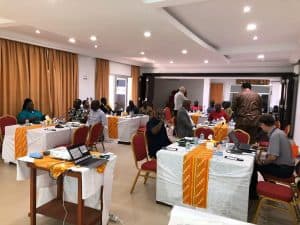
The drafters held a two-day physical meeting in Singapore over 13 and 14 February to finetune the policy components and baseline reporting requirements, with input from GPSNR members representing the processing and tire-making segments of the industry. The productive session saw open sharing from all participants, which provided insights into the processes and considerations of each sector and informed the discussion on the details of the policy components. The meeting participants also examined the assurance model and how it interfaces with policy development, as well as the support systems necessary to collect and share data securely. The meeting also saw the creation of a roadmap which lays out revised timelines and a work plan for the Working Group in its second year. Moving forward, these documents will be shared with the rest of the Policy Toolbox Working Group before being presented to the larger Strategy & Objectives Group.

‘Capacity Building’ Working Group

Members have started approaching the previously identified stakeholders in various rubber-producing countries to better understand the different challenges faced in promoting sustainability in natural rubber production, capacity building activities that have been conducted, and the degree of success (or lack thereof) of such activities, as well as how they can be improved upon. The Working Group has already received some responses from stakeholders in Brazil, Indonesia, Myanmar and Thailand. Aggregated data from these interviews will then be presented to the Executive Committee. The insights gleaned from these interviews will go towards the development of a capacity building action plan, which will undergo several rounds of consultation with members, smallholders, donors and potential local partners.

‘Traceability and Transparency’ Working Group

The Working Group has developed Request for Proposals for two pilots. One pilot for a project that employs satellite mapping tools and a second pilot for a comparison study of three traceability tools.

The project aims to enhance and improve current High Conservation Value (HCV) and High Carbon Stock (HCS) mapping in areas where rubber is predominantly produced. The focus will be on a combination of tools that use remote sensing, satellite imagery and machine learning to map areas of potential deforestation and other identified risks. The Working Group will liaise with the Policy Toolbox Working Group to ensure alignment with GPSNR’s member requirements, which are currently being developed.

The three traceability tools that the comparison study will focus on are: supply chain tracking, supply chain mapping and artificial intelligence (satellite and remote sensing). The study will assess each tool’s methodology for identifying origin and collecting information, with the aim to make a suitable recommendation based on the Working Group’s specified criteria.

Read More »
News

Smallholders Representation Working Group Update – February 2020

These documents have now been translated into several languages to cater to the geographical diversity of the group. Ensuring that the smallholders have a good foundational understanding of GPSNR’s aims, structure and bodies of the Platform and the roles of those bodies, is key to inclusion and participation. 

A sub-Working Group has been specially established to focus on preparations for the General Assembly and related sessions. The sub-Working Group will have its first session in early March, and will discuss matters such as agenda, potential facilitators, translation services, as well as plans to hold two half-day orientation sessions with the smallholders prior to the General Assembly. 

Due to the ongoing coronavirus situation, the Working Group will revise its timeline for continuing its plans to organize smallholder workshops in additional countries like India and Malaysia. Up for consideration is a partnership with the Capacity Building Working Group on possible short-term projects that can be implemented in the meantime.

Read More »
News

Strategy and Objectives Working Group Update – January 2020

Using the Theory of Change model, the Working Group identified root causes that prevent the natural rubber supply chain from achieving the desired state. Once these root causes were agreed upon, effective strategies could be designed to mitigate them.

Considering that the natural rubber industry and the world around it is not static but changes with time, the Working Group has planned for the Theory of Change to be a living document that GPSNR members will continually update and maintain. This will ensure its relevance and role in realizing the vision of GPSNR.

In addition to the above, the Working Group is drafting the Terms of Reference (ToR) for the Equity sub-Working Group. The sub-Working Group’s focus will be on how we can ensure equity along the supply chain.

‘Policy Toolbox’ Working Group

Working Group members’ comments on the first draft of the top line policy components were consolidated and incorporated into an updated draft. For ease of understanding, it was agreed that the policy components and implementation components would be displayed in separate tables. This would allow members to more easily distinguish the policy commitments they should adopt, and the corresponding actions they should implement.

The Working Group aims to have the top line policy components finalized by the end of January for the Executive Committee’s approval.  

‘Capacity Building’ Working Group

The Working Group has designed the questionnaire on which it will base the interviews of stakeholders conducting capacity building activities in rubber-producing countries. Volunteers from the Working Group as well as the GPSNR Secretariat will contact the previously identified stakeholders and seek their input on past and existing capacity building initiatives, evaluating the success of the activities and exploring the role that GPSNR can play in ensuring that the initiatives fulfill their objectives.

‘Traceability and Transparency’ Working Group

Using the Theory of Change document as an anchor to their discussions, the Working Group was able to analyze how the lack of traceability and transparency in the natural rubber supply chain would constitute a threat to sustainability, and how to tackle the associating challenges. Next, the Working Group will start on the design of pilot studies for tools currently employed to assess supply chain risks and/or achieve supply chain traceability or transparency.

Read More »
News

Smallholders Representation Working Group Update – January 2020

Of the 22 applicants, one is from Brazil, four from Côte d’Ivoire, two from Ghana, five are from Indonesia, four from Thailand and six are from Vietnam.

The 2nd General Assembly on 31 March 2020 will see the proposal of a new membership category, ‘Smallholder Producers’. Should the voting on this resolution pass, smallholders will officially find their voice in global efforts to ensure a socially, economically and environmentally sound natural rubber supply chain.

Thanks to sustained funding from Partnerships for Forests (P4F), we will be able to invite the geographically diverse group of smallholders to Singapore to attend their first General Assembly, with the view to onboard them and to have smallholder producers represented in the Executive Committee via the voting of nominated individuals.

As it is important for the smallholders to understand what is required of them at the General Assembly and as an Executive Committee member, the Working Group will be scheduling several sessions, both remote and on-site, to thoroughly brief the smallholders on GPSNR’s Statutes and Code of Conduct. The smallholders will also have the opportunity to get acquainted with one another in the two days prior to the General Assembly.

In preparation for this, the appointed Country Champions of the Working Group will be assisting the smallholders in travel logistics and other administrative matters. The Working Group is also looking into engaging professional translation services at the General Assembly to emphasize impartiality.

Read More »
News

Secretariat Update – January 2020

We can draw parallels to the coffee industry, which similarly comprises small plantation owners and more profitable downstream actors. In his recent sustainability report on the coffee industry, economist Jeffrey Sachs’ proposal for a global fund to fill the financial gaps for sustainability investments in coffee producing regions garnered vivid discussion.  

Currently, low and unpredictable rubber prices are a constraint to smallholders who produce the bulk of global rubber output. Transparency is critical in the purchasing process, and this kind of disruption typically comes hand in hand with embracing new strategies. 

Under the purview of the Strategy & Objectives Working Group, capacity building and extension services have been identified as potential measures to mitigate the root causes of the social and environmental impact from the natural rubber supply market. Implementing these at scale for the whole industry will require considerable financial investment.   

With the above considerations in mind, GPSNR is exploring new approaches to funding that would not be borne by a single segment of the industry, but in a manner incorporating the spirit of our shared responsibility. 

Enterprise Singapore organized an industry meeting on 14 January 2020, and invited GPSNR and Singapore Exchange to better understand the available options of an e-trading platform that could contribute to our funds. The meeting also discussed what could be the options, through GPSNR, to increase the uptake of the e-trading platform.

Tapping the vast potential of digitalization could present an exciting avenue of possibilities for GPSNR to better advance our vision of a fair, equitable and environmentally sound rubber value chain.      

The meeting was initiated by representatives from Enterprise Singapore, and panel speakers comprised representatives from GPSNR, Singapore Exchange and HeveaConnect. Participants included GPSNR members as well as other Natural Rubber buyers, producers, processors and traders .

Read More »
Scroll to Top