

Addressing the Impact of COVID-19 on Natural Rubber Smallholders

Share This Post

Many are calling these “unprecedented times”, and undeniably so. The COVID-19 pandemic has brought the world many firsts – from the closing of international borders to country-wide lockdowns and quarantines, and extreme social distancing measures applied to everyday activities such as exercising and grocery shopping. In this sense, many of the impacts of COVID-19 have been unprecedented. 

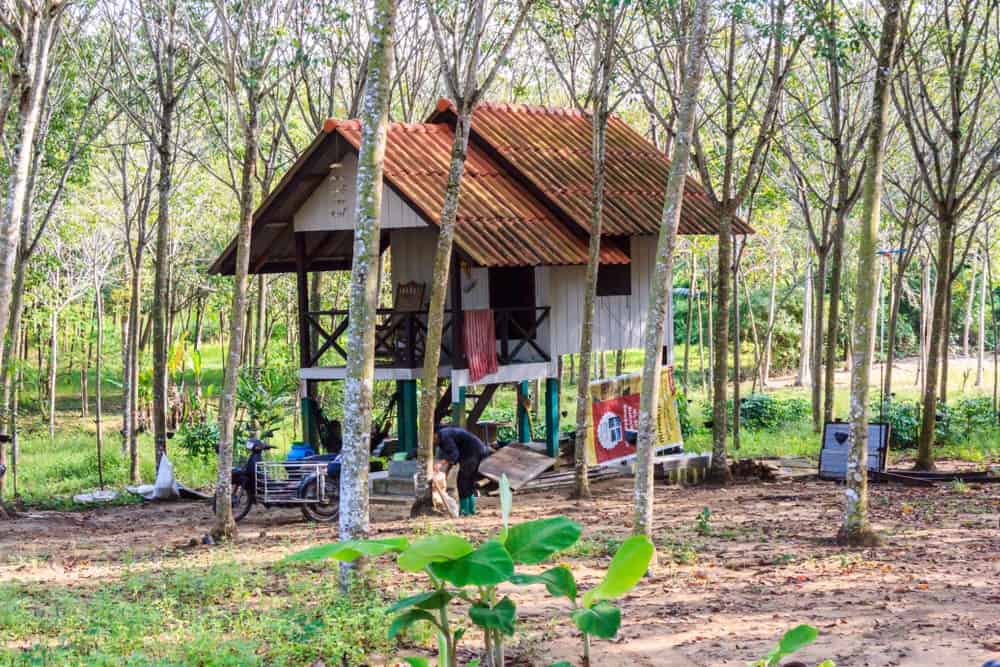
‘Unprecedented’, however, does not necessarily translate into ‘unexpected’. This is especially true for a significant link of the natural rubber value chain: the millions of smallholders and farm workers that supply the world with around 85% of its natural rubber. These smallholders, seasonal workers and their families are some of the most vulnerable people within the natural rubber sector, living in poverty and without adequate access to social services. Poor diversification of farmers’ incomes means that farmers are solely dependent on tapping rubber trees to make a living. When a pandemic occurs and global demand for natural rubber falls, it comes as no surprise that smallholders are the hardest hit. 

The Equity sub-Working Group was formed to look into the issue of equity in the natural rubber value chain and to define what GPSNR’s role will be in promoting equity along the supply chain. It is chaired by Robert Meyer (Halcyon Agri) and co-chaired by Hendrike Braun-Issa (GIZ). The sub-Group has, in its first few calls, recognized the importance of addressing the impact that COVID-19 has on the supply chain, in particular the natural rubber smallholders. In view of this, discussions have been centered around producing a set of short-term recommendations to counter the impact of the COVID-19 crisis. These recommendations are particularly aimed at supporting small-scale natural rubber farmers and their families.

The International Rubber Study Group (IRSG), represented by Secretary-General Salvatore Pinizzotto, is also participating in the sub-Group discussions to provide advice in the area of cooperation with Governments. 

Along with the short-term recommendations, the sub-Group is also looking at long-term efforts to address the underlying systemic issues, and are carrying out a study to inform the Platform on the subjects of Living Wage and Living Income.

Improving the capacity and livelihoods of smallholders is just one of the strategies undertaken by GPSNR. It is equally important for the other players in the industry to advance GPSNR’s vision of a sustainable natural rubber value chain. The Policy Toolbox Working Group continues to finalize the proposed member policy requirements and reporting requirements, with consultation from all member categories. Meanwhile, the Traceability and Transparency Working Group is focused on acquiring a better understanding of tools to achieve greater traceability and transparency within supply chains. Both groups will be aligning on key issues such as supply chain risk assessment.
More To Explore

News

Member Consultation on proposed GPSNR Policy Components and Baseline Reporting Requirements

Natural rubber faces a similar set of environmental, social and economic issues as other agricultural commodities such as palm oil, but the spotlight on sustainability has only been recently turned towards this key raw material, 70% of which goes into tire production. The launch of GPSNR marked a significant step towards developing sustainable standards for natural rubber, with member organizations making a commitment to 12 Sustainable Natural Rubber Principles. 

The Policy Toolbox Working Group was established to develop a guiding framework for GPSNR members to implement policies and practices that align with the 12 Principles. Two key documents, the Policy Components and Baseline Reporting Requirements, have emerged after a year of discussion and drafting. 

The Policy Components outline specific commitments that GPSNR company members should include in their sustainable natural rubber policies, while the  Baseline Reporting Requirements indicate qualitative and quantitative sustainability data to be reported to the Secretariat for the first year of reporting.

A members webinar was held on 16 June, where the Co-Chairs of the Policy Toolbox Working Group explained the purpose, process and next steps surrounding the two documents. 

Several members have volunteered to participate in an ongoing pilot testing of the Baseline Reporting Requirements. The goal of the pilot is to refine and finalize the Baseline Reporting Requirements based on company feedback.

The proposed Policy Components and Baseline Reporting Requirements are now open for member consultation until 3 July 2020.

Sri Trang Agro-Industry joins GPSNR

Sri Trang Agro-Industry joins 23 other rubber producers, processors and traders at GPSNR to make the industry-wide transition to sustainable natural rubber 

We are pleased to welcome Sri Trang Agro-Industry as the newest member of GPSNR’s growing community.

The Global Platform for Sustainable Natural Rubber (GPSNR) proudly announces the addition of Sri Trang Agro-Industry Public Company Limited (STA) as its newest member in the Producers, Processors and Traders category. STA, a leading fully integrated natural rubber company established in 1987, brings with it a solid commitment to the industry’s transition towards the sustainable and equitable production of natural rubber at scale. With large-scale rubber plantations covering almost 7,000 hectares across 19 provinces of Thailand, STA plays a significant role in the global natural rubber market. The company’s membership in GPSNR underscores its dedication to fostering a more sustainable and responsible natural rubber industry.

“We are thrilled to welcome Sri Trang Agro-Industry Public Company Limited to GPSNR,” said Stefano Savi, Platform Director of GPSNR. “Given the company’s scale and outreach, we look forward to their insights and contributions to important industry-wide processes on sustainable and equitable production currently underway at GPSNR, like our assurance model and shared investment mechanism.”

Nattee Thiraputhbhokin, Chief Marketing Officer of STA, stated, “Joining GPSNR reflects our unwavering commitment to advancing sustainable practices in the natural rubber industry. In addition, to the ever-evolving world of rubber production, STA emerged as a trailblazer with its groundbreaking Sri Trang Ecosystem. This digitalized, transparent, and sustainable framework showcased STA’s unwavering commitment to advancing sustainability in the natural rubber industry. With traceability ingrained in every step, from rubber tree cultivation to the delivery of traceable products, the ecosystem sets a new standard for better accountability. Joined by other industry leaders under the Global Platform for Sustainable Natural Rubber (GPSNR), STA aims to forge a more sustainable and equitable future for all stakeholders, inspiring a transformation that resonated far beyond their business borders.”

STA joins over 290 GPSNR members composed of tire makers, natural rubber producers, processors, traders, civil society members, and end-users in driving positive change and shaping the future of the natural rubber sector.

About GPSNR: 
GPSNR is an international membership-driven platform set up to define sustainability for the natural rubber value chain. It brings together various stakeholders to a common ground based on fairness, equity and environmental sustainability. More on sustainablenaturalrubber.org

For more information, please contact:
Abby Ng
Membership Outreach and Communications Associate 
Email: abigail@gpsnr.org

Scroll to Top