GPSNR Working Groups Update: October 2024

Share This Post

Smallholders Representation and Capacity Building (SCB) Working Group:

The Project Management Subgroup has officially commenced its activities with a kick-off meeting and two preparatory sessions, setting the groundwork for project evaluations. The GPSNR Capacity Building website has been updated with data from projects up to Quarter 3 of 2024, providing members with the latest insights. This month, 10 Cambodian members were approved, with an onboarding call scheduled to welcome them, and the Smallholder pre-GA webinar took place on 18 November 2024 to support engagement ahead of the General Assembly.

The Secretariat continues to support registered smallholders in the lead-up to the General Assembly, with 9 Ivorian, 5 Thai, and 2 Indonesian smallholders currently awaiting membership approval. Ongoing capacity-building projects are being actively monitored and managed, including Phase 3 of the Indonesia GAP Project, where Koltiva is revising its training materials for smallholders based on valuable feedback received.


Shared Responsibility Working Group:

To further the work on the Shared Investment Mechanism, the Project Management subgroup has approved the Project Evaluation Criteria document and will start to evaluate projects to ensure conformance with GPSNR’s requirements for capacity building projects. The subgroup will continue to review project proposals and aims to have all proposals reviewed by mid-February.

On Value Transfer related tasks, the Executive Committee’s value transfer task force met for a first meeting to discuss the next steps, agreeing that the mechanism should reward smallholders who have already put sustainable practices in place. Value transfer task force is developing a series of simple indicators that can showcase improved smallholder performance, and ways that smallholders can support this with evidence. Further discussions will continue in December. 

More To Explore

News

GPSNR’s new Policy Framework drives members commitment to sustainable rubber production and sourcing

Singapore, 23 September 2020: On Wednesday, members of the Global Platform for Sustainable Natural Rubber (GPSNR) convened the annual General Assembly, which saw the approval of a members’ sustainability policy framework and the creation of a new membership category for smallholder producers of natural rubber.

The newly approved policy framework will help GPSNR member companies, who account for almost 50% of global natural rubber volume, to establish or update strong supply chain sustainability commitments through their natural rubber purchasing policies, on all aspects of sustainability: economic, environmental, and social. Modeled around the Platform’s 12 Principles of Sustainable Natural Rubber, the new policy framework sets out eight overarching themes that include commitments to legal compliance, community livelihoods, healthy, functioning ecosystems (including no deforestation), and respecting all human rights.

“This is a tremendous milestone for the Platform and for the natural rubber industry. In just under two years, GPSNR members developed and approved concrete policy commitments for companies to integrate into their sustainable natural rubber policies. Today, and despite the challenges we all faced during this global pandemic, GPSNR members send a signal to the world about their commitment to achieving a fair, equitable and environmentally sound future” said GPSNR Director Stefano Savi.

Around 85% of the world’s natural rubber is produced by smallholders. In order to transform a sector that is primarily reliant on smallholder producers, GPSNR is embracing smallholder inclusivity and a concept of shared responsibility through the establishment of a Shared Responsibility Working Group, which will identify how the responsibilities and costs of implementation can be equitably distributed across all stakeholder categories, with the understanding that smallholders should not carry the burden of a higher cost to implement sustainability activities in complying with the policy or implementation guidance to be developed.

“Smallholders are a crucial link in the natural rubber value chain, and they have a key role to play in driving awareness on-the-ground and setting the global agenda for sustainable natural rubber” remarked Director Savi.

This year, GPSNR welcomed 28 smallholder members from seven rubber-producing countries. These smallholders now constitute a newly approved standalone category and play an equal role in decision-making within GPSNR alongside the other four categories: producers, processors, and traders; tire manufacturers and other natural rubber makers/buyers; car manufacturers, other downstream users and financial institutions; and civil society.

GPSNR’s virtual General Assembly drew more than 120 attendees, including members of the Platform, partners and invited guests. In addition to voting on resolutions, GPSNR members also elected representatives to the 2020-2021 Executive Committee, which comprises representatives from each of the membership categories. And for the first time, three newly elected smallholder producers with diverse geographical backgrounds will participate in Executive Committee discussions and decision-making.

Empowering Smallholder Farmers: The Path to Deforestation-Free Rubber Supply Chains to Meet the EUDR

On Wednesday, 19 April 2023, the European Union approved the upcoming Deforestation-Free Regulation (EUDR) to prevent companies from placing products linked to deforestation onto the EU market. As part of the wider vision of the EU Green Deal, it will demand companies who import rubber or rubber-based products (e.g., tires) to verify that their supply chain is deforestation-free. It’s a push towards an era of environmental accountability, yet it also sparks debates about the path forward for the rubber industry.

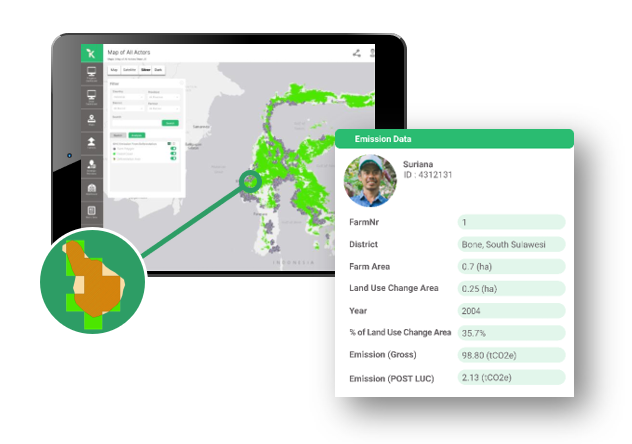
The EUDR requires companies to have traceability to the farm level, including geo-location data and proof of land legality. According to the regulation, every plot below 4 hectares requires at least a GPS point coordinate, while plots above 4 hectares must have a polygon.

Fulfilling these traceability requirements is no small feat. There is concern from the industry that smallholder farmers may be unintentionally excluded from global sustainable supply chains. Ensuring smallholder farmer inclusion requires a holistic sustainability approach.  There is no doubt that the rubber industry has begun moving towards sustainable rubber sourcing through combined industry efforts like the Global Platform for Sustainable Natural Rubber (GPSNR). However, the reality is that most imported rubber to the EU currently does not meet the regulatory requirements as the industry lacks traceability to the farm level. As 85% of the global natural rubber supply is supplied by approximately 6 million smallholder farmers, the implications of this regulation could be far-reaching and severe, particularly for these smallholder farmers.

However, there is a lot of hope.

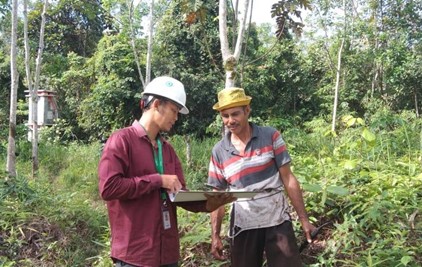
Firstly, even though it might seem challenging, traceability to the farm level is doable – even for the rubber industry. This has been demonstrated in a GPSNR-funded farmer training and coaching project primarily focused on supporting smallholders to apply Good Agriculture Practices (GAP). Koltiva, the company I am working for and who was selected to be the implementing partner for this project, has mapped more than 4,000 farmers and their farms to help them to prepare for the EUDR in less than a year.

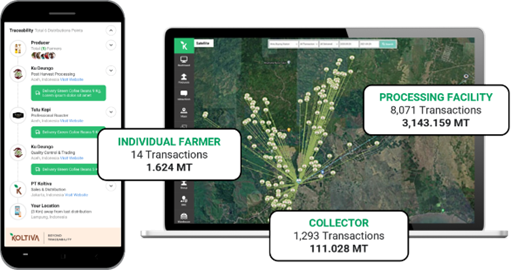
Secondly, we believe that traceability to the farm is scalable. In our work with clients in 51 countries, we were able to map almost 1 million smallholder farmers through our KoltiTrace platform. Platforms such as KoltiTrace allow companies to map and verify their supply chain, including transaction traceability from Seed to Tire and deforestation-free analysis.

Finally, EUDR could have a long-term positive impact on smallholder farmers. Currently, many rubber farmers do not have proper land titles. Due to the EUDR geolocation requirements, many smallholders will, for the first time, have access to a map of their own plantation, allowing them to legalize their land.

And it doesn’t stop there. Smallholders have largely been invisible in global supply chains. Traditional development programs have tried to engage them, but they have not reached the expected results. Many smallholders still have no access to knowledge, no access to capital,  and soon will also be excluded from the carbon economy.

I believe that it’s possible to bridge these gaps. Traceability to farm level and digitalizing the first mile of agricultural value chains can lay the foundation for holistic sustainability interventions. Enabled by technology and data, the sector can equip farmers with critical knowledge, improve their access to finance, actively support farmers to apply low-carbon practices and enable them to reap the benefits of the growing carbon economy.

While traceability cannot be achieved overnight, the rubber industry is in a unique position. At GPSNR, the major industry players are sitting at one table. Through combined efforts and data-sharing agreements of shared supplier data, the rubber industry can become a leading example of how to meet the EUDR.


About the Author:
Luca Fischer is Koltiva’s Program Manager, leading Koltiva’s boots-on-the-ground implementation projects in the rubber sector globally. He bridges the gap between the client, product, and field teams.

Luca has over five years of work experience in sustainable sourcing, smallholder livelihood, and climate-smart agriculture development. He graduated with an M.Sc. in Sustainable Resource Management from the Technical University of Munich, Germany.

About Koltiva (click here for more information)
Established in 2013, Koltiva is a leading agritech company for enterprises to make their global supply chains traceable, inclusive, and climate-smart. Backed by Koltiva’s human-centered technology with boots-on-the-ground professional service, Koltiva supports some of the largest multinational companies by digitizing and verifying global supply chains, focusing on enhancing traceability, inclusiveness, and sustainability. Koltiva combines triple-tech (AgriTech, FinTech, and ClimaTech) to improve producers’ outcomes and profitability while building more sustainable supply chains.


Scroll to Top