PUBLIC CONSULTATION: GPSNR’s Assurance Model

Share This Post

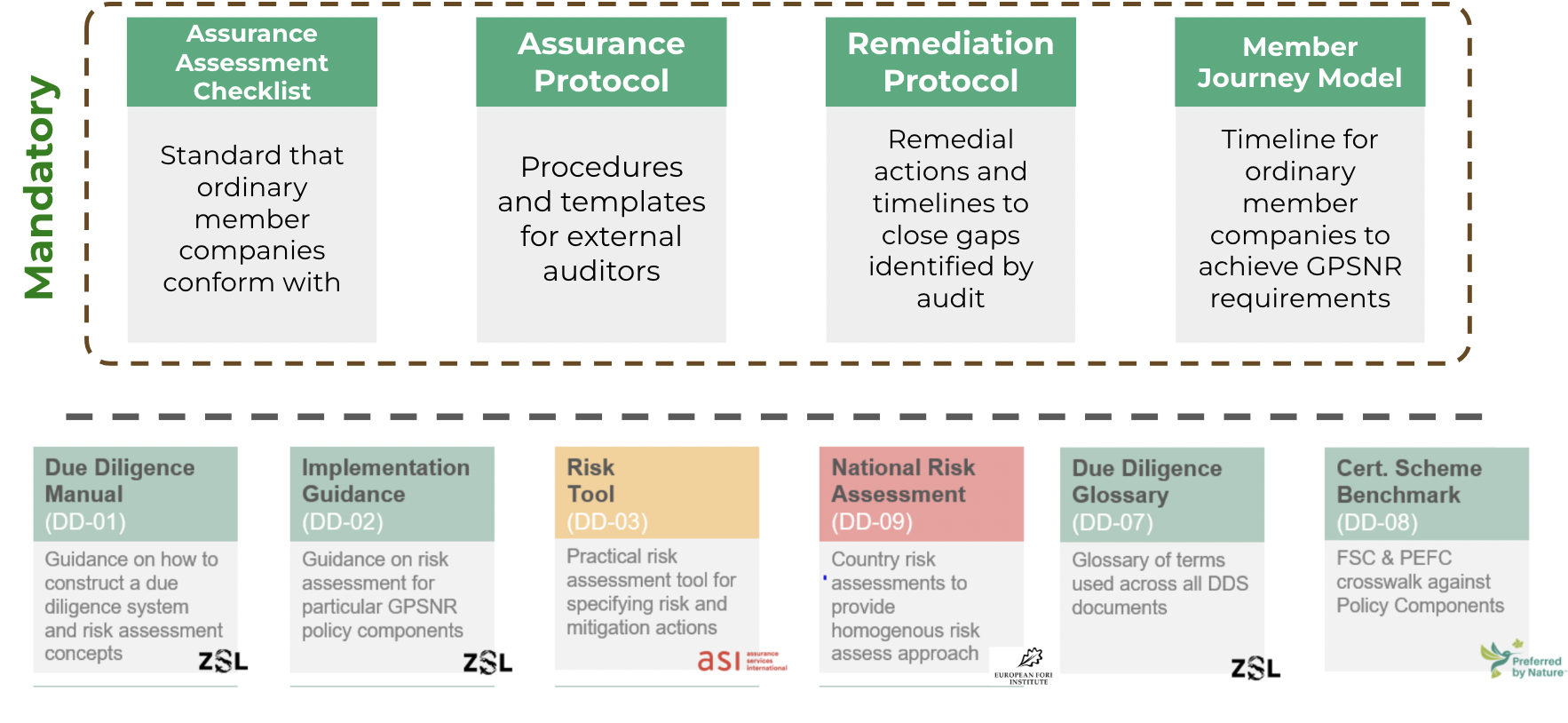
To develop and implement an assurance system that will support GPSNR in demonstrating its long-term positive impact on the natural rubber industry and help GPSNR members companies validate their sustainability claims and commitments, GPSNR is conducting a 60 day public consultation from 1 May to 30 June 2024 on the three of the four mandatory elements of its Assurance Model. This includes the Assurance Assessment Checklist, Assurance Protocol, and Remediation Protocol. The Assurance Assessment Checklist captures the themes and minimum requirements that were previously discussed during the platform’s in-person meetings in February 2024. The Members Journey Model (MJM) can be found here, the MJM has already been developed and is being put forward for vote at the upcoming Extraordinary General Assembly. The Members Journey Model outlines the development path that members are expected to take once they join GPSNR.


GPSNR Assurance Model Structure (pending Extraordinary General Assembly vote)


After the consultation, the GPSNR Secretariat will review the comments from this public consultation, feedback from the GPSNR in-person meetings in June, and the learnings from the Assurance Model pilots which will be ongoing till July 31st and make necessary changes. A second 30-day consultation will be conducted after the documents have been revised in Q3 of 2024.


Any feedback on the documents should be added to this file by 30 June 2024.


Document Name

Link 

Feedback Link 

Assurance Assessment Checklist 

Linked here

See here

Assurance Protocol 

Linked here

Remediation Protocol 

Linked here

More To Explore

GPSNR Working Groups Update: September 2023

Strategy and Objectives Working Group:
The Traceability Pilot Field Trials consortiums Agridence and Koltiva have presented the final reports, which have been distributed within the Risk Subgroup. 

The Risk Subgroup has extended an invitation to ASI to share the formula behind the Risk Assessment Framework. This ensures that the framework is malleable to fit the dynamics of the Natural Rubber Industry. 

Furthermore, the Risk Subgroup has solidified plans for an initial pilot trial in collaboration with ASI, focusing on the establishment of Indonesia’s national risk assessment.

The resolution for the Assurance Model has been finalised and is currently in circulation among the wider membership for voting. The Member’s Journey Model and Assurance Model Timeline are slated for voting at GA 2023. The following items have been included in the Resolution as a strong basis for future consultations and discussions following GA 2023: Shared Investment Mechanism, Assurance Model Framework, and KPIs.

The Risk Subgroup is awaiting proposals from the Basel Institute in addressing corruption within Rubber Supply Chains from the ASI Risk Tool, Reporting Requirements and doing a qualitative corruption data analysis. 

Furthermore, the Risk Subgroup anticipates developments in the Assurance Model in December 2023, before proceeding with the expansion of the Risk Tool and the pre-setting of national risk levels. This ensures that the Risk Tool is not developed in silo and is in alignment with the other components of the Assurance Model.

Lastly, the Risk Subgroup intends to conduct an analysis of the Risk Tool with the Policy Framework to further understand how granular should Risk Assessment reach. For example, is Risk Assessment sufficient on a theme level or would it be necessary to deep dive into the Policy Component level.  

Smallholders Representation and Capacity Building (SCB) Working Group:
The Thailand Agroforestry subgroup conducted a KPI workshop before the Agroforestry training in October 2023. The subgroup is gearing up to conduct the inaugural set of Agroforestry training sessions, benefiting 100 farmers in Songkhla in October 2023.

Additionally, a productive knowledge exchange session took place involving the Agroforestry-Income Diversification task force, Pak Febrius, and the Thailand Agroforestry Subgroups.

Meanwhile, the Thailand GAP subgroup successfully finalised a contractual agreement with Koltiva and will hold its kick-off meeting, marking the first meeting since the start of the project.

The HCSA-HCVN Field Trials task force presented its final report to the SCB WG for endorsement.

The Digital Knowledge Sharing Platform (KSP) task force has conducted two pre-pilot development meetings and the Rubber Wiki app was officially launched on the Google Play Store. The task force is planning a training session tailored for task force and secretariat members, focusing on the effective management of Rubber Wiki. Following the app’s official launch, the KSP contractor will organise group socialising events in Indonesia and Thailand, aimed at introducing the app and gathering valuable user feedback.

Lastly, the SCB WG is gearing up for both national and international calls with smallholder members, an essential part of the preparations leading up to GA2023.

Policy Toolbox Working Group:
During the Year 1 Reporting Review process, input on the reporting process was gathered from members through a survey and stakeholder-specific meetings. This feedback will be used to inform revisions to the Reporting Matrix and disclosure requirements for reporting Years 2 and 3, aligning with the Transparent Reporting Roadmap (TRR).

The WG selected consultant Petra Westerlaan to propose a quantitative orientation for the reporting matrix and conducting a crosswalk with other established reporting frameworks such as CDP Forest, GRI, and ZSL-SPOTT. This quantification approach is expected to facilitate data aggregation and will make evaluating annual progress easier.

The Resolution for the Disclosure Requirements for Reporting Requirements has been finalised and is will be presented to the membership for voting. 

Lastly, quantification from Petra Westerlaan has been completed and the Working Group will embark on further consultations with the Working Group to prepare the updated Reporting Requirements to be approved at an extraordinary GA.

Shared Responsibility Working Group: The Shared Investment Mechanism (SIM) Resolution has been subsumed under the Assurance Model Resolution for approval in the 2023 GA, as a strong basis for further consultation and discussion after the GA. This is due to the integral role of the KPIs, which has not been finalised, in the implementation of the SIM. 

Value and benefits per category to be defined.

The Secretariat is looking into the development of guidance for the operation of the SIM.

Additionally, there is a co-chair seat open, and we are calling for interested volunteers.

News

GPSNR Working Groups Update: December 2020

Strategy and Objectives Working Group

The Working Group has received several bids in response to the Request for Proposal (RFP) for a study on environmental impacts, and risks, in the natural rubber value chain that was published in November. The Working Group has shortlisted three candidates and, as part of the evaluation process, will be conducting with these candidates in January 2021 before awarding the bid to the successful candidate. 

The Working Group is also starting on the Theory of Change document update, an exercise which will involve all other Working Groups. This will take place in January 2021. The Equity sub-Group is preparing summary documents for the living income studies and is planning to present the studies to GPSNR members in early 2021.

‘Policy Toolbox’ Working Group

The Working Group has finalized the Baseline Reporting Requirements and these will go to the Executive Committee for review. The Working Group is also developing a Request for Proposal for a consultant to work on the implementation guidance and reporting requirements.

‘Capacity Building’ Working Group

Since the last update, the Good Agricultural Practices (GAP) Task Force has had their first kickoff call and is beginning the work to identify and/or refine guiding principles for GAPs appropriate for the sustainable production of natural rubber.

The Working Group is also engaging the Executive Committee on their comments regarding the proposed capacity building strategies for four focus countries.

‘Traceability and Transparency’ Working Group

In early December, the Working Group onboarded smallholders from Indonesia and Côte d’Ivoire into the group, with the smallholders participating in their first meeting on 10 December. 

Aside from reviewing the Working Group’s Terms of Reference (ToR) and its objectives moving forward, the Working Group will also be starting to develop recommendations for members on traceability and transparency tools in early 2021.

Smallholder Representation Working Group

The revised ToR for the Working Group is undergoing a final review, following which it will be sent to the Executive Committee for approval. 

The Working Group has also formalised a document that defines the role and key tasks of a Country Champion. So far, Country Champions have been actively involved in organizing and arranging national calls, supporting smallholder engagement, and providing technical and linguistic assistance.   

As part of the Working Group’s revamp, it will be undergoing a membership refresh. Part of this will also involve smallholders being onboarded into the Working Group in 2021.  The Working Group is also looking into onboarding smallholders from Cambodia. Any GPSNR members who have operations in Cambodia or partners working in Cambodia who can help to identify potential smallholders for an onboarding workshop are welcome to reach out to the Working Group’s Co-Chairs, Ulrich Antoni and Julian Oram.

Scroll to Top