

Introducing GPSNR Topic Talks! Webinar Series

Share This Post

GPSNR Topic Talks! is a new webinar series organised by the GPSNR Secretariat and presented by GPSNR members. The webinars will take place over three Tuesdays in October and November, and will cover three main themes around sustainability and the global natural rubber supply chain.

The first Topic Talk, a presentation by Philippe Thaler from CIRAD on the implications of EU legislation on imported deforestation, took place just yesterday night. The webinar was well attended by GPSNR members from various membership categories. In his presentation, Philippe covered the current status of EU commitments towards avoiding imported deforestation and how France has started implementing its policy. He also elaborated on the demand from French institutions to CIRAD to assess compliance with this policy in natural rubber. He concluded with some examples of how GPSNR can demonstrate the platform’s positive impacts in this context. The Q&A session afterward allowed for a deeper dive into the topic, as well as opening up some interesting questions on the use of alternative tools apart from compliance and assurance that can also help stakeholders progress towards their zero deforestation goals.

The next Topic Talks will focus on the themes of smallholder solutions as well as assurance and smallholders. More details on the upcoming webinars are provided in the subsequent section of this article. GPSNR members may contact the Secretariat to register for the webinars.


Smallholder Solutions: From Income Diversification to Landscape Approaches

3 November 2020 | 7PM (GMT+8)   

This webinar consists of two presentations:

“A landscape-level approach to inclusion and capacity building for rubber smallholders”

Presented by: Kirana Megatara, Proforest & SNV

This presentation is based on experience from the Kelola-Sendang project in South Sumatra, where SNV, with Proforest support, worked with rubber smallholders in the context of a large jurisdictional initiative. New links were built between these groups and a crumb rubber factory buyer in the Kirana group, helping to streamline the supply chain and open channels of communication on sustainability issues.

“Exploring Smallholder Solutions in the Rubber Sector – The Processing and Sale of Rubberwood to Support Smallholder Financing in Indonesia”

Presented by: WWF with Financial Access

HeveaConnect, Target Corporation, and World Wildlife Fund are engaged in finding solutions to enhance the production and trade of sustainable natural rubber. The three organizations came together in 2019 around the shared interest in understanding how the processing and sale of rubberwood might incentivize the adoption of sustainable practices by natural rubber smallholders and enhance their livelihoods. We enlisted the services of Financial Access to analyze the potential of rubberwood to serve as a mechanism to support smallholder financing in Indonesia. Although the scope of the analysis was limited to two provinces in Sumatra, the findings of this study could be used there and elsewhere in Indonesia to inform the development of sustainable natural rubber initiatives that include the processing and trade of rubberwood as one of several strategies to support equity in natural rubber supply chains.

Assurance and Smallholders: Learning from Existing Schemes

24 November | 7PM (GMT+8)

This webinar consists of two presentations:

“FSC Smallholder Certification Solutions”

Presented by: FSC

The presentation will cover FSC’s solutions for smallholders to become certified. First, an overview of the evaluation of certification solutions for smallholders will be given. FSC’s existing solutions will be covered, with a focus on the benefits for FSC Group Certification. Next, solutions in the pipeline will be covered, addressing the impact of pilot projects and highlighting success stories.

“PEFC, a system of choice for rubber smallholders”

Presented by: PEFC

Through a comprehensive explanation of PEFC, PEFC will elaborate further on their unique bottom-up approach in standard-setting and certification. Why and how this approach makes PEFC a system of choice for rubber smallholders and all companies involved in the natural rubber supply chain. They will also showcase current collaborative projects with their national members and companies to support smallholder producers. PEFC will explain how it will benefit GPSNR members and the work that GPSNR is engaged in.
More To Explore

News

GPSNR Working Groups Update: October 2022

Strategy and Objectives Working Group

The assurance model taskforce, which sits under the umbrella of this working group, worked on establishing KPIs, GPSNR and Company targets, and tasking the KPIs to other working groups, categories and members. Its other subgroup on risk is currently working on a proposal for the definition of polygons in the EU Deforestation Regulation based on a request from GPSNR member ETRMA. Th subgroup also has two new co-chairs – Maggie Fitzherbert from ZSL and Ayako Itoh from Bridgestone.

Smallholder Representation Working Group

After completing its first round of pilot agroforestry workshops in Indonesia, the working group has its next round planned in Cambodia starting this month. Subsequently, they are preparing for country-based focus group discussions on the Smallholders Policy Equivalent and for the GPSNR-HCSA Smallholder Toolkit Field Trials. They are also working on processing smallholder applications from Liberia and Cambodia.

Policy Toolbox Working Group

The group is working on finalizing the TORs for the Year 1 Reporting Review to be conducted in the first quarter of next year. They are also assessing if any changes to reporting framework and its details (i.e. process, extensions, questions) are needed based on the Year 1 Reporting Review results.

Capacity Building Working Group

The group is currently evaluating proposals to appoint a software developer for the second phase of the GPSNR Knowledge Sharing Platform. They have kicked off the Disease Fighting Project with SNV-IRRI in Indonesia, after having recently completed the first milestone of the SNV-Proforest GAP coaching in the country. They continue to seek members’ funding for capacity building projects in Indonesia (second stream of disease fighting) and Cote d’Ivoire (training centres). To know more, you can find the project details here.


Shared Responsibility Working Group

The group is working on the deliverables discussed for each of its sub working groups during the in-person meetings, and will present findings to the membership on 15th November 2022.

News

Strategy and Objectives Working Group Update – January 2020

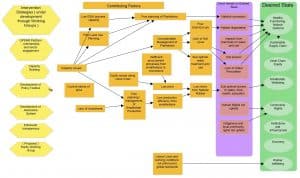
Using the Theory of Change model, the Working Group identified root causes that prevent the natural rubber supply chain from achieving the desired state. Once these root causes were agreed upon, effective strategies could be designed to mitigate them.

Considering that the natural rubber industry and the world around it is not static but changes with time, the Working Group has planned for the Theory of Change to be a living document that GPSNR members will continually update and maintain. This will ensure its relevance and role in realizing the vision of GPSNR.

In addition to the above, the Working Group is drafting the Terms of Reference (ToR) for the Equity sub-Working Group. The sub-Working Group’s focus will be on how we can ensure equity along the supply chain.

‘Policy Toolbox’ Working Group

Working Group members’ comments on the first draft of the top line policy components were consolidated and incorporated into an updated draft. For ease of understanding, it was agreed that the policy components and implementation components would be displayed in separate tables. This would allow members to more easily distinguish the policy commitments they should adopt, and the corresponding actions they should implement.

The Working Group aims to have the top line policy components finalized by the end of January for the Executive Committee’s approval.  

‘Capacity Building’ Working Group

The Working Group has designed the questionnaire on which it will base the interviews of stakeholders conducting capacity building activities in rubber-producing countries. Volunteers from the Working Group as well as the GPSNR Secretariat will contact the previously identified stakeholders and seek their input on past and existing capacity building initiatives, evaluating the success of the activities and exploring the role that GPSNR can play in ensuring that the initiatives fulfill their objectives.

‘Traceability and Transparency’ Working Group

Using the Theory of Change document as an anchor to their discussions, the Working Group was able to analyze how the lack of traceability and transparency in the natural rubber supply chain would constitute a threat to sustainability, and how to tackle the associating challenges. Next, the Working Group will start on the design of pilot studies for tools currently employed to assess supply chain risks and/or achieve supply chain traceability or transparency.

Scroll to Top