
GPSNR Working Groups Update: July 2021

Share This Post

As every month seems to be busier than the last, these monthly updates encapsulate all the details that are important for members to know. Here is the snapshot for the month of July 2021:

Strategy and Objectives Working Group

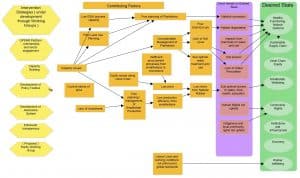
After a busy few months of putting together the Environmental Risk Study and the Theory of Change, this group is preparing to present these two important pieces of work to the rest of the membership before publishing them on public domains.

While the Environmental Risk Study webinar is scheduled for 29 July, the Theory of Change is still being finalised and will be worked on through a workshop planned for September or October.

The group is also continuing to work on refining the platform external partnerships approval process. 

Smallholder Representation Working Group

After an onboarding workshop for Indonesian smallholders this month, the group is planning its next onboarding for Sri Lankan smallholders in September. While COVID-19 has caused a delay in similar workshops for Cambodia and India, the group has begun planning outreach for Liberia and Malaysia and Colombia. 

They are also developing participants lists from workshops to onboard more smallholders from Vietnam, Thailand, Ivory Coast, and Ghana, which already have some amount of representation at GPSNR.

Policy Toolbox Working Group

This working group has completed the initial reviews of two significant aspects of the GPSNR assurance model: the Implementation Guidance and the Reporting Requirements. The WG will also embark on a review of the Compliance Panel Guidance in August. As they take each of these bodies of work forward in the next few months, please reach out to the secretariat for any questions around these documents and how they impact your work. 

Capacity Building Working Group

The group rolled out a call for funding from all rubber industry players (both GPSNR members and non-members) for capacity building work in Indonesia, Thailand and Ivory Coast, while also finalising BMZ funding for projects in Indonesia and Ivory Coast in 2021-22. 

In the next month or so, the group is working on identifying suitable locations for capacity building programmes in Indonesia across five key rubber-producing regions, and advancing implementation plans for Ivory Coast.

They are also finalising Good Agricultural Practices, developing systems for monitoring and evaluating capacity building activities and putting mechanisms in place to ensure national implementation subgroups remain aligned with GPSNR.

Traceability and Transparency Working Group

This working group is currently finalising the definition and acceptable levels of traceability for GPSNR and developing data collection and reporting standards together with the Policy Toolbox working group.

Shared Responsibility Working Group

The group is drafting activities and framework for Shared Responsibility for integration into other processes such as the Implementation Guidance. 

More To Explore

News

Strategy and Objectives Working Group Update – December 2019

The final version of Desired State V1-0 and Theory of Change will be submitted to the Executive Committee in view of approval at the General Assembly on 31st March 2020.  The Strategy & Objectives Working group is also preparing a concept of Equity working sub-group. GPSNR calls for members who wish to support in preparing the concept note for the equity sub-group, to please state your interest to GPSNR secretariat. 

Strategy 1 ‘Policy Toolbox’ Working Group drafters proposed the first draft of the policy elements and KPIs to the working members, which have now been mapped out against GPSNR 12 principles and desired state.  In order to collect the comments in a written form, members are asked to provide their comments online by January 3rd 2020. After the working group members agree on the final version of policy components, it will be submitted to the Executive Committee for comments and approval.

Strategy 2 ‘Capacity Building’ Working Group has completed a validation of their strategy against the Theory of Change.  The Working Group realizes that the situation in each country varies, so the capacity building strategy needs to be customized in its approach.  A list of stakeholders conducting capacity building activities in rubber producing countries has been finalised. The next step will be to collect inputs from the identified stakeholders in order to design GPSNR capacity building strategies.  In order to have a standardized information, the interviews will be conducted by GPSNR members in January 2020, and the result of the interview will be consolidated by GPSNR secretariat.

Strategy 3 ‘Traceability and Transparency’ Working Group – Some of the tools that the members are using for natural rubber traceability and transparency were presented during the first calls.  The next step is to start looking at Theory of Change, what are the underlying cause of lack of transparency and traceability, and how increasing transparency will contribute to the desired state.

GPSNR members can see the discussion and the minutes of each working grouop on GPSNR discussion forum. Please contact nigel@gpsnr.org for your log-in credentials.

News

Strategy and Objectives Working Group Update – January 2020

Using the Theory of Change model, the Working Group identified root causes that prevent the natural rubber supply chain from achieving the desired state. Once these root causes were agreed upon, effective strategies could be designed to mitigate them.

Considering that the natural rubber industry and the world around it is not static but changes with time, the Working Group has planned for the Theory of Change to be a living document that GPSNR members will continually update and maintain. This will ensure its relevance and role in realizing the vision of GPSNR.

In addition to the above, the Working Group is drafting the Terms of Reference (ToR) for the Equity sub-Working Group. The sub-Working Group’s focus will be on how we can ensure equity along the supply chain.

‘Policy Toolbox’ Working Group

Working Group members’ comments on the first draft of the top line policy components were consolidated and incorporated into an updated draft. For ease of understanding, it was agreed that the policy components and implementation components would be displayed in separate tables. This would allow members to more easily distinguish the policy commitments they should adopt, and the corresponding actions they should implement.

The Working Group aims to have the top line policy components finalized by the end of January for the Executive Committee’s approval.  

‘Capacity Building’ Working Group

The Working Group has designed the questionnaire on which it will base the interviews of stakeholders conducting capacity building activities in rubber-producing countries. Volunteers from the Working Group as well as the GPSNR Secretariat will contact the previously identified stakeholders and seek their input on past and existing capacity building initiatives, evaluating the success of the activities and exploring the role that GPSNR can play in ensuring that the initiatives fulfill their objectives.

‘Traceability and Transparency’ Working Group

Using the Theory of Change document as an anchor to their discussions, the Working Group was able to analyze how the lack of traceability and transparency in the natural rubber supply chain would constitute a threat to sustainability, and how to tackle the associating challenges. Next, the Working Group will start on the design of pilot studies for tools currently employed to assess supply chain risks and/or achieve supply chain traceability or transparency.

Scroll to Top