Earlier this year, I joined the Global Platform for Sustainable Natural Rubber (GPSNR) to work with smallholder farmers, civil societies, manufacturers, processors and end users on capacity building for those at the bottom of the natural rubber (NR) supply chain. The primary goal was to equip them with the necessary skills for sustainability reform, with the ultimate goal of cultivating better quality raw materials and fostering greater economic mobility. This journey provided me with valuable insights, enabling me to learn from industry professionals and gain an understanding of sustainability issues from diverse perspectives. In this short article, I would like to share some of my key takeaways from being exposed to GPSNR’s initiatives for a sustainable NR industry and interacting with those from other commodities on similar journeys.
To begin, the adoption of the European Union Deforestation Regulation (EUDR) is widely celebrated as a significant step in combating climate change and demonstrates the EU’s commitment to ensuring a sustainable supply chain. However, my interactions with smallholder members of GPSNR shed light on the concerns raised about the shifting of compliance costs to producers. One smallholder member I work with has often highlighted the challenge of balancing the cost of implementing sustainable practices against revenues. They expressed their desire for tangible benefits, such as receiving premium prices for their products, if they were expected to adopt sustainable farming methods. To truly ensure a sustainable supply chain, it is important for governments and industry players to support and assist the vulnerable groups along the supply chain in overcoming the financial barriers they face. This will help ensure that the burden of compliance costs is not disproportionately placed on their shoulders.
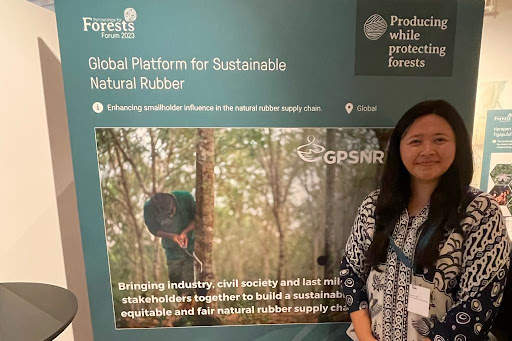
Attending the Partnerships for Forests (P4F) Forum 2023 in London. P4F’s invaluable support has played a pivotal role in empowering GPSNR’s smallholders and fostering sustainable engagement.
Additionally, while initiatives to combat deforestation remain crucial, we must not overlook the importance of addressing social issues and the potential economic consequences of such regulations. At the Amsterdam Declaration Partnerships in May 2023, I had the opportunity to hear a minister from a producing country emphasize the importance of consuming nations recognizing the economic and social consequences. Failing to consider economic and social consequences can have far-reaching effects such as increased poverty levels and inequality. Therefore, a holistic approach that balances all three pillars of sustainability is necessary to safeguard the well-being and livelihoods of those affected while protecting the environment.
Lastly, drawing from my experience during the National Initiatives Strategy meeting, an initiative to enhance social, environmental, and economic welfare on a global scale, it became clear that national initiatives have certain limitations when it comes to supporting multiple commodities simultaneously. Therefore, these initiatives need to prioritize specific commodities in order to ensure practicality and effectiveness. During the meeting, it was collectively acknowledged that national initiatives do not need to take the lead in every solution, but rather offer support to industry and government-led initiatives while fostering effective collaboration to avoid duplication in allocation of resources. This also highlights the significance of industry-led solutions, which can complement the work of national initiatives. Industry players’ proactive measures can help anticipate and mitigate potential risks in the supply chain more effectively, promote sustainable practices, and contribute to the overall goal of combating climate change and complying with EUDR.
As I reflect on my experience with GPSNR, it is evident that sustainability in the NR supply chain has been a longstanding commitment even prior to the introduction of the EUDR. Various initiatives have been taken to promote sustainable practices within the NR industry, including the approval of reporting requirements and the adoption of the GPSNR policy framework. These initiatives aim to encourage GPSNR members to align their practices with GPSNR Policy Framework and thus, establish strong sustainability commitments across the NR supply chain.
This year marks a significant transition for GPSNR as we move from commitment to implementation, focusing on four key fronts. Firstly, our efforts are dedicated to finalizing the GPSNR assurance model, an encompassing framework that establishes sustainability guidelines and standards for the entire supply chain. Additionally, GPSNR is also actively working on implementing the shared responsibility mechanism, wherein the manufacturers collaborate to share the costs of capacity building, fostering an equitable and sustainable NR industry.
Furthermore, GPSNR is expanding its capacity building initiatives in essential areas such as Good Agricultural Practices (GAP), agroforestry, and disease management. These efforts aim to empower local communities in key NR producing regions, particularly in Thailand and Indonesia. GPSNR also implemented a smallholders-inclusive strategy, whereby smallholders members can participate in the decision-making processes, become part of the Executive Committee of GPSNR, and have the voting rights at the General Assembly. This ensures that the voices and perspectives of smallholders are taken into account in the development and execution of sustainable natural rubber initiatives.
Lastly, GPSNR is actively striving to fine-tune decisions that support a smoother implementation of the EUDR, which include shared due diligence systems, joint deforestation analysis tools, and common traceability tools, all funded by manufacturers. These measures will enhance transparency and accountability within the NR supply chain.

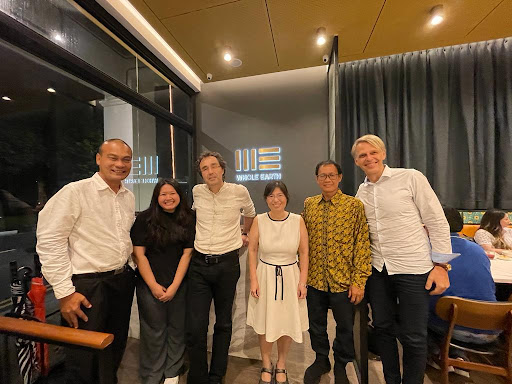
Members of the Smallholder Representations and Capacity Building Working Group, which include smallholder members from Thailand and Indonesia, come together in Singapore, bringing their invaluable perspectives to GPSNR workshops in June 2023.
In conclusion, my journey with GPSNR as a passionate sustainability advocate has underscored the significance of collaboration in forging a sustainable NR industry. As we navigate the path forward, it is crucial to address the challenges ahead while maintaining a delicate equilibrium between environmental, social, and economic considerations. The initiatives undertaken by GPSNR, including capacity building, smallholder inclusion, and strategic decisions to support EUDR implementation, reflect a steadfast commitment to sustainability. Together, we can make a positive impact on the global NR supply chain and create a sustainable future.