

Secretariat Update – August 2019

The Global Platform for Sustainable Natural Rubber (GPSNR) and the International Rubber Study Group (IRSG) have agreed to build cooperation by signing a memorandum of understanding (MoU).

Share This Post

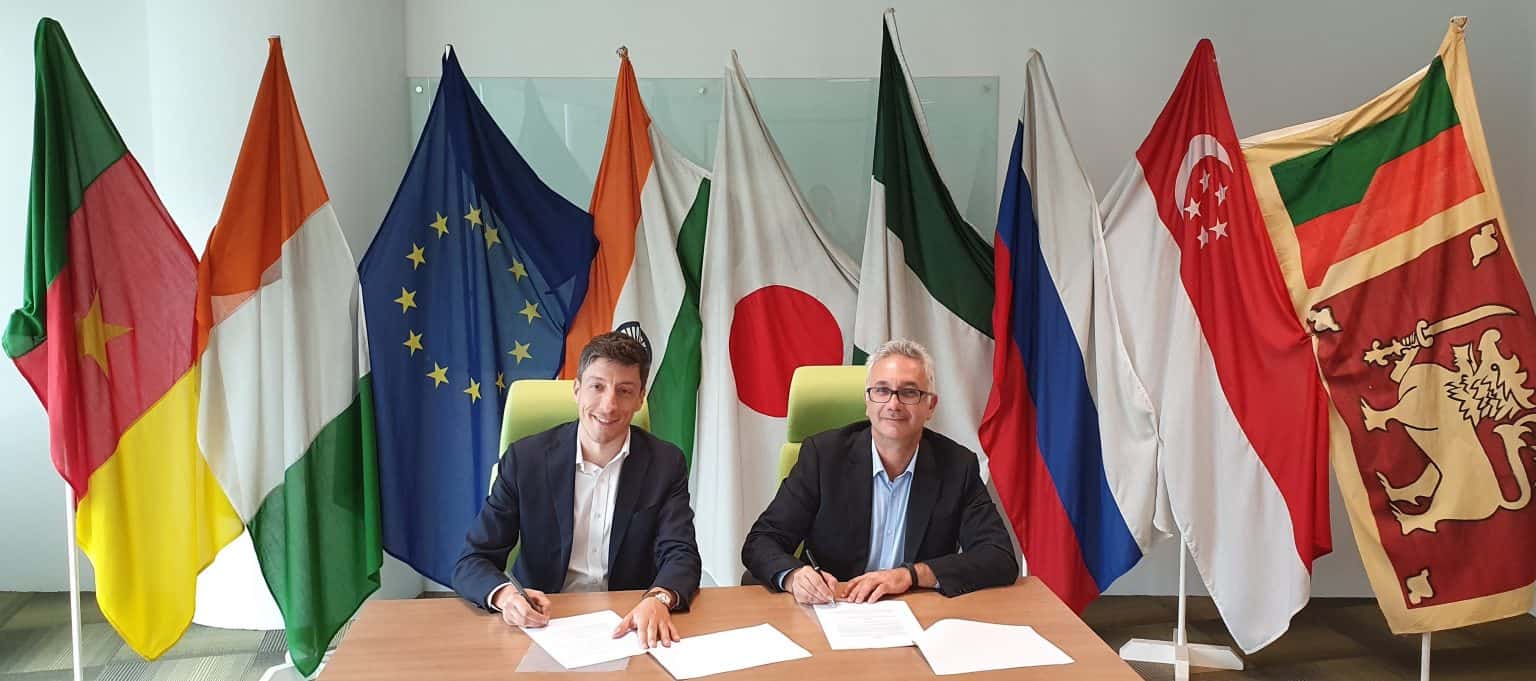
The signing of the MoU took place at IRSG’s Office in Singapore, on the 6 August 2019 by Mr Salvatore Pinizzotto, IRSG Secretary General and Mr Stefano Savi, GPSNR Director. The MoU will have the aim of consolidating, developing and detailing the cooperation between the two organisations. It will also contribute to the effectiveness to achieve the organisations’ common objectives in the field of sustainable production and consumption of natural rubber.

The cooperation will have a focus on Sustainability in the Natural Rubber Value Chain, particularly in relation to socio-economic and environmental aspects linked to the natural rubber sustainable production and consumption. Immediate opportunities for collaboration have been identified in the following areas: 

  1. Definition of Natural Rubber Sustainability and identification of appropriate standards, building on the activity carried out from IRSG in the SNR-i project.
  2. Natural Rubber Sustainability and socio-economic impacts on smallholders in producing countries.
  3. Land tenure right and sustainable income of smallholders in producing countries.
  4. Impact of climate change in rubber plantations and mitigation of risks.

The International Rubber Study Group (IRSG) was established in 1944 and is the only intergovernmental organization that brings the world’s rubber producing and consuming stakeholders together. The IRSG is the forum for the discussion of matters affecting the supply and demand for natural as well as synthetic rubber. IRSG is at the forefront in conducting activities and research on the sustainability of the natural rubber economy. IRSG has 36 member Governments and more than 700 industry members covering the whole natural rubber value chain.

The Global Platform for Sustainable Natural Rubber (GPSNR) is an international, multistakeholder, voluntary membership organization, with a mission to lead improvements in the socioeconomic and environmental performance of the natural rubber value chain. Development of the GPSNR was initiated by the CEOs of the World Business Council for Sustainable Development (WBCSD) Tire Industry Project (TIP) in November 2017. Currently the Platform has 51 Members including Producers, Processors & Traders, Tire makers and other rubber makers/buyers, Carmakers, other downstream users and Financial Institutions, and Civil society.

Representatives from each of these stakeholder groups have contributed to the development of the Singapore-based platform and the wide-reaching set of priorities that will define GPSNR strategy and objectives.
More To Explore

News

GPSNR Working Groups Update: July 2021

As every month seems to be busier than the last, these monthly updates encapsulate all the details that are important for members to know. Here is the snapshot for the month of July 2021:

Strategy and Objectives Working Group

After a busy few months of putting together the Environmental Risk Study and the Theory of Change, this group is preparing to present these two important pieces of work to the rest of the membership before publishing them on public domains.

While the Environmental Risk Study webinar is scheduled for 29 July, the Theory of Change is still being finalised and will be worked on through a workshop planned for September or October.

The group is also continuing to work on refining the platform external partnerships approval process. 

Smallholder Representation Working Group

After an onboarding workshop for Indonesian smallholders this month, the group is planning its next onboarding for Sri Lankan smallholders in September. While COVID-19 has caused a delay in similar workshops for Cambodia and India, the group has begun planning outreach for Liberia and Malaysia and Colombia. 

They are also developing participants lists from workshops to onboard more smallholders from Vietnam, Thailand, Ivory Coast, and Ghana, which already have some amount of representation at GPSNR.

Policy Toolbox Working Group

This working group has completed the initial reviews of two significant aspects of the GPSNR assurance model: the Implementation Guidance and the Reporting Requirements. The WG will also embark on a review of the Compliance Panel Guidance in August. As they take each of these bodies of work forward in the next few months, please reach out to the secretariat for any questions around these documents and how they impact your work. 

Capacity Building Working Group

The group rolled out a call for funding from all rubber industry players (both GPSNR members and non-members) for capacity building work in Indonesia, Thailand and Ivory Coast, while also finalising BMZ funding for projects in Indonesia and Ivory Coast in 2021-22. 

In the next month or so, the group is working on identifying suitable locations for capacity building programmes in Indonesia across five key rubber-producing regions, and advancing implementation plans for Ivory Coast.

They are also finalising Good Agricultural Practices, developing systems for monitoring and evaluating capacity building activities and putting mechanisms in place to ensure national implementation subgroups remain aligned with GPSNR.

Traceability and Transparency Working Group

This working group is currently finalising the definition and acceptable levels of traceability for GPSNR and developing data collection and reporting standards together with the Policy Toolbox working group.

Shared Responsibility Working Group

The group is drafting activities and framework for Shared Responsibility for integration into other processes such as the Implementation Guidance. 

News

GPSNR Working Groups Update: January 2024

Strategy and Objectives Working Group: ASI finished the initial draft of the Assurance Model proposal and presented it to Working Group (WG) members in December for their feedback. To gather more specific insights, feedback calls were arranged with various categories. Based on the feedback received, ASI plans to revise the draft and present it for further discussion at the February in-person meetings.

Smallholders Representation and Capacity Building (SCB) Working Group: Smallholder representatives attended the 5th Sustainable Rubber Plantation and International Conference in Buriram, Thailand, from December 13-15, 2023, to discuss sustainable practices. A consultation on the assurance model was held on January 25, 2024. Both SNV-Proforest’s Indonesia GAP and SNV-IRRI’s Disease Fighting project concluded in December 2023, with final reports submitted. Koltiva’s Indonesia GAP project, extended until September 2024, received additional funding from Goodyear. 

The Thailand agroforestry project signed a supplemental agreement for more projects. Southland and Sri Trang joined the Thailand GAP project as processors, with training material under review. 

The Digital Knowledge Sharing Platform (KSP) task force completed its user acceptance test, releasing the Rubber Wiki app on the Google Play Store. Koltiva was awarded the third phase of KSP for content development with the task force’s content development phase kicking off on January 25, 2024.

Continental pledged funds for capacity-building in Cote d’Ivoire. The Cote d’Ivoire subgroup will discuss new Continental-funded projects.

Two SCB WG meetings were scheduled on December 26 and 31 for final presentations and updates on various projects, including endorsements. The Thailand Agroforestry project plans training for late January 2024, and the Thailand GAP project aims to start training in late January or February 2024. The Income Diversification and Rubber Agroforestry task force is planning its third agroforestry workshop in Liberia from May 22-24, 2024.

Shared Responsibility Working Group: The Working Group is initiating initial steps to explore ways to develop a value transfer mechanism in GPSNR. The Secretariat has discussed possible paths with the co-chair, who will present these plans to the EC in the near future.

Executive Committee: The EC convened for an in-person strategy planning session in Paris, where they identified and outlined key strategic priorities in a Gantt chart. he Secretariat, along with members and WGs, will collaborate to implement these strategic priorities set forth by the EC.

Scroll to Top